Stela Brings macOS Back to x86-64 PCs Through Apple Silicon Translation
Stela, a new open project, translates Apple Silicon instructions so macOS can boot on x86-64 PCs. It's slow and unstable, but the hardware bar is low.
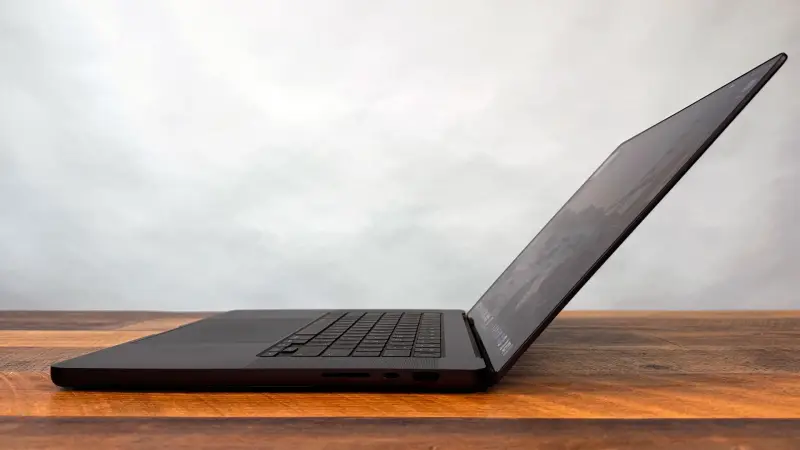
When Apple moved its Macs from Intel to its own Arm-based chips, it closed the door on a long-running hobby. Hackintosh builds, which ran macOS on ordinary PC hardware, stopped being practical once Apple's silicon pulled ahead on performance per watt. Stela, a young project from developer Tyler Smith, is an attempt to reopen that door. It's early and rough, but it's the first credible route I've seen that doesn't depend on the old Intel-era tricks.
What Stela actually is
Stela is a Linux-based UEFI application. You boot it from a USB stick, and it loads macOS 27 while presenting a virtual M2 Mac Mini to the operating system. That framing matters. Stela isn't a patched installer or a set of kernel extensions bolted onto a PC's firmware. It sits between the guest OS and the x86-64 hardware and does the translation work underneath.
The project is only a few hours old in practical terms. Smith has shipped three releases since the initial 0.1, and he's been upfront that the software "is slow and not very stable." Those warnings seem to matter less to the people trying it out, who are more interested in getting a Mac boot screen on hardware Apple never intended to run it. The project's Discord server has seen a large influx of users, many posting photos of their machines getting close to a successful boot.
How the translation works
The interesting engineering is in the two translation paths. On the CPU side, Stela converts Arm instructions into x86-64 using a mix of ahead-of-time and just-in-time compilation. Ahead-of-time work can be done once and reused, while JIT handles code that only becomes known at runtime. That split is the standard way to make heavy instruction translation tolerable, and it's also where most of the speed penalty will come from.
On the graphics side, Stela translates calls to Apple's Metal layer into Mesa's NIR intermediate representation. Mesa is the open-source graphics stack that already sits underneath much of Linux's GPU support, so Stela is effectively borrowing a mature shader pipeline rather than building one from scratch. Whether that choice holds up under real macOS workloads, with window compositing and GPU-accelerated apps, is the question I'd want answered before anyone calls this usable.
Smith has also said the macOS image is not modified. In his words, "Stela provides the translation and hardware behavior underneath that lets macOS go through the exact same restore process you might do on a real Mac." That's a meaningful design decision. It means the guest is running an unaltered system image, and the compatibility burden sits entirely in the translation and emulated hardware layer.
Hardware requirements and what's missing
The minimum bar is low. Stela needs an x86-64-v2 processor, which covers something like a 2008-era Intel Core chip or a 2011-vintage AMD FX part. AVX2 and AVX-512 are used when the CPU supports them, but they aren't required. You'll also need 8 GB of RAM, UEFI firmware, a GPT partition or a whole drive, and an Nvidia GPU anywhere from the 16xx series through the current 5000 cards.
The gaps are just as clear. Wi-Fi isn't supported yet, and Bluetooth support is limited. Wired networking is in better shape, with a broad list of working Ethernet controllers from Intel, Realtek, Broadcom, Aquantia, and Atheros, plus USB Ethernet adapters. Smith's stated goal is to eventually support everything the Linux kernel does. That's an ambitious target, and it implies a long tail of driver work rather than a single milestone.
For anyone planning to use this as a daily driver, the wireless gap alone is a dealbreaker. Most laptops rely on Wi-Fi, and a machine that can only boot into macOS over a cable is more of a lab curiosity than a workstation.
The harder questions
Translating code on the fly has a cost, and one idea floating around the community is pre-translation. With AI-assisted automation, it's not unreasonable to imagine that large parts of macOS could be converted to x86-64 ahead of time, reducing the runtime overhead. The catch is that a lot of what a modern OS does never sits on the disk image in a form you can pre-translate. A browser's JIT JavaScript compiler is the obvious example: it generates machine code while the browser runs, so there's nothing static to convert in advance. That's a structural limit, not just an engineering backlog item.
There's also the trust question. Even if the translation layer is fast enough, macOS still has to accept and run the translated code. Apple's boot and code-signing mechanisms weren't designed with this scenario in mind, and getting past them could require further modification to the translation path. Nothing in Stela's current release notes suggests that's solved, and it's the piece I'd watch most closely.
Still, the appeal is easy to see. A lot of people want macOS without buying Apple's hardware, and the repair and upgrade story on those machines is a constant complaint. Stela doesn't deliver that yet. What it does show is that the Arm-to-x86 path is not a dead end, and that a small project can get a macOS boot screen running on commodity PCs within a few days of its first release. Whether it grows into a usable system will depend on how the performance, graphics and Wi-Fi gaps close over the next several releases.