NordVPN's Digital Footprint Tool Maps Your Exposure but Leaves the Cleanup to You
NordVPN's Digital footprint scanner maps where your details surface in open-source data and suggests fixes, but it won't delete a single record.
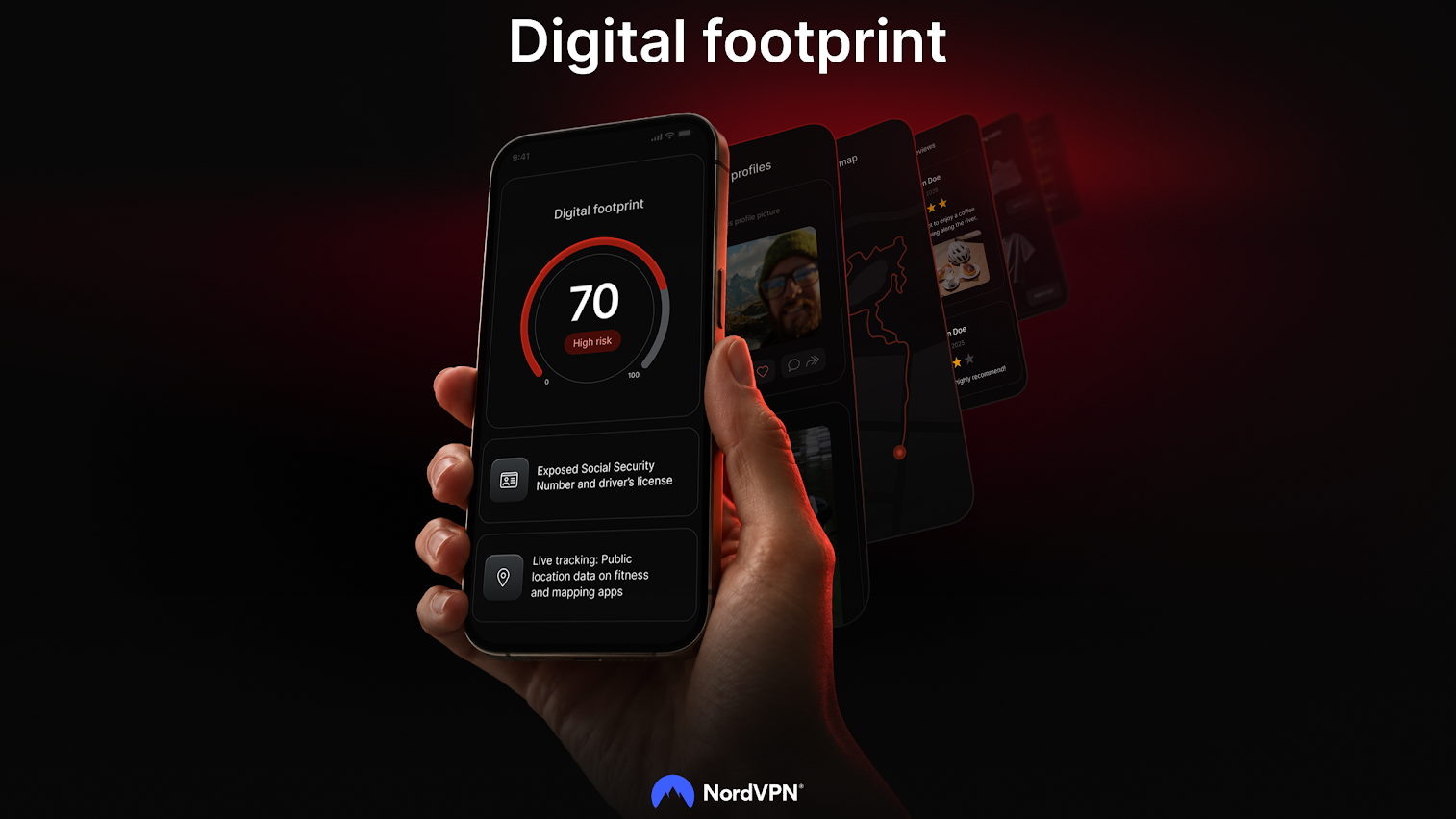
NordVPN is betting that the next useful thing a VPN can do is show you what's already visible about you. Its new Digital footprint feature doesn't encrypt anything or reroute traffic. It audits your public trail and tells you where it's exposed. That's a notable shift for a company whose product has long been a tunnel, and it says something about where the consumer privacy market is heading.
What the scanner actually looks for
Most breach-focused privacy tools answer one question: has your email or password appeared in a leaked database? Digital footprint asks a wider one. It scans open-source intelligence across the web and pieces together the material a determined person could find with a few searches. That includes old accounts you stopped using years ago, forum posts and message boards you forgot about, unmanaged apps that still hold profile data, and location breadcrumbs that have ended up in public records.
The tool then maps the result into a picture of what a curious stranger could assemble in minutes. For many people, that picture is more revealing than any single breach notice, because it combines fragments that look harmless on their own.
NordVPN's product director, Domininkas Virbickas, framed the problem this way: "People know about data breaches, but that's only part of the picture. Your data is also out there because of accounts you forgot about, profiles that were built about you, and everyday browsing. Digital footprint shows you the full extent of your exposure and tells you what to do about it."
That framing matches a gap that's been widening. The company points to reported increases in global data breaches, with volume up 13 percent, as the headline risk people already understand. But the quieter leakage, from forgotten accounts and scattered location data, tends to get less attention even though it's harder to undo.
Why data brokers are the real issue
Changing a leaked password doesn't address the part of the problem most people miss. Data brokers buy and combine information drawn from ordinary internet use and assemble it into personal profiles. Those profiles can then feed decisions made by banks and employers, which is where the consequences become concrete.

That's the reason NordVPN frames trimming public traces as more than tidying up. Fewer public records give brokers less to trade. And fewer scattered footprints reduce the chance that automated scoring systems misread someone's credit profile based on loose or outdated online data. Neither outcome is guaranteed, but both are the kinds of downstream effects that make an audit worth running.
What it doesn't do
Here's the thing: the tool doesn't remove anything. NordVPN is explicit that you can't scrub your history from the internet with one click, and the scanner isn't an automated takedown service. It grades your overall exposure, walks you through manual steps to shrink your profile, and tracks whether your footprint is getting smaller or larger over time.
That distinction matters. Removal services in this space typically submit opt-out requests to data brokers on your behalf. Digital footprint, as described, stops at diagnosis and guidance. You still have to close abandoned accounts, tighten privacy settings on the platforms you keep, and contact data brokers directly to request deletion. For someone with a long digital history, that's a substantial amount of tedious work, and many people will stall partway through.
A useful way to think about it is as an audit. It shows where the leaks are and in what order they're worth fixing. It doesn't patch them.
What this says about VPNs
The launch also reflects a commercial reality. Encryption and a fast connection used to be enough to differentiate a VPN. Those features are now widely available, so providers are adding layers such as dark web monitoring and exposure scanning to justify subscriptions. NordVPN is pursuing that route by combining the new scanner with its existing dark web monitoring, so users can spot exposed records before scammers try to use them.
NordVPN says subscriptions start from $3.49 per month and come with a 30-day money-back guarantee. Those terms let you test the diagnostic layer without much commitment, though whether it's worth paying for depends on how much time you're prepared to put into acting on the results.
Open questions worth watching
Several things remain unclear from the launch. The most important is how the scanner's findings are sourced and verified. Open-source intelligence is noisy, and a tool that flags a profile as exposed needs to be accurate enough that users don't spend hours chasing false leads. Users should also watch how the grading works, since a single score can make a messy situation look simpler than it is.
There's also the question of whether the feature changes behavior over time. The promise of tracking whether your trail shrinks or grows only pays off if people return to the tool and keep acting on it. A diagnostic that gets used once and forgotten doesn't reduce much exposure.
For existing NordVPN users, the feature adds a useful diagnostic layer, provided they're willing to follow through. For everyone else, it's a reminder that privacy work is mostly maintenance. My read is that the scanner's real value is the inventory it produces, and that the cleanup still belongs to you.