Maersk Breach Traces to Legacy System at Acquired Logistics Unit
Maersk says a legacy system at its acquired LF Logistics unit was breached. Core operations are unaffected, but a group is demanding $5 million.
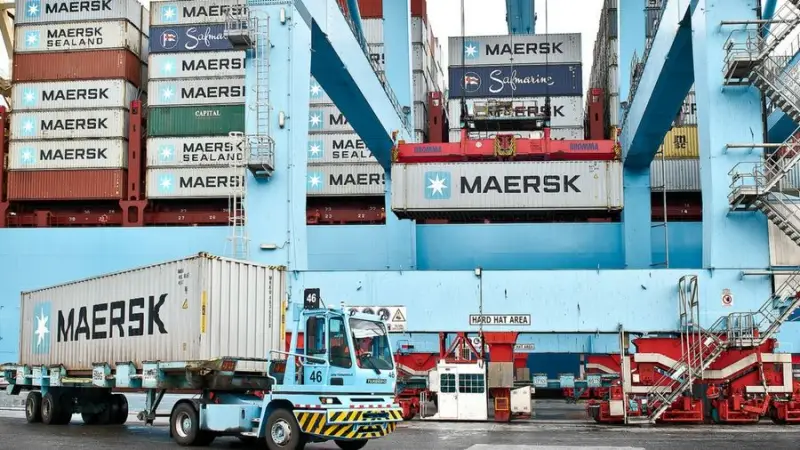
The interesting part of the Maersk breach isn't the ransom note. It's where the attackers got in. According to Maersk, the intrusion didn't touch its core shipping platforms. It hit a legacy system belonging to a company it had acquired earlier, and that gap between an acquisition and its security integration is where a lot of large logistics groups get exposed.
A.P. Moller–Maersk, usually just called Maersk, has confirmed that attackers stole sensitive data from that acquired business. The criminals are now pressing for payment and threatening to publish what they took on the dark web. Maersk says its findings so far point to no sensitive data having been disclosed, and it is still investigating the claims.
A legacy system from a 2022 acquisition
The company that was breached is LF Logistics, a Hong Kong-based third-party logistics provider focused on warehousing and ecommerce fulfillment. Maersk bought it in 2022 for $3.6 billion and folded it into its Logistics & Services division. Over time, LF Logistics stopped operating as a separate entity, which means its internal systems were no longer a standalone concern. Some of them, apparently, were still running on older infrastructure that had not been fully brought up to Maersk's standards.
Maersk's incident disclosure describes the affected environment as a local system. The company says there is no sign of impact on other Maersk systems, or on the customer and business-partner systems that connect to it through APIs and EDI (electronic data interchange). That distinction matters. EDI and API links are how shipping lines, freight forwarders and warehouses exchange bookings, manifests and status updates, and a compromise that spreads into those connections would be far more serious than one contained in a single acquired system.
Maersk told customers they can keep using its platforms to book and manage shipments as normal. My read is that this is probably accurate for the operational layer, but it doesn't close the question of what a legacy environment holds. Acquired systems often contain credentials, integration keys and data exports that were never fully inventoried, and those are the things attackers look for first.
What the attackers say they took
The group calling itself WhiteArmor has listed Maersk on its data leak site and is demanding $5 million in bitcoin. According to BleepingComputer, the group gave the company 30 days to make contact and pay. In its message, the group framed the ransom against LF Logistics' business, writing that Maersk's contract-logistics arm, the former LF Logistics, runs fulfillment for many of the world's largest consumer brands, and that $5 million equals roughly four hours of that unit's EBITDA.
The group claims to have taken about 100GB of data. The categories it lists are specific: nearly 30,000 driver records, passwords in plaintext, 33 SUPER_ADMIN accounts, signed delivery receipts, purchase orders and Advance Shipping Notices (ASNs), and 27,842 mobile device logs that include phone numbers, email addresses and IMEI numbers. Those claims haven't been independently verified, and Maersk is currently assessing them. Ransomware groups have a well-known incentive to inflate their haul, so treat the itemized list as a threat-actor claim, not a confirmed inventory.
Why plaintext passwords change the response
If the claims hold up, the plaintext passwords and the super-admin accounts are the most urgent item. Plaintext credentials mean no hashing stood between the attackers and working logins. Admin accounts mean those logins may carry broad control. In practice, that would force the IT team to rotate every affected secret, revoke sessions and check whether any of those passwords were reused on other services. Reuse is the part that spreads a single breach into several.
The mobile device logs raise a different kind of risk. Phone numbers, email addresses and IMEI numbers aren't dangerous on their own, but they are good raw material for phishing and vishing (voice phishing). A caller who knows a driver's device identifier and phone number can sound credible when asking for a reset code or a change to a delivery route. Logistics workflows depend on trust between drivers, dispatchers and warehouse staff, which makes that kind of social engineering effective in this sector.
And yet, the operational blast radius may still be limited. Many of these data types are the ones companies rotate and monitor routinely. The harder problem is the long tail: service accounts that nobody remembers, credentials embedded in old scripts, and integrations that were never re-audited after an acquisition closed.
Why the scale makes this a bigger story
Maersk is one of the largest container shipping companies in the world. It employs more than 100,000 people, reports more than $50 billion in revenue, and runs a network of more than 60 terminals and over 500 warehousing facilities. A breach in one acquired unit doesn't threaten that whole network, but it does test how well a large group can absorb a smaller company's security debt.
Maersk has been here before at a much higher cost. In 2017, the NotPetya malware brought its global network to a standstill, and the damage was estimated at between $250 million and $300 million. That experience is one reason the company's current messaging stresses isolation and integration checks. Whether that containment holds will depend on what the forensic work finds in the LF Logistics environment, and on whether the claimed data appears on the leak site.
Companies facing extortion demands usually don't pay, and the group's deadline is a pressure tactic. What matters more is the timeline for the next few weeks: whether the claimed data surfaces, whether Maersk can confirm or rule out the 33 admin accounts and plaintext credentials, and whether it can show that no connected customer or partner system was reached. Those answers will tell the industry more about this breach than the ransom figure does.


