Jensen Huang's Exit Puts Nvidia's Leadership and AI Chip Supply in Question
Jensen Huang has resigned as Nvidia CEO amid reported ties to a woman under FBI scrutiny. With Nvidia chips in most data centers, the fallout reaches well beyond one company.
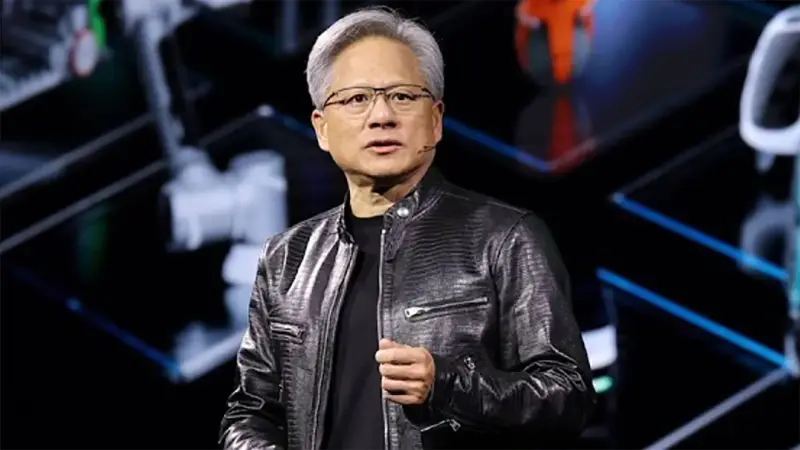
Nvidia confirmed Thursday morning that Jensen Huang has resigned as CEO, with CFO Colette Kress named interim CEO. The personal circumstances behind the exit are unusual, but the question that matters for developers and buyers is practical: who steers the company that makes most of the AI accelerators the industry runs on, and what happens to chip supply and China sales while that question is open.
What's known, and what isn't
Reporting has tied Huang to an alleged affair with Alice Huang, who is not related to him. She's described in multiple reports as a senior executive at Megaspeed, a company that became an Nvidia cloud partner in 2023. Megaspeed was previously part of 7Road International, a Chinese gaming company, and was spun off a few years ago. Alice Huang reportedly holds a majority stake and was described as running operations as recently as May, though NBC reports her formal role is less clear. The FBI is reportedly trying to determine whether she is a Chinese spy.
Here's the thing: nobody has shown a quid pro quo, and nobody has shown that state or industry secrets changed hands. Those gaps matter, and they should be stated plainly. But the perception problem doesn't depend on proof. Huang spent part of 2025 lobbying President Trump to ease export restrictions so Nvidia could keep selling chips to China, and those conversations overlapped with a period when he and Alice Huang were, at minimum, closely connected through a business partner of Nvidia's. Even if every link is innocent, that timeline is a bad look.
It's also worth being precise about the structural issue. Many Chinese companies are only nominally independent of the Chinese Communist Party, which can expect alignment on strategy and operations. Whether or not Alice Huang is a spy, a partner with that profile sitting so close to a chip executive lobbying on China export rules would normally trigger disclosure questions. Whether Huang disclosed the relationship is one of the things investigators will need to answer.
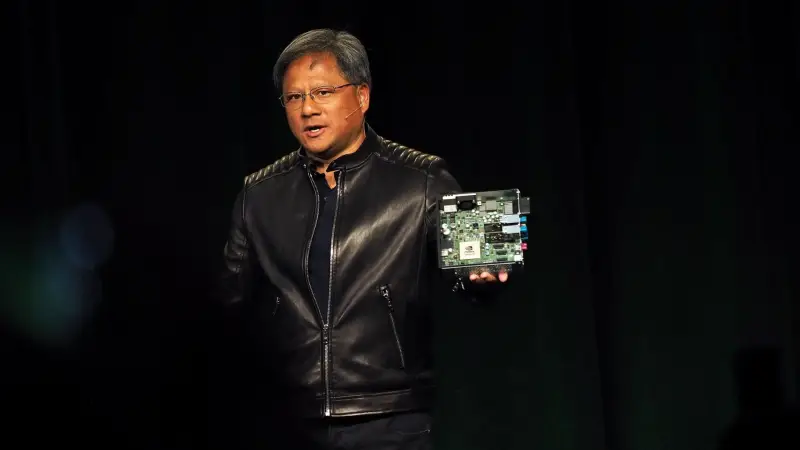
Why Nvidia's leadership matters to the rest of AI
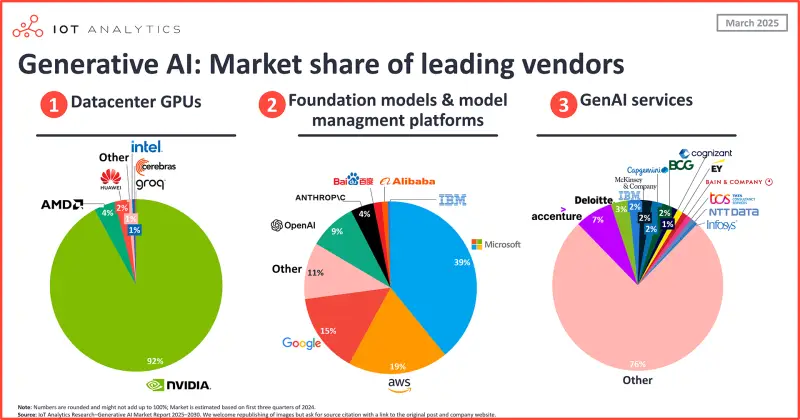
Nvidia's market position is hard to overstate. A 2025 report from IOT Analytics found Nvidia chips in 92% of data centers. That number explains why a leadership change at Nvidia isn't a normal corporate event. Most of the AI models, tools and products that developers touch today were trained or are served on Nvidia hardware, and the company's fortunes move global markets. Investors are nervous for good reason.

The chip shortage makes the stakes sharper. Nvidia currently can't produce AI chips fast enough to meet demand, so any stumble in execution or planning shows up downstream: in training timelines, in inference costs, and in how quickly new capabilities reach production. Foundation model development depends on a steady supply of accelerators, and robotics and autonomous systems do too. If Nvidia's roadmap wobbles during a leadership gap, the effects travel quickly.
Another company could eventually fill the gap. AMD, custom silicon from cloud providers and Chinese chipmakers all compete in parts of the market. But building a competing software and hardware ecosystem takes years, and the developer tooling built around Nvidia's stack is a moat of its own. That's why the near-term question is less about who could replace Nvidia and more about whether Nvidia's execution holds through the transition.
The China question
Huang's own argument to Washington was that cutting Nvidia off from the Chinese market would help Chinese AI competitors and weaken the US position in the AI race. He may be right about that. But his standing as the person making that case has now taken a hit. Regardless of what investigators find, expect the episode to make future export arrangements for AI chips harder to negotiate and more closely scrutinized. Any new restrictions or licensing terms would land on Nvidia's China business, which has been a significant revenue stream.
That's the part I'd watch most closely. Chilling effects on sales are hard to measure in quarterly numbers until they're already visible, and export policy can swing faster than product cycles. Chinese labs have been building capability on whatever hardware they can access, so the long-term effect on the global AI race depends as much on Beijing's domestic chip push as on Nvidia's sales figures.
A long run from graphics to AI
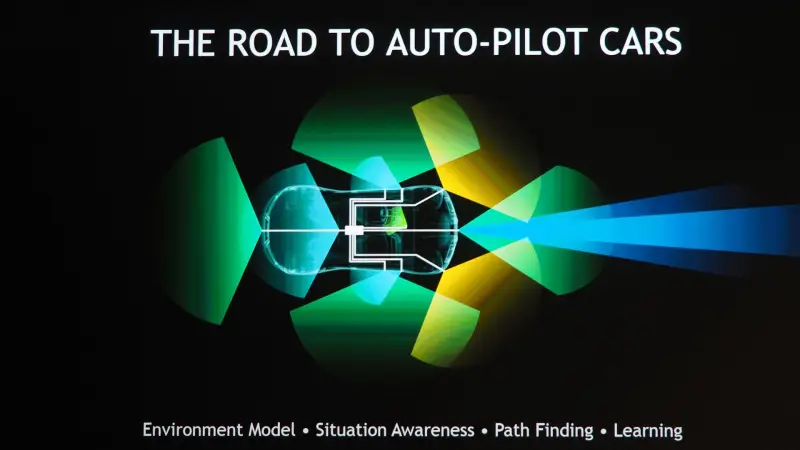
I first met Huang about 30 years ago, when he still went by Jen-Hsun Huang. His pitch was a graphics chip with 3D acceleration and sound, and he was competing with Matrox and ATI. Nothing about that meeting suggested the company would end up at the center of the AI industry. Nvidia's early work on autonomous vehicles was an obvious bet, but the bigger shift came when researchers found that GPUs were well suited to training and running neural networks. That discovery reshaped the company and made Huang one of the most influential executives in tech.
By 2024, as the AI boom accelerated, Huang was effectively the most important CEO in the industry. Customers and competitors alike depended on Nvidia's decisions. That concentration of influence is exactly why this episode carries weight beyond one executive's personal life. The industry built a lot of its plans around one company's judgment, and that judgment is now in question.
What to watch next
The immediate signals are concrete: whether Nvidia names a permanent CEO, whether Kress's interim period brings any change in product or supply guidance, and what the FBI's inquiry produces. On the market side, the reaction will show how much investors price in leadership risk at a company this central to AI. On the policy side, the open question is whether the China export terms that Huang lobbied over get revisited. For anyone building on Nvidia hardware, the advice is unglamorous. Keep an eye on availability and pricing, and avoid assuming the current roadmap is locked. For everyone else, the lesson is that the AI stack rests on fewer load-bearing decisions than the hype suggests, and one of them just changed hands.