Noctua's NT-CP1 Brings Self-Conforming Carbon Nanotube Pads to AM4 and AM5
Noctua's NT-CP1 carbon nanotube pad for AM4 and AM5 CPUs is on sale for $24.95 or €24.95, aimed at replacing paste that degrades over time.
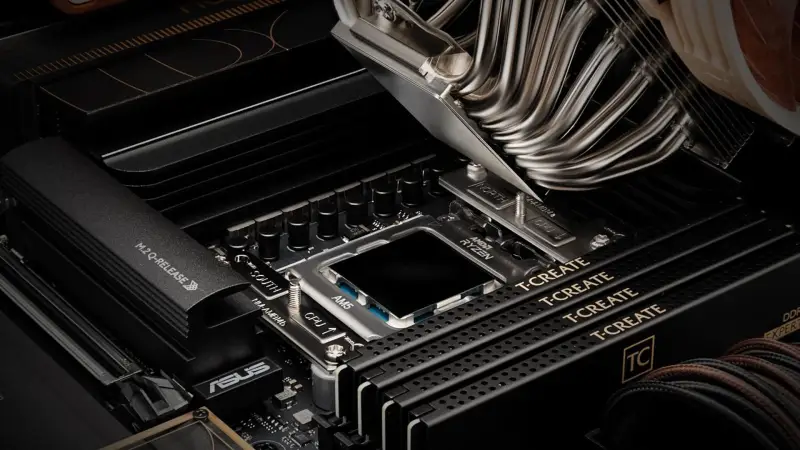
Noctua has started selling the NT-CP1 AM5/4, a thermal pad built on Carbice's vertically aligned carbon nanotube technology, for AMD AM4 and AM5 processors. The pad costs $24.95 in the US and €24.95 in Europe, and it's the first consumer product from the partnership between the two companies, which Noctua announced in June 2026. The pitch is simple: a pad that gets better with use instead of worse, and then stays put.
Why this matters for anyone who builds PCs
Most thermal interface materials have the same problem. Thermal paste and standard pads are only as good as the day you install them. Over months and years, pump-out pushes material away from the die, delamination separates layers, and cracking opens air gaps. Each of these failure modes raises the thermal resistance between the CPU's integrated heat spreader and the cooler, and the processor runs hotter for the same workload. Enthusiasts usually respond by reapplying paste on a schedule, which is a chore most people skip.
Noctua's claim is that the NT-CP1 reverses that curve. According to the company, the carbon nanotubes gradually conform to microscopic irregularities on the IHS over hundreds to thousands of thermal cycles. Heat transfer improves during this initial activation period rather than declining, and once activation is complete, the pad should keep stable performance for years without maintenance. For a user who would rather install a component once and forget about it, that's the selling point.
What's inside the pad
Conventional carbon and graphite pads have a reputation for being brittle, slippery during installation, and electrically conductive, which makes them awkward to use near a socket. Noctua's design tries to address each of those issues. The core is an aluminum backbone sandwiched between layers of carbon nanotubes. The exposed surfaces carry a nanoscale polymer coating, which the company says makes the pad tougher to handle and less likely to shift while it's being seated.
That coating does double duty. It adds a slight tack that helps hold the pad in place, and it provides electrical insulation, but only while the polymer layer stays intact. That caveat matters. A scratched or damaged coating could reintroduce the conductivity risk the design was meant to avoid, so builders will want to handle the pad carefully and avoid dragging it across the socket area or other exposed contacts. The recommended installation is a peel, press, and peel sequence, which removes the protective films in steps and leaves the pad seated on the IHS.
The physical specs are straightforward. The pad is 90µm thick and comes precut to 33x33mm, sized to cover the IHS on both AM4 and AM5 sockets. Thickness is a meaningful number here. A thinner pad generally means less bulk resistance, but it also needs to be compliant enough to fill the gaps between the die and the cooler base. Noctua hasn't published comparative thermal data alongside this launch, so the real-world value of the thin profile will depend on how the pad performs against paste and conventional pads under the same cooler and mounting pressure.
Manufacturing and recyclability
Noctua also points to how the pad is made. The company says it's produced in the US, using recycled aluminum for the backbone and waste carbon gas as the feedstock for growing the nanotubes. It claims that this process is more energy-efficient than the methods used for conventional graphite and graphene pads. Because the core is aluminum, the company says the pad can go through standard aluminum recycling channels at end of life, which is a practical advantage over composite products that are hard to separate.
Those claims are the manufacturer's, and independent energy or lifecycle figures weren't part of the announcement. Still, sourcing and end-of-life considerations increasingly show up in buying decisions for hardware that users keep for years, so they're worth noting even before third-party verification arrives.
What to watch
The interesting question is whether the activation curve holds up across different coolers, mounting pressures, and CPU lineups. Thermal pads that rely on conformance depend on the contact pressure the cooler applies, and that varies widely between tower coolers, AIO pumps, and budget mounting brackets. Long-term testing from independent reviewers, measuring temperatures over months rather than a single benchmark run, will show whether the claimed improvement during activation and the stability afterward hold in practice.
There's also the price. At $24.95, the NT-CP1 costs considerably more than a tube of paste, so the value case rests on the promise of never reapplying it. For a user who enjoys tinkering with thermal paste every year or two, that math won't work. For someone who wants to build a machine and not revisit its cooling setup, it might. Here's the thing: the pad's appeal depends less on peak numbers and more on whether that consistency survives a few years of real use. That's the claim worth testing, and it's the one to watch as reviewers get their hands on the product.