Idle Cannabis Grow Rooms Eye a Second Life as AI Data Center Sites
Falling cannabis prices are pushing some growers to repurpose power-rich facilities as small AI data center nodes. The economics are promising but far from guaranteed.
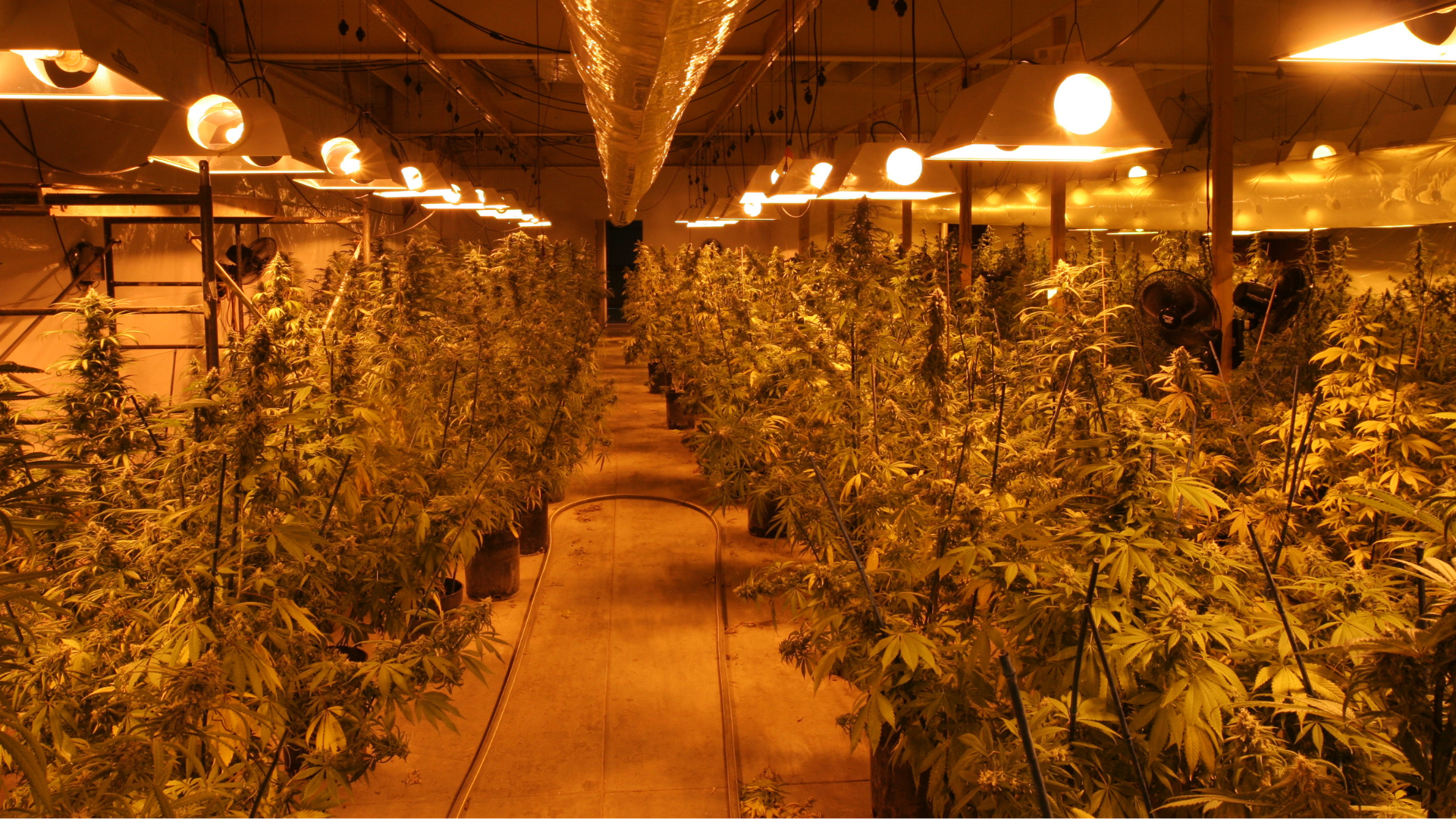
Cannabis growers are running into a problem that has nothing to do with the plant itself. Sales peaked in 2024, according to reporting from Arizona Public Media, and oversupply has pushed prices down while competition, operating costs and taxes keep climbing. Some operators are now looking at their buildings differently. Instead of selling grow rooms to the next cultivator, they're asking whether those facilities could host computing hardware for AI workloads.
Why grow facilities look like data center real estate
On paper, the match is better than it sounds. Indoor cannabis cultivation is one of the more power-hungry agricultural businesses around, running high-output lighting, dehumidification and climate control around the clock. That means many facilities already have electrical service and cooling infrastructure that would take a new build years to secure. Water access, which is getting harder to find near major population centers, is another asset that's already in place.
Power is the resource that matters most here, and it's scarce. Grid connections for large loads can take years to approve, so a building that already has capacity is worth more than its previous use suggests. That's the core logic behind what's being called "adaptive reuse."
Forbes examined a 32,850-square-foot cannabis facility in Kalamazoo, Michigan, that is currently wired for 1.5 megawatts. According to that reporting, the site can be expanded to 2.5 megawatts in under a year and to 15 megawatts over the long term. It also has fiber internet service and a modern HVAC system. Those details, more than the square footage, are what make a property like this attractive to someone planning a small facility. Forbes framed the Kalamazoo site as a test case for the broader idea, and it's a useful one.
The pitch to communities
Adaptive reuse also has a public relations advantage. Hyperscale campuses, the multi-hundred-megawatt sites that have become synonymous with the AI buildout, have drawn organized pushback in many areas over water use, noise and power demand. A smaller node in an existing building looks different to a neighbor who has been watching a cornfield turn into a server farm.
Tucson City Council member Paul Cunningham put it bluntly. "Data centers are dirty words, and everybody knows that. And no one wants to build a brand-new data center anywhere," he said. "But if we have buildings that were using that amount of water and that amount of energy already in their previous function and [it] can be done without being invasive, I'm OK with exploring that option." That's a reasonable framing, and it's one that could resonate in other cities facing the same debate.
Moe Asnani, a former owner of two Tucson dispensaries who is leaving cultivation, is pitching the idea from a different angle. He told Arizona Public Media that these facilities "can potentially be repurposed to be mini data center nodes." He also described a philosophy of decentralization: smaller nodes where people control their own data and aren't "at the mercy of other people's updates and things like that." Whether that vision survives contact with the economics of AI infrastructure is an open question, but it shows that some of the interest comes from people who see the buildings as a way out of a shrinking business.
Where the economics get harder
This is where the story gets less tidy. Niki Krear, vice president of acquisitions at real estate investment trust New Lake Capital Partners, described the target profile for data center operators as a narrow sweet spot. "It's a combination of finding affordable power, dense fiber networks, and favorable tax policies," Krear told MJBizDaily. A cannabis facility might check the fiber and cooling boxes and still fall short on the others.
Power is the sticking point. Even though many grow facilities already have above-average electrical capacity, data centers often need two to three times as much. Upgrades to a site's electrical service can take as long as five years, which undercuts the speed advantage that makes these buildings appealing in the first place. Someone buying a struggling grow to get compute online quickly needs to know whether the utility work is already underway.
Local zoning is another hurdle. Operators looking at smaller sites may still face neighbor opposition, zoning restrictions and moratoriums, and the paperwork can be as slow as it is for a new build. Scale matters too. A facility with a few megawatts doesn't get the purchasing advantages a large campus does, and that gap can make the per-unit cost of equipment higher.
The hardware clock
The timing creates a separate problem. AMD has claimed its 2026 rack-scale AI solution is four times more energy efficient than its 2024 platform, and chipmakers are pushing efficiency gains on a steady cadence. Newer accelerators tend to do more work per watt, which is good for the power budget in principle. But it also means operators must refresh hardware frequently to stay competitive, and they have to decide what to do with the equipment they're replacing. Some of that older gear is already being resold in bulk, which shows how quickly the secondhand market moves.
A small node that has to upgrade often, buy in small lots and absorb higher unit costs is in a tough spot. Large operators can negotiate volume discounts that a few-megawatt site simply can't match. The cannabis facility might solve the power and permitting problem and still lose on hardware economics.
What to watch
My read is that the conversion idea will be real but narrow. Growers facing bad margins have a genuine asset in buildings with power, water and cooling already in place, and some of them will find a buyer.
That said, the pressure is real. As hyperscale projects face more resistance, smaller footprints in existing buildings become more attractive to operators who need capacity quickly. Watch whether any of these conversions reach energization, how long the utility upgrades actually take, and whether the decentralized-node model draws real customers or stays a pitch. Those three answers will tell us more than the square footage ever could.