Nvidia Without Jensen Huang: What His Exit Means for Chips, Anthropic and Open-Source AI
Jensen Huang's resignation as Nvidia CEO raises questions about chip demand, Anthropic's IPO valuation and the open-source AI community's main industry ally.
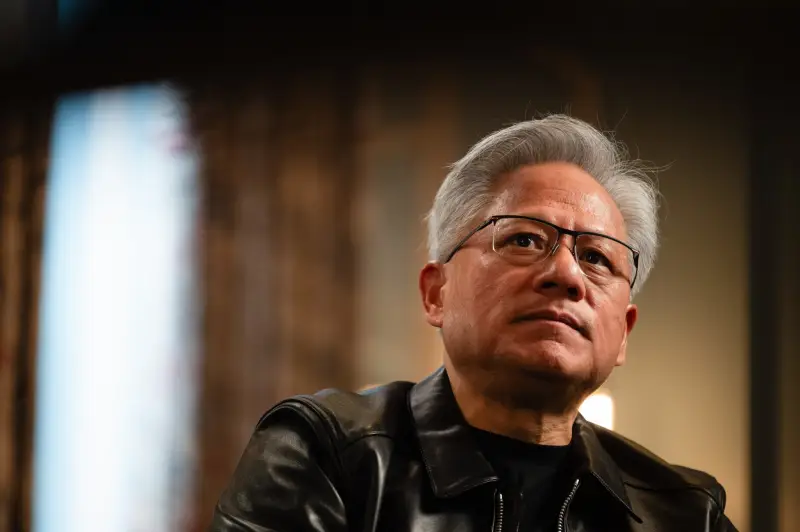
Jensen Huang's abrupt resignation as Nvidia CEO may be the biggest AI story since ChatGPT launched almost exactly four years ago. The reason isn't just the speed of the fall. Huang built Nvidia into the company that supplies much of the hardware the industry runs on, and his departure lands on the industry at a moment when investors were already pricing in a great deal of optimism.
Who's running Nvidia now
Nvidia CFO Colette Kress and Harvey Jones, the company's first-ever board chair, are now in charge. Jones is expected to lead the search for a permanent CEO, and that search is already underway. The next chief executive inherits a rare position: the job of replacing a founder who was the public face of the company for decades, at a time when the company's chips sit at the center of the AI buildout.
The personal conduct behind the decision
The cause is personal, and it's been reported in detail. Reuters has reported that Huang had relationships with multiple people, at least three by its count, and the allegations go beyond the personal. Huang is also accused of possibly being complicit in routing chips to China through Megaspeed, a shell company run by one of the people he was involved with. Those claims are serious, and they're still developing. What's clear is that his family, including his wife of 41 years, Lori, and their two children, both of whom work at Nvidia, is now dealing with the fallout in public.
Reaction has been harsh. Martin Casado, an investor at a16z, called it a "dark, dark day." Penny Herscher, a longtime semiconductor executive, put it this way: "It's sad for his family, for the employees, for the customers. Jensen's a remarkable person, and it's sad to see such a remarkable person in this horrible situation—self-inflicted, but horrible." One Nvidia employee posted publicly that they were "extremely sad today as I see Nvidia without Jensen Huang," and several colleagues have echoed the sentiment.
Why the open-source community is worried
Huang's exit also changes the politics of the open-model debate. He had been one of the most prominent voices opposing tighter limits on open models, and that community has lost its most visible industry champion. Clement Delangue, CEO of Hugging Face, which Nvidia acquired for nearly $13 billion in September, said the situation "sucks" and that he wished none of it had happened. He also said Hugging Face will "keep fighting for open-source AI, harder than ever." Expect open-source advocates to press that argument more loudly now that the most powerful figure on the hardware side is gone.
The Anthropic question
Rumors have started to circulate that Anthropic CEO Dario Amodei orchestrated Huang's downfall. There's no evidence for that, and the timing argues against it: Anthropic had every reason to wait until after its IPO if it wanted to move against Nvidia's leadership. Amodei has warned that open models could be misused for serious harm and has favored industry-wide slowdowns, so the theory fits a narrative people already have. It doesn't fit the facts we have.
The more concrete issue is valuation. Anthropic's IPO demand had been poised to exceed expectations before the Nvidia news broke. Jonathan Tower, managing partner at the VC firm Catapult, expects a 10–15% valuation haircut, potentially approaching 20% if Nvidia's leadership crisis raises doubts about its $10 billion anchor commitment. "Anthropic's underlying business hasn't changed overnight, but investor confidence has," he said. He expects the anchor to hold but says investors will want a bigger margin of safety. His larger question is whether this marks the start of a wider repricing of AI risk.
Where the market goes from here
The stock market's reaction is the biggest open question. Nvidia shares fell about 4% at the bell, a modest move for a shock of this size. That could mean investors are waiting for more information, or that they believe the core GPU business is strong enough to carry the company through a leadership gap. My read is that the market is pricing in the second possibility for now, but the first is what to watch over the coming weeks.
Some parts of the chip market could benefit. Nervous Nvidia customers may place larger orders with other suppliers, including Google, Amazon, AMD and Broadcom. That shift wouldn't happen overnight, since large AI buyers plan their hardware purchases well in advance, but it's the kind of change that shows up in supplier backlogs over several quarters.
The next CEO will face an unusual task: keeping the company's momentum while the industry works out how much of its confidence was tied to one person. And given the allegations, more leadership questions may still come up. This story is far from finished, and the people building on Nvidia's hardware will be watching the next few announcements closely.