Nebius Shares Fall 17% Despite Q3 Beat as Capex Plans Climb
Nebius beat Q3 revenue and profit estimates, but a steeper spending plan and a full-year forecast below consensus sent shares down 17%.
Nebius beat on the numbers that usually matter most in a quarter, and the stock still fell 17% on the day it reported. That gap says more about what investors are pricing in for the company's next two years than about the third quarter itself.
A beat on the quarter, a miss on the year
Nebius Holdings NV posted adjusted profit of $90.9 million, compared with an adjusted loss of $100.4 million a year earlier. That works out to adjusted earnings of 31 cents per share, against analyst expectations of a loss of 69 cents. Revenue rose 517% year over year to $980.8 million, ahead of the $907.5 million consensus.
The trouble started with the outlook. Nebius now expects full-year revenue to land at the low end of its $3 billion to $3.4 billion target range. Analysts had penciled in $3.37 billion, so the guidance points to a result below the consensus even though the quarter came in strong. For 2027, the company is forecasting $12 billion to $13 billion in revenue.
The capital spending problem
My read is that the spending numbers did more damage than the revenue guidance. Nebius raised its full-year capital expenditure guidance to $27 billion, which CNBC reported is $4.15 billion above what Wall Street had expected. The company also plans to invest between $40 billion and $45 billion in data centers next year, a figure that cleared the consensus estimate by an even wider margin.
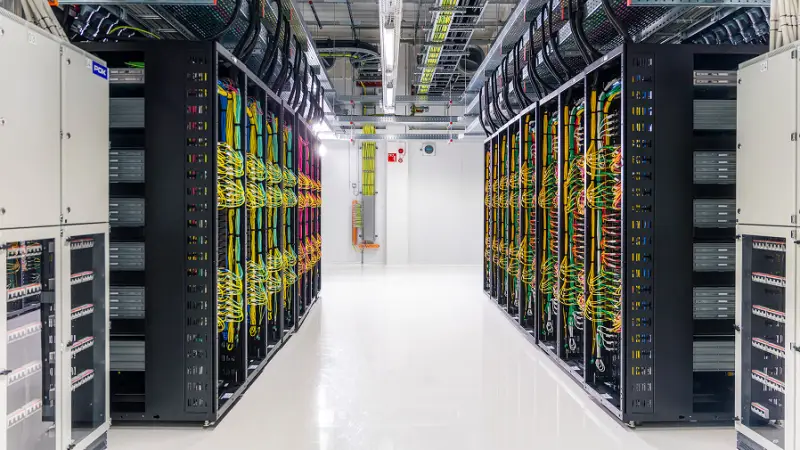
Those numbers reflect a strategic shift. Today, about 90% of Nebius's infrastructure sits in rented data centers. The next 2 gigawatts of computing capacity it plans to bring online will be mostly powered by facilities the company operates itself. Owning sites can improve control over cost, power and hardware deployment over time, but it front-loads capital and ties up cash long before the capacity earns revenue. Investors who had been comfortable with a leased-capacity model may be recalculating what the next phase costs.
Founder and CEO Arkady Volozh framed the spending as a long-term bet. "Our focus remains on building a healthy, profitable business for the long term," he said. "We will continue to invest across the business – in our capacity and infrastructure buildout, in our platform and products, and in the team that takes this to market."
Customer prepayments are doing the heavy lifting
The contract book is what makes the spending plausible. Nebius signed $12 billion in contracts during the three months ended Sept. 30, including multiyear deals with Snowflake Inc. and Databricks Inc. Customers' prepayments are a meaningful source of funding for these data center projects. The company says prepayments received in the third quarter exceeded its capital expenditures in that period.
Here's the thing, though: the company expects the ratio of prepayments to capital expenditures to shrink as its data center buildout accelerates. That's a normal consequence of spending more, but it means the cushion that made this quarter look well funded will thin. Investors may be asking how much of the next phase depends on continued large prepayments and how much will need to come from outside funding. Nebius hasn't set out that split in the material cited here, so that question stays open.
Where the growth is coming from
The Token Factory service, which runs open-source AI models for post-training and inference, is one of the clearer growth stories in the report. It launched a year ago and is approaching a "multi-hundred-million-dollar run rate," according to the company. Contract value grew 17-fold quarter over quarter, which is the kind of figure that signals demand from developers, though a fast-growing base off a small starting point should be read with that context in mind.
Token Factory also gives Nebius a software layer above raw compute. Services like this tend to carry different margins and customer retention profiles than capacity leasing, and they can make an AI cloud less dependent on any single large training customer. Whether that offsets the capital intensity of the infrastructure side is the question the next few quarters should answer.
What to watch next
The useful signals from here are less about the next earnings headline and more about the mechanics. Watch whether revenue tracks toward the top of the $12 billion to $13 billion range for 2027 as capacity comes online. Watch the prepayment ratio, since it indicates how much the buildout depends on customers paying ahead. And watch utilization of the self-operated sites once they go live, because owned capacity only improves economics if it fills.
For developers and decision-makers evaluating Nebius, the quarter shows a company growing fast and reaching profitability on an adjusted basis, while betting heavily that demand for its capacity will keep pace with an expensive expansion. The market's 17% reaction suggests investors want more evidence that the math works at the scale the company now describes.


