Jensen Huang Steps Down at Nvidia Amid Espionage and Personal Conduct Allegations
Jensen Huang has resigned as Nvidia's CEO. Colette Kress is interim CEO while the board searches for a permanent successor.
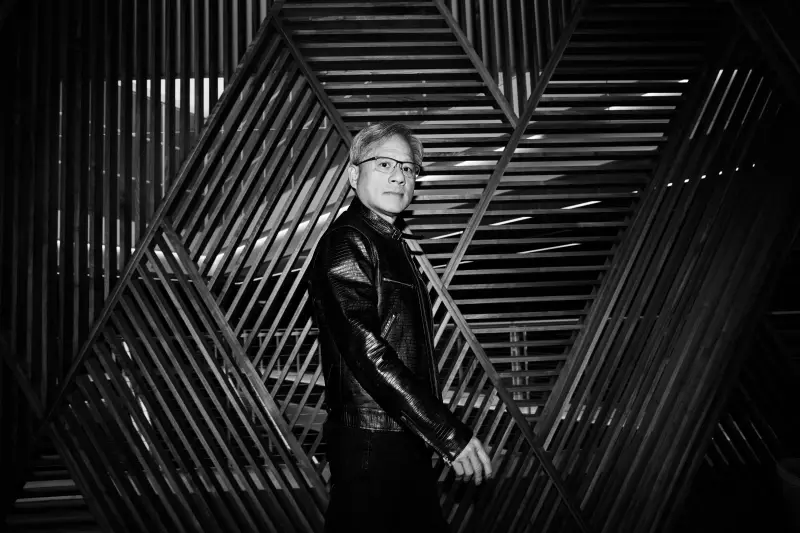
Jensen Huang stepped down as Nvidia's president, chief executive and board member on Thursday, effective immediately. The move came four days after the company announced an internal investigation into a relationship Huang had with Alice Huang, who has no known family connection to him and who has been described as an alleged asset of China's Ministry of State Security. Colette Kress, Nvidia's CFO, takes over as interim CEO while the board considers internal and external candidates for the permanent role.
The espionage story isn't the whole story
The spy allegations drew the most attention, but they may not have been the decisive factor. A source familiar with the board's deliberations told WIRED that a separate allegation probably weighed more heavily. On November 11, The New York Times reported that Huang also allegedly had a relationship with a direct report at Nvidia. That claim, along with Huang's business dealings with Megaspeed, a Singapore-based AI company where Alice Huang previously held a senior position, is what the source believes mattered most.
That ordering matters for anyone trying to read the decision. An intelligence concern involving a senior executive is a security and reputational problem that a board can respond to in several ways. A reported relationship with a subordinate, combined with commercial ties to a company linked to the same individual, creates governance questions that boards typically have to answer directly. Here's the thing: the board's choice to remove the CEO outright, effective immediately, suggests it saw no workable middle path.
How the timeline unfolded
The sequence moved quickly. On October 29, The New York Times reported that Huang had been the target of a Chinese intelligence operation facilitated through his relationship with Alice Huang. The pair had been seen together in public at least twice, in June 2024 and May 2025. The board announced its investigation on November 8.
On November 6, The New York Times and Financial Times reported that Alice Huang was a spy for China's Ministry of State Security, recruited to collect information on the Nvidia executive. Beijing has rejected all claims that she worked for the country. US intelligence officials reportedly briefed President Donald Trump on the relationship last year, but he didn't act on the briefing.
Huang sent a company-wide email on Sunday acknowledging the affair, apologizing to his family and Nvidia employees, and pledging to cooperate with the internal investigation. He has been married to Lori Huang since 1985, and both of their children work at the company.
A crisis PR firm and the Megaspeed question
WIRED reported on Monday that Huang began working with a crisis PR firm last year to manage his personal communications. Starting in October 2025, those consultants were looped in on all press inquiries involving him, whether personal or professional.
The timing lines up with a New York Times report from that month that the US Commerce Department was investigating whether Megaspeed was helping Chinese companies get around American export controls through a large network of subsidiaries. That investigation was reportedly halted and transferred to the Justice Department after Nvidia general counsel Tim Teter asked about it. None of these threads has been resolved in public reporting, and it's worth keeping them separate. A PR firm's role, a commercial relationship and an alleged intelligence operation are different questions.
Export controls, Trump and Nvidia's China strategy
Huang has been a persistent critic of export controls. He has argued they unnecessarily constrain the market for American chips, split the world into separate Chinese and American tech ecosystems, and push China to build competitive chips of its own. He also worked to build a relationship with Trump to advocate for policies that favor Nvidia, including opening its markets to China. That history gives the leadership change a strategic dimension beyond personal conduct. The person who made the case in Washington for a looser China posture is no longer in the role.
From gaming chips to the center of AI
Huang cofounded Nvidia in 1993 with Chris Malachowsky and Curtis Priem. The founders reportedly sketched their plans in a Denny's diner, aiming to bring realistic 3D graphics to personal computers. For its first few decades, Nvidia was best known among gamers for chips that rendered demanding in-game graphics.
The company's trajectory changed in 2012, when AlexNet, a neural network developed by Alex Krizhevsky, Ilya Sutskever and Geoffrey Hinton, won a high-profile computer vision prize. Nvidia shifted its focus toward chips for AI workloads. Huang has repeatedly described AlexNet as a "Big Bang"-like event for computing. Because its GPUs proved effective at training and running large models, Nvidia's share value soared in 2023 and 2024. In the summer of 2025, Nvidia became the first company to cross $4 trillion in market value. As of September 2026, the company controlled about 90 percent of the GPU market.
What the succession question really asks
My read is that the central question isn't simply who replaces Huang. Nvidia's position rests on its hardware, but also on CUDA, the software layer that keeps developers building on its chips, and on a leadership style that the company's own history ties closely to Huang: fast-moving, controlling, charismatic and often bombastic. Whether that style can be replicated, or whether Nvidia's strategy becomes more distributed across its leadership, will be visible over the coming months.
Several threads are worth watching. The search for a permanent CEO will reveal how the board weighs internal candidates against outside ones. Kress's interim tenure will show how the company handles operations and investor expectations during the transition. And the Megaspeed inquiry, the China strategy and the export-control debate will test whether the company's public posture on China changes without the executive who shaped it.