Louis Rossmann Says Repair Is Really About Ownership
Louis Rossmann argues repair is a symptom of a bigger loss of ownership, from locked firmware to subscriptions, and wants durable legal change.
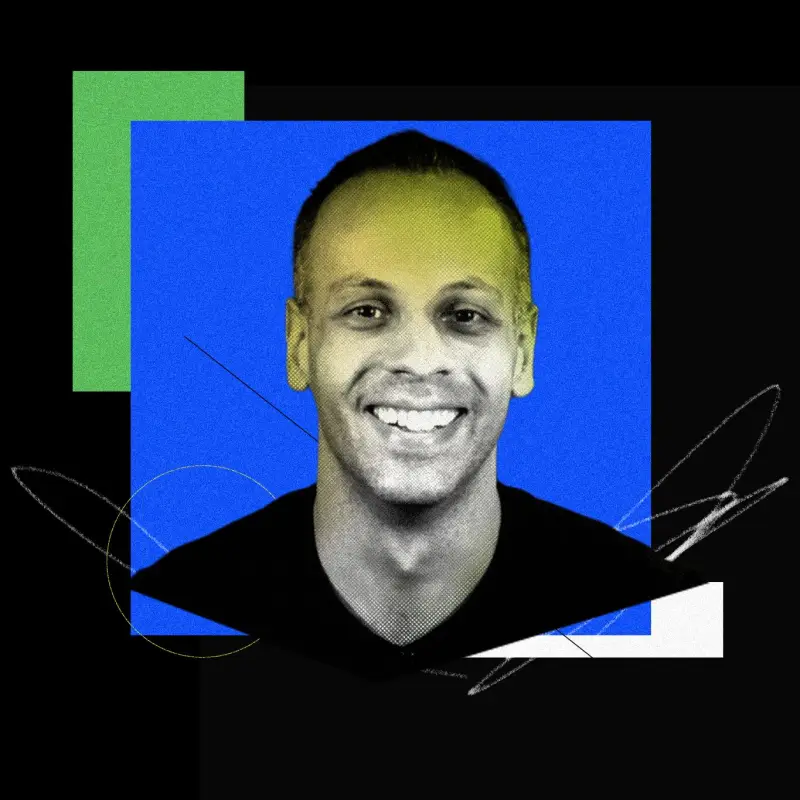
Most right-to-repair coverage starts with a dead phone or a tractor stuck at the dealership. Louis Rossmann, a repair technician and YouTuber who spent years fixing Apple hardware, thinks that framing undersells the problem. In his view, repair is one visible symptom of something larger: a steady erosion of what it means to own a product. Once you see it that way, the fight looks less like a niche consumer complaint and more like a question about how hardware, software and copyright law fit together.
I talked with Rossmann about that bigger picture, along with the mechanics of the law he wants changed, the bounties he's offering for reviving locked devices, and what happens when AI tools make it easier to tear those locks off. His answers were blunt, and some of them cut against the usual talking points on both sides.
Ownership is the real issue
Rossmann's core argument is that the right to fix a device is only one piece of ownership. The others are harder to see. Many modern products need a connection to a manufacturer's server to function, which means the company can switch them off at any time. Features that were included at purchase can be moved behind a paywall. And a product's usefulness can change after the sale, even when the hardware hasn't changed at all.
His favorite example is a thermostat maker that went bankrupt and then pushed a firmware update that cost customers $117 a year to keep some of the functionality they'd had before. The device didn't have a built-in expiration date. The business model changed after the sale, and the customer's device changed with it. Rossmann's point is that this isn't a bug in one company's plan. It's a logical outcome of products that depend on software the owner can't modify.
He describes the trend as something that has been building for 10 to 20 years, with everything drifting toward subscriptions and server dependence. Repair restrictions, in his telling, are simply the easiest part of that trend to measure. A locked battery or a parts pairing check is concrete. A firmware update that quietly removes a feature is harder to argue against in a room full of people who don't follow tech closely.
My read is that this framing is why the movement is growing beyond phone enthusiasts. A farmer who can't diagnose a tractor, a homeowner whose appliance needs a cloud login, and a gamer who can't resell a console all run into the same underlying design choice, even if their specific complaints look different.
How a small Apple shop became a national issue
Rossmann's perspective started narrow. His shop worked mostly on Apple devices, and he was focused on the repairs he understood thoroughly. He assumed the problem affected only people in his position. That changed around 2017, when he went to a legislative hearing in Nebraska and found himself in a room full of farmers describing their problems with tractors. He recalls asking where the right-to-repair discussion was, and being told that this was the right-to-repair room and that everyone there had the same problem.
That experience widened his lens. Farmers have been among the most organized voices on this issue, and their struggle with John Deere has become a central example of how repair restrictions affect people whose livelihoods depend on machinery running during a narrow planting or harvest window. Rossmann says many of the farmers he talks with still depend on workarounds. They use cracked software to run diagnostics and make repairs themselves, rather than waiting for a dealer.
He's also skeptical of corporate promises. He points to Samsung, which launched an independent repair program that made screens and batteries available. The catch was that the battery was glued to the screen, so buying one meant buying both. A battery that costs $200 to $250 is hard to justify for a phone that's worth about $200 when it works. Rossmann's shorthand for this pattern is simple: the headline says a company supports repair, but the details are surface-level.
The Apple angle has its own history. In 2018, CBC News ran a piece on the company's repair practices. Rossmann recalls the producer's original idea was to show Apple being unhelpful about upgrades. He suggested a different approach: take a broken machine to Apple, record the response, then bring it to him and record his. He says the diagnosis he found was a bent pin in a screen cable, likely the result of someone forcing the cable into place during an earlier repair. A short shorted connection had knocked out the backlight. He bent the pin back with a pair of tweezers, and the screen worked. The segment reached a national audience, and Rossmann says that was when he realized how much the public would respond to a concrete story about a fix.
His broader turning point came in 2016, when Apple asked him to remove a video showing how to repair a MacBook Air that had liquid damage around the trackpad. The fix involved a zero-ohm resistor, which functions like a sacrificial fuse that blows to protect the rest of the board. Rossmann refused to take the video down and told the company to file a claim under the Digital Millennium Copyright Act if it wanted the video gone. That exchange drew attention, and it led him to start a nonprofit to push the cause in a more organized way.
Repair is not the same as doing it yourself
A lot of people hear "right to repair" and assume it means they're expected to crack open a laptop and reflow a chip. Rossmann pushes back on that. The right to repair, as he defines it, means you can fix something yourself, send it to the manufacturer, hand it to an independent shop, or buy a replacement. Choosing not to fix it is a legitimate outcome too.
He's candid about his own habits. Most of the broken devices in his house don't get repaired. He buys new ones, because after 12 to 15 hours a day fixing other people's equipment, he doesn't have the energy left for his own. The wall of laptops behind him is, by his own account, a testament to that.
His air conditioner story shows the range of options he thinks should exist. When the unit failed, he tried to hire a technician who stopped responding after three attempts to schedule. The manufacturer's answer was that it doesn't repair these units and could sell him a new one for $10,000. The unit itself cost about $2,500. Rossmann opened it up and found the contactor, a relay that switches the high-voltage supply to the compressor when the thermostat calls for cooling, filled with fire ants. He cleared them out with compressed air and got it running again. The unit was old enough that he could find its schematics online, and buying parts was straightforward.
That, he argues, is the real ask. Most people aren't demanding that everyone become a motherboard technician. They want qualified people to be able to do the work, and they want the parts and documentation to be available. Rossmann says he'll never shame anyone for paying a professional or buying a new device. He's pushing for choice, not an obligation.
Why parts access is the sticking point
Companies often justify restrictions on quality control. If they let outside parties use unauthorized components, they can't guarantee the device will perform to their standards, and they worry that tinkering could break things. Rossmann's response is practical. If quality is the concern, he asks, why does his shop have a better rating on Google Maps than every single Apple Store in the country? He doesn't think ratings settle the question, but he thinks the argument is weaker than companies make it sound.
He describes an experience that illustrates the restriction. When he tried to buy a chip from an electronics distributor, he was told he wasn't on the approved list and couldn't be sold to. He says this is where right-to-repair legislation would matter: it would make it illegal to block a qualified buyer from purchasing a part simply because the manufacturer prefers that buyers go through its own channel. In his view, the request is narrow. Buy the same parts the device is built with, and make the documentation available.
What AI changes, and what it doesn't
The conversation turned to AI, which has made software modification far more accessible. People have described using Claude Code to strip bloatware and adware from smart TVs and to reshape other software they own. Tools like that also lower the barrier to finding guides and understanding how a system works. I asked whether that's part of the future of ownership: not just physical tinkering, but control over the software side of the devices people buy.
Rossmann says he loves the idea. Using AI to break digital locks and recover access to something a company has taken away is, for him, a strong use case. But he's skeptical about relying on frontier models that run on someone else's servers. A cloud-hosted model is a service the provider can change, restrict, or withdraw. He noted that guardrails are present in these tools, and that it's easy to imagine a future where companies tell AI providers to stop helping users get around their restrictions. He's experimented with the guardrails himself for fun, but he's clear that the risk is real.
His answer is local models, running on a laptop or other personal hardware, where the owner controls the system. He pointed to other countries developing models meant to run on your own machine, and said he's excited about what becomes possible when a capable model fits on a standard laptop. He doesn't expect that to happen in the next year or two, but he thinks it's coming. He also predicted that some workflows, such as recreating commercial design software with AI, could become harder over time if providers start blocking that kind of use. Whether that happens is an open question, and Rossmann is careful to present it as a concern rather than a forecast.
That's a useful distinction. Local inference doesn't automatically solve the ownership problem. A model can run locally and still be trained, licensed or distributed under terms that limit what you can do with it. But local models do remove one important form of leverage that a provider holds over a user, which is the ability to switch off a capability remotely.
Section 1201 and the case for durable legislation
Rossmann's most specific target is Section 1201 of the Digital Millennium Copyright Act. In plain terms, it makes it illegal to bypass a technical protection measure, a digital lock, to access a protected work, including when the purpose is repair. The law was written to address piracy. Rossmann argues that it was poorly designed for the world it was meant to regulate and is much worse suited to a world where washing machines, televisions and dryers connect to the internet.
His account of how the provision became law is pointed. In his telling, Congress repeatedly rejected the idea as too restrictive. The architect of the provision, Bruce Lehman, then pushed to have it negotiated into an international treaty. After the treaty was signed, he argued the United States had to pass a matching law to meet its obligations. Rossmann views that as a way around legislators who had said no. Treaty history is complicated, and reasonable people read it differently, but the practical result is clear: the anti-circumvention rules apply even when the person bypassing a lock owns the device.
His analogy is simple. You can't break into a neighbor's house, and you shouldn't be able to. But if you buy a house for $600,000 and find a locked closet inside, you should be able to open it, because you own the house. Under the current framework, he argues, that's a crime when the closet is software.
The consequences show up in everyday products. Rossmann says he could show his 79-year-old father how to pirate television, movies and music in under 10 minutes, using tools like SoulSeek or Usenet. His point is that these laws haven't stopped piracy in any meaningful way, but they have made it harder for people who want to follow the rules. If you legally buy a Blu-ray and want to rip it for a device you also own, the digital lock inside the disc is the obstacle. The lawful path, in practice, is to buy another copy formatted for the device you want.
Digital ownership adds another wrinkle. A Kindle book is typically licensed rather than owned in a technical sense. Rossmann points to cases where Amazon removed books from customers' Kindles after purchase, with little recourse. He thinks public intuition about what you've bought hasn't caught up with how software and copyright are structured.
On what comes next, he's clear about his preference. Right now, the exemptions that allow some repair-related circumvention have to be requested again every few years. Rossmann wants durable legislation that doesn't depend on repeated exemption requests. He's starting with repair because it's the most defensible case. If you want to fix what you bought and paid for, he argues, that shouldn't be a crime, and you should be able to teach others how to do it. He's explicit that this doesn't yet extend to ripping a Blu-ray for a portable player. The current ask is narrower: fix what you own.
Why the message is hard to sell
Rossmann doesn't pretend the issue has broad appeal yet. Repair and digital locks are abstract concepts, and they compete with issues people feel more immediately, such as the economy, cultural debates, immigration, COVID or policing. High gas prices, he notes, will get more attention than a firmware clause. His job, as he sees it, is to connect the acronym to something ordinary people care about, like a thermostat that stops working unless they pay a monthly fee.
He admits he hasn't succeeded fully in the 12 years he's been working on this. He thinks part of the problem is his own approach. He's spent years trying to win people over with the message "here's why you should care," and he now thinks that sounds like a lecture. Stories work better. A customer who learns they saved $1,800 on a phone repair, or gets their photos back from a dead drive, becomes invested in a way that a hashtag or bumper sticker rarely achieves.
That's also his reason for thinking the movement needs more examples of things that work. When the Apple repair videos went up, they gave people a concrete demonstration of what was possible, and Rossmann believes millions of people now have working laptops because of them. The lesson he takes from that is to show people a fix before asking them to care about a law.
Bounties, a 2 a.m. video and a Home Assistant fix
That philosophy led to a more unusual project. Rossmann launched a bounty program for people who can disable digital locks on products. The idea came from a video about Futurehome, a thermostat maker that went under and then pushed a firmware update that removed features. A former employee had sent him details about the company's decisions. Rossmann was editing the video at about 2 a.m. when he decided the piece wasn't enough. He offered $5,000 or $10,000 to anyone who could make the device work again.
He says it was a late-night impulse, but the logic was consistent with his earlier work. Back in 2013 and 2014, repair guides were scarce, and some manufacturers' schematics carried confidentiality warnings. Rossmann says he's been sued and has had to go to court, and he doesn't find that intimidating. He wanted to encourage more people to test these systems and say, out loud, that the restrictions weren't acceptable.
The bounty worked in a way he didn't fully anticipate. An employee at the company, who had seen the offer, emailed him a solution soon after. He said he would have done it for free, and he had built a Home Assistant integration that let people use the thermostat again. Rossmann treats that as proof of what he's trying to demonstrate: the problem is real, and people can work around it when they're motivated.
He's careful about what the bounty can and can't accomplish. It doesn't change the law. What it does is produce working examples to point to in discussions with legislators and the public, and it signals that the restrictions can be challenged in practice, not only in theory.
Hard ask, slow progress
Politics is where Rossmann's frustration shows most. Right-to-repair issues have gotten more attention recently, and he noted that some newly elected Democrats have spoken about them, including Josh Turek in Iowa and Jake Johnson in Minnesota. He sees that as encouraging. But he also expects the next session to be packed with competing priorities, and he doesn't believe repair should be ranked above everything else. He says he never tells people his issue matters more than theirs. People vote for what matters to them.
His strategy is to build a visible base of support so representatives can see that the issue helps them. That's the purpose of the FULU, or Freedom from Unethical Limitations on Users, Own Your Shit tour. The tour has visited 13 cities, and Rossmann says the goal in each stop is to bring people together and invite local representatives to engage. Former FTC commissioner Rohit Chopra spoke at one event in San Jose, which Rossmann described as a highlight.
He's less impressed with past federal action. He recalls a 2021 presidential directive that included right to repair, and says it produced little in practice. He's hoping this effort goes differently, but he doesn't assume it will. The pattern he sees is familiar: broad enthusiasm, limited follow-through, and a strong dependence on how many people keep showing up to press the issue.
What to watch next
My read is that the next phase of this movement will be decided less by slogans and more by three things. The first is whether durable legal changes, rather than repeated exemption requests, move forward. The second is whether more products, from thermostats to appliances to vehicles, shift toward server-dependent features that make ownership conditional. The third is whether local AI models become capable enough to give ordinary owners real control over the software on their devices.
Rossmann's own answer is that the path forward starts with something small and concrete. A repaired air conditioner, a restored thermostat, a recovered set of photos. Those stories make the abstract argument about ownership feel personal. For anyone building, buying or regulating connected hardware, the practical takeaway is straightforward: the question of who can fix, modify and keep running a product is becoming part of the product itself, and the companies that treat it that way are the ones most likely to face resistance later.