Cunk on Cinema Streaming: Where the Series Lands by Region
Cunk on Cinema streams on BBC iPlayer in the UK and Netflix in the US, Canada and Australia, covering film history to CGI and AI.
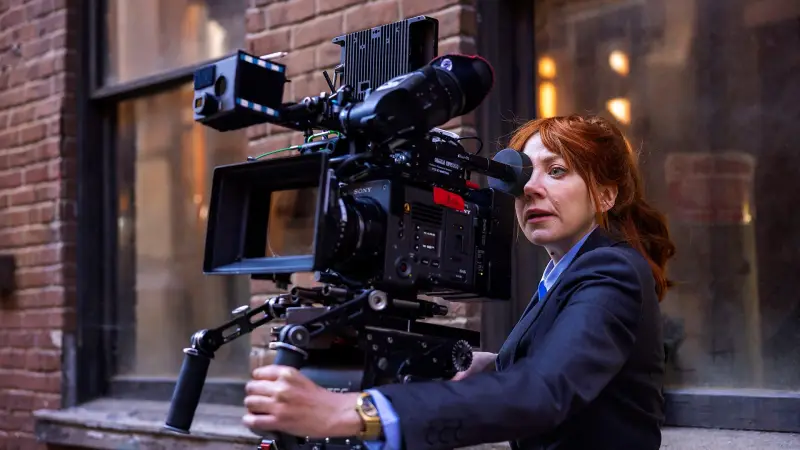
Diane Morgan's Philomena Cunk has never been short on confidence, and this three-part series gives her a whole medium to get wrong. Where you can watch it depends almost entirely on where you're sitting, so the first question is really a geography question.

Release dates and platforms
In the UK, all three episodes arrive on BBC iPlayer from Thursday, November 12. Viewers who prefer a linear schedule can catch the first episode on BBC Two at 10pm GMT that same evening, with the remaining two episodes following on November 19 and November 26.

Elsewhere the timing is different. Netflix carries Cunk on Cinema in the United States, Canada and Australia from November 15, a few days after the UK launch. Windowing like this is common. A broadcaster keeps rights in its home market and licenses the same show to a streaming platform elsewhere, so one title can sit on different services depending on the country and the day.

What free actually requires
Free comes with conditions. iPlayer requires an account registered with a UK postcode, and you need a valid TV Licence to use the service. Those two requirements are the real gate, not the price tag.

If you're traveling or living abroad, a VPN can change the location your connection appears to come from. That can help you reach services you already pay for or have access to at home. But a VPN doesn't change what a streaming service has agreed to offer you. Licensing rules differ by territory, plan and device, and the service's terms still apply whatever your connection looks like. Use a VPN only within those terms.

What the three episodes cover
The series has a loose but clear arc. Episode one follows Cunk from the invention of the camera through to Hollywood's early figures. It includes an interview with the writer of Die Hard and a deep dive into what The Wizard of Oz really means. Episode two turns to film censorship and how the medium has changed over time.
Episode three takes the show to Hollywood. Cunk puts questions to Benedict Cumberbatch, Michael Bay, Mark Kermode and others about CGI, AI and the modern film industry. That's the episode I'd watch with this audience in mind. AI appears here as a question topic inside a comedy format, not as a technical subject, and the source doesn't go into detail beyond naming it. Still, it's a useful signal of how mainstream culture is grouping generative tools with visual effects. Filmmakers and critics have been arguing over craft, credit and authorship in exactly these terms, and a deadpan interviewer asking the same questions makes them visible to a much wider audience.
Why the format works
The appeal of Cunk on Cinema is the contrast between confident delivery and shaky facts. Cunk asks questions that sound reasonable until you notice the premise is off, and the interview subjects end up having to answer on her terms. For viewers who already know film history, the jokes land harder because the underlying material is accurate enough to stand on its own. For everyone else, the show works as a light introduction to the medium's history and its arguments.
That's a model worth watching in other formats. Comedy-documentary hybrids have a way of picking up technical topics and making them accessible without flattening them, and AI is a subject where that kind of accessible framing is in short supply.
What to watch next
The practical takeaway is simple. In the UK, the full series is available at once on iPlayer, with the option of weekly broadcast on BBC Two. In the US, Canada and Australia, the wait is three days and the platform is Netflix. Check your region before you start, and remember that free access in the UK depends on a postcode and a licence.
The more interesting question is whether AI gets more than a passing joke in episode three. If it does, that would tell you something about how the mainstream conversation about generative tools in film is developing. Either way, the three episodes are short, and they're a reasonable place to see how one of the sharpest comedic voices on British television handles a medium she clearly takes seriously.