Channel 4's AI Documentary Follows Geoffrey Hinton's Growing Unease
Channel 4's two-hour AI documentary centres on Geoffrey Hinton and airs free in the UK on 12 November 2026. Here's what it covers and where else to find it.
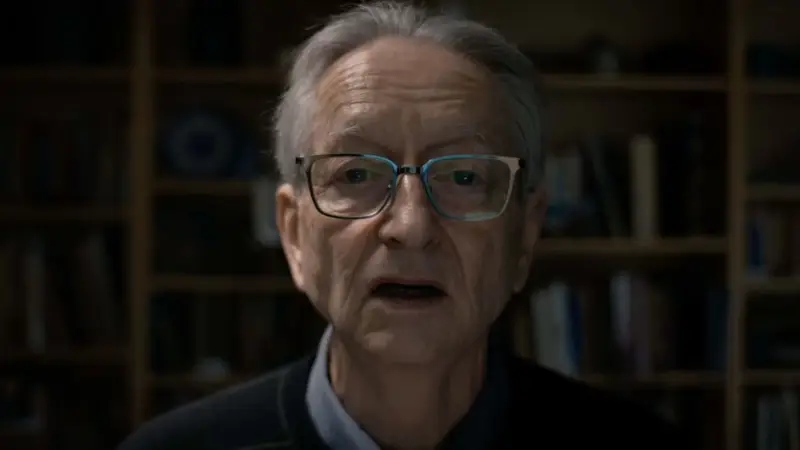
Most documentaries about artificial intelligence cast the technology as either miracle or menace. This one, AI: Probably Nothing to Worry About, builds its story around a more uncomfortable figure: the researcher who helped lay the groundwork for modern AI and now sounds troubled by it. That tension is the real hook here, and it's why the film is worth a look even if you've already sat through plenty of AI coverage.
What the documentary covers
Directed by Nick Holt, the two-hour film traces how AI got from academic curiosity to the force it is today, with a clear focus on Geoffrey Hinton, often called the godfather of AI. The source material describes his model beginning to learn on its own, which set off the technological wave we're now living through. The documentary treats that moment as the pivot point, and it spends much of its running time on what followed.
Two threads run through the film. The first is human impact: how these systems are changing work, daily life and the people who depend on them. The second is the corporate story, specifically how major companies have bought into the technology. The film names Demis Hassabis, Sam Altman and Elon Musk as figures at the centre of that push, which gives it a business-side counterweight to Hinton's personal reflections.
Here's the thing: Hinton is not presented as a bystander. The documentary frames him as someone who is deeply concerned about what he helped create, and that irony drives the narrative. A film that ends up sounding more like a warning than a victory lap is a different proposition from the usual product showcase, and it's a fair reading of what the material suggests.
Who appears in it
Beyond Hinton and Hassabis, the interview subjects include former OpenAI staff, Vitalik Buterin and Emad Mostaque. That mix matters. Researchers, company founders and people who have worked inside frontier labs each bring a different relationship to the technology, and documentaries that pull from all three tend to show where expert opinion diverges rather than presenting a single consensus.

On the production side, Nick Holt directs, with Zara Powell, Ben Brown, David Dugan, Mark Raphael and David Glover credited as producers. Barbara Broccoli, David Glover, David Dugan and Mark Raphael are listed as executive producers. Jack Brophy, Stefan Wiesen and Duane McClunie handle cinematography, Sarah Playford composed the score, and Ben Brown edited the film. The production companies are 72 Films, Windfall Films and FremantleMedia.
Watching in the UK

In the UK, the documentary airs free on Channel 4 on Thursday, 12 November 2026 at 10pm. If you miss the broadcast, it becomes available on Channel 4's streaming platform from the same day, so you don't need to catch the live slot.
Channel 4's streaming service is free to use, but you'll need an account tied to a valid UK postcode to sign in. That's the main hurdle for most UK viewers, and it's worth setting up before the premiere rather than at 10pm on the night.
Watching from outside the UK
For viewers abroad, the picture is less settled. The film has no US release date for television or streaming, and there are no announced plans for Canada or Australia either. It did screen at the Tribeca Film Festival earlier this year, so a wider release in other markets seems plausible, but nothing in the source confirms timing for any territory.

Until a release is confirmed, some people look to a VPN, which routes your connection through a server in another country so the streaming service sees a UK address. It's a common approach for travellers who want to access home services, but it has limits. Streaming platforms actively detect and block VPN traffic, results vary by service and device, and you should check the terms of whichever service you're using. Treat it as a workaround for accessing content you already have a right to watch, not a guaranteed route.

UK viewers travelling in Canada face the same situation: a VPN can connect to a home streaming account, but the usual caveats about blocking and terms apply.

For Australia, nothing in the source points to a release at this stage either. Like the others, it's a case of watching for announcements rather than planning around a known date.
Why this one is worth the two hours
AI documentaries have become a crowded category, and many lean on dramatic music and speculative graphics. What sets this film apart, based on its framing, is its attention to the people who built the technology and the doubts some of them now carry. For developers and technology decision-makers, the most useful part may be the gap between the builders' ambitions and their own unease, because that gap maps onto open questions the field still hasn't resolved: how fast capabilities are advancing, who controls them, and what safeguards are realistic.
My read is that the film works best as a conversation starter rather than a technical primer. It won't teach you how these models are trained, but it will show you how the people closest to the work talk about the trade-offs. If you're following the topic professionally, that perspective is worth having next to the benchmark numbers and product launches you already track. Keep an eye on the US and other markets too, since a wider release could arrive with little notice.