Nvidia's Board Weighs a CEO Succession as Allegations Against Jensen Huang Mount
Nvidia's board may meet November 11 to discuss Jensen Huang's future after reported relationships. A change would be the company's first CEO transition in 33 years.
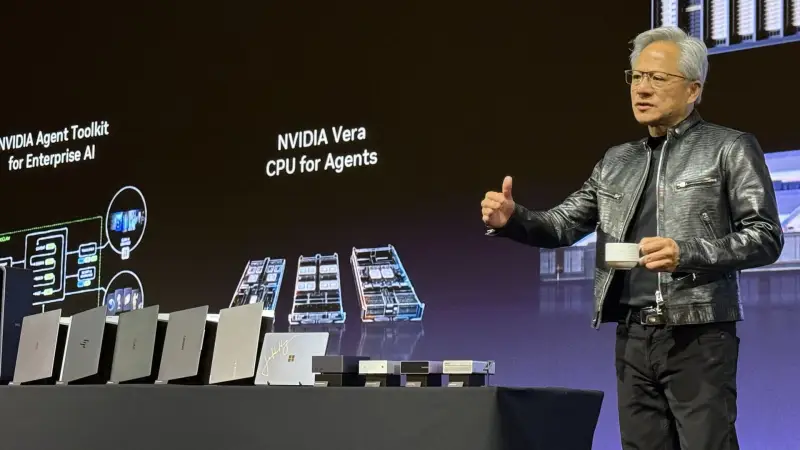
Nvidia's board is reportedly preparing to remove co-founder and CEO Jensen Huang, and the reasons have nothing to do with chip roadmaps or quarterly guidance. According to the Wall Street Journal, no final decision has been made. Still, directors could meet as early as November 11 to discuss his future, and the company's share price fell about 8% in after-hours trading after the reports surfaced. Whoever takes over would be Nvidia's second CEO in 33 years.
What has been reported
The WSJ report describes two alleged extramarital relationships. One reportedly involves Alice Huang, a Chinese businesswoman whom U.S. intelligence is said to believe is an asset of Chinese intelligence. The other reportedly involves an Nvidia executive. The New York Times later reported that the executive is Kimberly Powell, Nvidia's vice president of health care, who reports directly to Huang. Five people who worked at Nvidia told the paper the relationship was known internally, and Huang and Powell were reportedly seen together at a San Jose hotel during the company's GTC conference in March.
Nvidia's board launched an independent investigation on November 8. That detail matters more than the headlines do. A board that opens an outside-style inquiry is trying to establish facts before acting, and the findings will decide whether this stays a personal matter or becomes a governance one. Nothing reported so far establishes what the investigation will conclude.
Earlier on Sunday, directors publicly expressed confidence in Huang and his leadership team. The wording was careful, though. Expressing confidence in the team alongside the CEO is a familiar way for a board to signal that the position is no longer assured, even if it stops short of saying so.
Why succession is a hard problem for Nvidia
Huang has led Nvidia for its entire public-company history, and the company has never had to run a CEO search. That makes this less like a routine handoff and more like a test of depth. Nvidia's leadership bench is the question, and the reporting suggests the board does not see an obvious like-for-like successor.
Chief financial officer Colette Kress is the most immediate option. She could serve as interim CEO while the board searches for a permanent replacement. Whether a CFO-led interim period reassures investors is an open question, particularly for a company whose valuation has been tied so closely to one person's strategic vision. Investors often read a CFO in the top seat as a holding pattern, and a holding pattern at this stage of the AI hardware cycle carries real cost.
Co-founder Chris Malachowsky is also on the board and remains an Nvidia Fellow. He knows the company's technology, culture and history better than almost anyone. But he has not held an executive role at Nvidia for at least a decade, so while his institutional knowledge is valuable, he is unlikely to be the answer to a CEO search. A board could still lean on him for continuity or as an adviser during a transition.
The policy question underneath the personal one
Nvidia's code of conduct explicitly lists personal relationships as potential conflicts of interest and tells employees to consult the legal department when one arises. What it does not do, based on the reporting, is explicitly prohibit every relationship between a manager and a direct report. That gap is why whether Huang broke internal rules is still unclear.
The closest precedent is Intel. In June 2018, an internal investigation confirmed that then-CEO Brian Krzanich had a consensual relationship with an employee, which violated the company's non-fraternization policy for managers. Intel's rule was explicit, and the investigation confirmed the violation. Nvidia's document is less specific, which means the outcome here may depend on how the board reads its own conduct standards and whether it considers the reporting relationship a conflict in itself. Companies in this position typically find that the question of what the policy says matters less than the question of what leaders are expected to do when a policy is unclear.
The Intel comparison also shows how quickly these situations move once an investigation produces findings. Intel's board acted after its review concluded. Nvidia's review is still underway, and the timeline the board has discussed points to a decision within days or weeks rather than months.
What to watch next
Three things will tell you more than the next round of headlines. First, whether the board's investigation reaches a conclusion before the possible November 11 meeting, or whether directors decide to act on partial information. Second, how the board handles the interim period, especially whether it names an interim CEO or opens a broader search. Third, how the stock trades once the company's leadership is clearer. An 8% after-hours drop reflects uncertainty more than a verdict, and that uncertainty tends to narrow quickly once a board speaks.
For developers and enterprise buyers who rely on Nvidia's roadmap, the practical question is continuity. Product teams and customers generally care less about who sits in the corner office than about whether engineering priorities, supply commitments and software platforms stay on track through a transition. For now, the company's technology plans haven't changed, and the open question is who will set the direction next. That answer should become clearer once the board finishes its work.