Georgia Residents Sue Over OpenAI's Effingham County Data Center Under RICO
Residents allege county leaders and OpenAI conspired to advance a 3.2 GW data center in secret. The case tests how far civil racketeering law can reach into development deals.
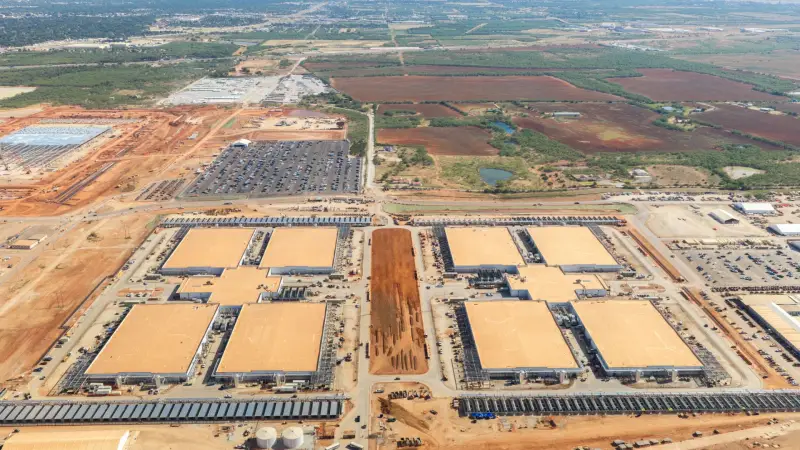
A group of Effingham County, Georgia residents has filed a civil racketeering lawsuit against county commissioners, county staff, and OpenAI and its affiliates. The plaintiffs allege a conspiracy to get OpenAI's "Project Camellia" approved. Dr. Michelle Finch-Mincey, Lehman Mincey Jr., and Raymond Carver are seeking damages, arguing the project has already hurt nearby property values. They point to purchase offers on nearby homes that dropped or were withdrawn after the data center was announced. These are allegations, not findings, but the case is worth watching because it puts the development process itself on trial.
What the plaintiffs are alleging
The complaint names all six Effingham County commissioners as defendants, including Chairperson Damon Rahn, Forrest Floyd, Roger Burdette, Jamie DeLoach, Elizabeth Helmly, and Phil Kieffer. County Manager Tim Callanan is also named, along with Effingham County Industrial Development Authority (IDA) CEO Brandt Herndon and the IDA itself. On the company side, the defendants include OpenAI, Octans GA LLC, which operates the facility on OpenAI's behalf, and Savannah Industrial Development LLC, the entity involved in selling IDA property to Octans and OpenAI.
The legal theories fall into a few buckets. The plaintiffs claim fraud and concealment, arguing that non-disclosure agreements and misleading public statements kept residents in the dark about what was being built. They also allege a civil conspiracy "to advance Project Camellia through confidential negotiations and closed-door decisions." Beyond that, the suit describes improper land transactions and zoning violations, and it invokes civil racketeering. The core grievance is sequencing: the plaintiffs say residents learned of key decisions only after land, tax incentives, and zoning approvals were effectively locked in and contracts were signed.
The project behind the suit
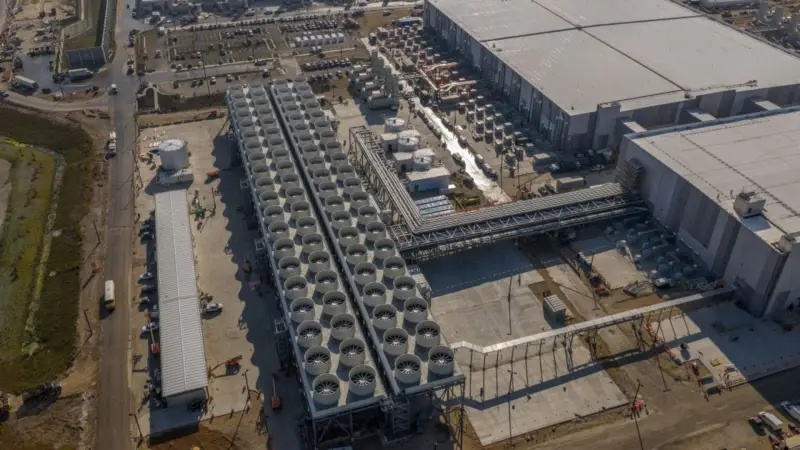
Project Camellia is one of OpenAI's largest planned data center projects, and the figures attached to it are substantial. The site is expected to cost between $20 billion and $30 billion and will be built in five phases. Planned compute capacity is 3.2 gigawatts. At that scale, the project would reshape local power and water planning in a way few county decisions ever have.
The developer has made specific commitments to address those concerns. It says the project won't raise the community's utility costs because it will pay the full cost of all required infrastructure upgrades. It also says water use will be minimal thanks to a closed-loop cooling system. Those promises are central to the public debate, and they're the kind of claims that can be tested over time through utility rate filings and water use reporting. Whether they hold will matter as much as the lawsuit's outcome. The dispute here isn't really about whether a data center can be built. It's about whether residents were given a meaningful say before the details were settled.
Why RICO, and why Georgia's version matters
The Racketeer Influenced and Corrupt Organizations Act was written to go after organized crime, especially Mafia structures in which leaders used layers of lower-level members to carry out the actual crimes. Georgia has its own RICO statute, and it's broader in practice than the federal version. That breadth explains why it has shown up in cases with little obvious connection to organized crime. Prosecutors used it in the 2023 racketeering case against Donald Trump and 18 others over efforts to overturn the 2020 results in Georgia. It was also central to Young Thug's trial, where the rapper was accused of running YSL Records as a criminal street gang.
Critics argue the statute reaches too far. Volkan Topalli, a Georgia State University professor of criminal justice and criminology, put it bluntly in Atlanta Magazine: "When you have a hammer, everything looks like a nail." His point is that a tool built for syndicates can become a pressure device against ordinary felony defendants. Applied to a land and zoning dispute, that critique cuts in a particular direction. A civil RICO claim against elected officials and a corporate developer would be a novel use of a statute that has been stretched before, and it's far from clear how a court would treat the link between zoning decisions and a pattern of racketeering activity.
A pattern, not a one-off
The lawsuit lands in a context where secrecy around data center deals is already drawing scrutiny. Developers and local officials have used non-disclosure agreements during negotiations. Developers say the agreements help them avoid running afoul of insider trading rules, since a publicly traded company can't freely discuss a pending project. Residents have countered that the need for that secrecy is hard to see. West Feliciana Parish in Louisiana, for instance, closed a data center deal without using NDAs.
Gilroy, California offers another example. An AWS data center there drew criticism after residents only learned what was being built once construction began. The project followed a five-year permitting process that relied on zoning rules written 45 years earlier, and the public comment window was narrow enough that many residents never had a real chance to weigh in. Effingham's situation shares that basic shape: a large project, a long development runway, and a community that feels it entered the conversation too late.
What to watch
For developers and the people who advise them, the practical lesson is that disclosure timing is now a risk factor. Projects at the gigawatt scale touch land use, power procurement, tax structure, and water, and each of those can become a legal hook if residents believe the process was closed. Teams in this position typically find that early, detailed public engagement costs less than defending a process after the fact, though the tradeoff depends heavily on each deal's confidentiality constraints.
The open questions are concrete. Will a court treat civil RICO as a viable framework for zoning and land disputes? How will claims about property values be measured if they reach the merits? And will the utility-cost and closed-loop water commitments be verifiable on the timelines that matter to residents? My read is that the answers will shape how data center developers approach county negotiations for years, regardless of how this particular case ends.