AMD EPYC Venice Brings Zen 6 With 27% Average IPC Gain Over Zen 5
AMD's first Zen 6 chips, EPYC Venice, show a 27% average IPC uplift over Zen 5 in data center workloads, built on TSMC's N2P node.
What changed inside the Zen 6 core
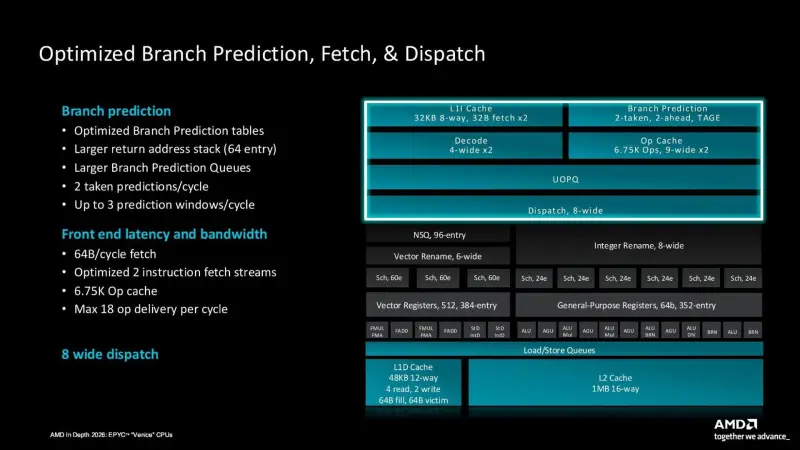
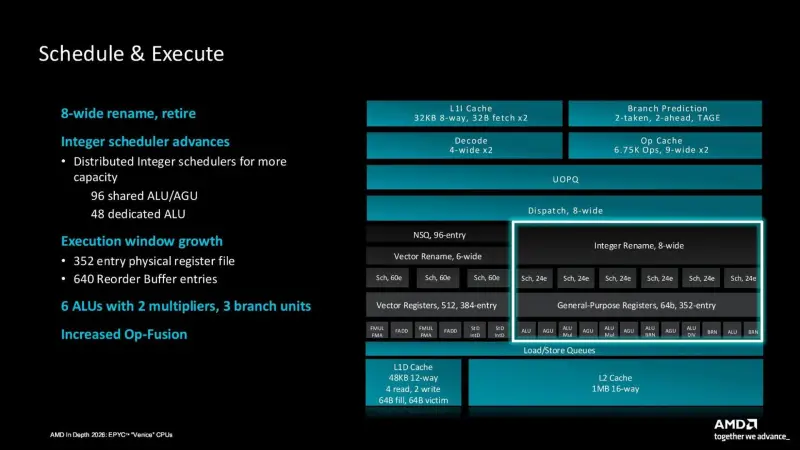
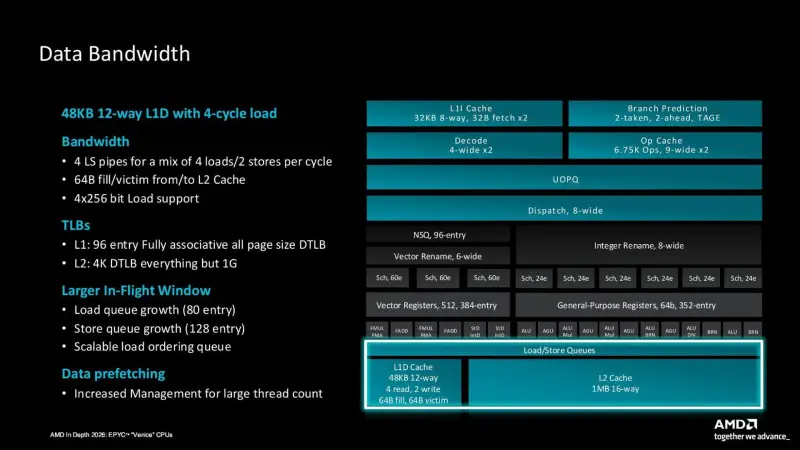
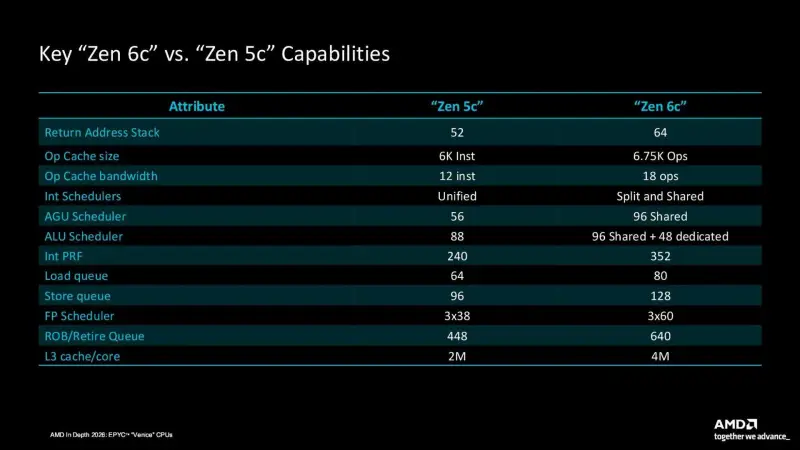
Zen 6 is built on TSMC's N2P node, but the more interesting changes are inside the core. The vector engine has been redesigned to push SIMD throughput higher, and it now handles half-precision FP16 instructions natively instead of converting them, alongside standard 32-bit precision. AMD has also split the integer schedulers in the execution engine, which lets more instructions be in flight at once. Zen 6 is neither a minor tweak to Zen 5 nor a full architectural reset. It's the same basic design with most of the dials turned up, and that's visible in the performance numbers.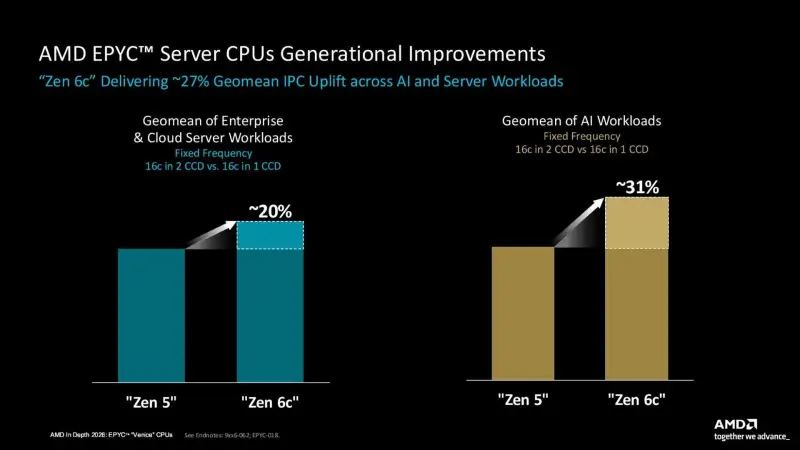
| Speed Improvement (v. N3E) | Power Improvement (v. N3E) | Density (v. N3E) | |
| TSMC N2P | +18% (iso-power) | -36% (iso-speed) | +15% |
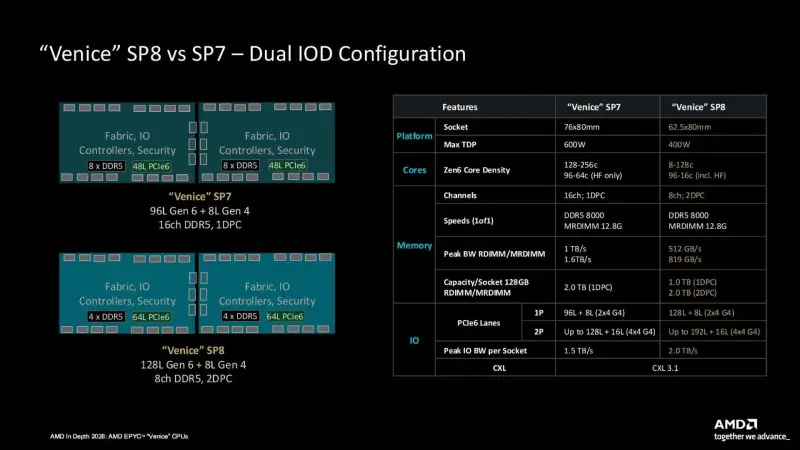
The CCD and platform: more cores, more memory, more I/O
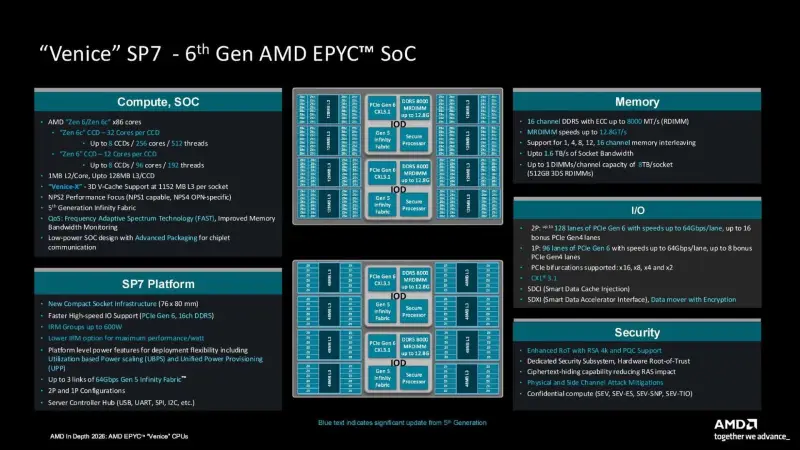
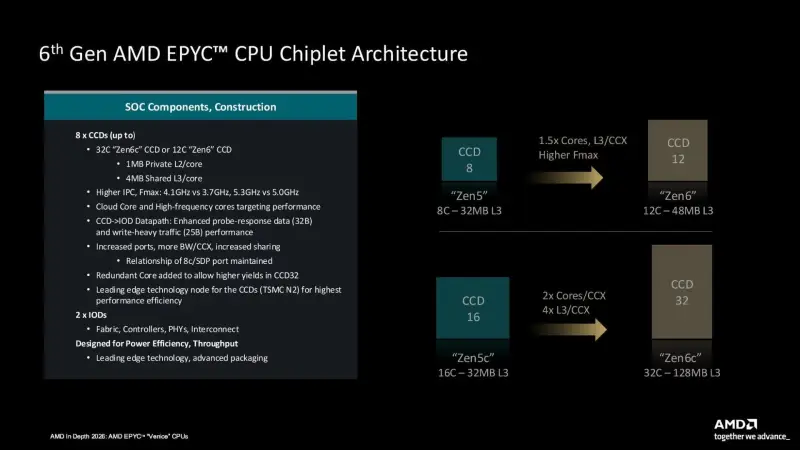
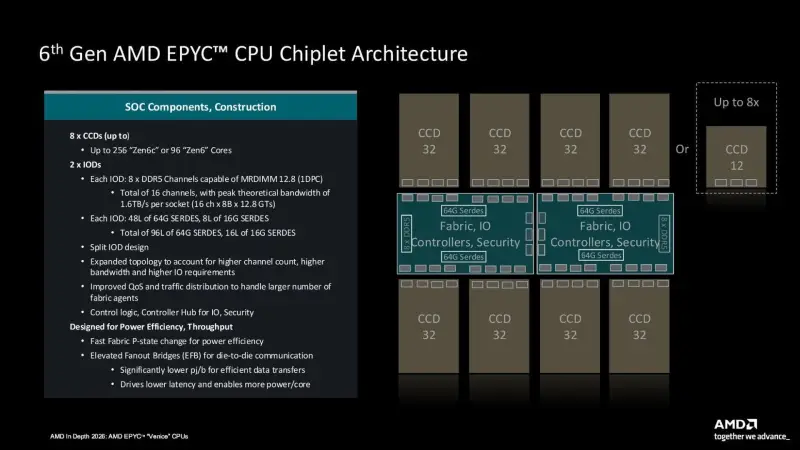
The biggest structural change is the Core Complex Die. Zen 6 CCDs scale to 12 cores, up from 8 on Zen 5. Zen 6c CCDs reach 32 cores, double the 16 of Zen 5c. Most other CCD specs either hold steady or improve.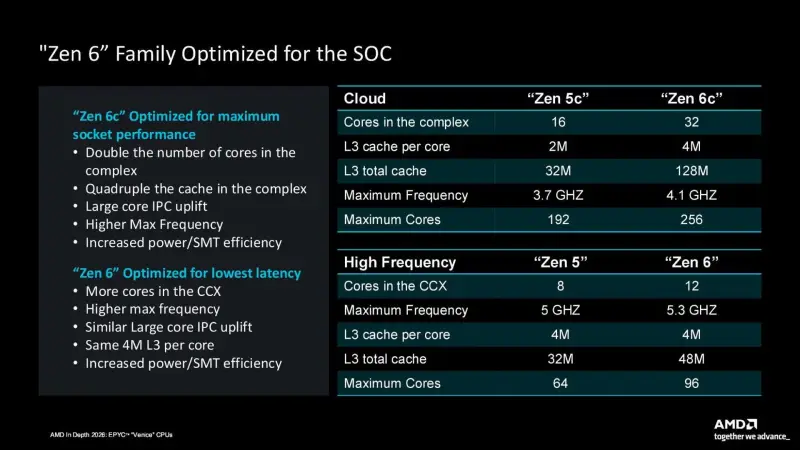
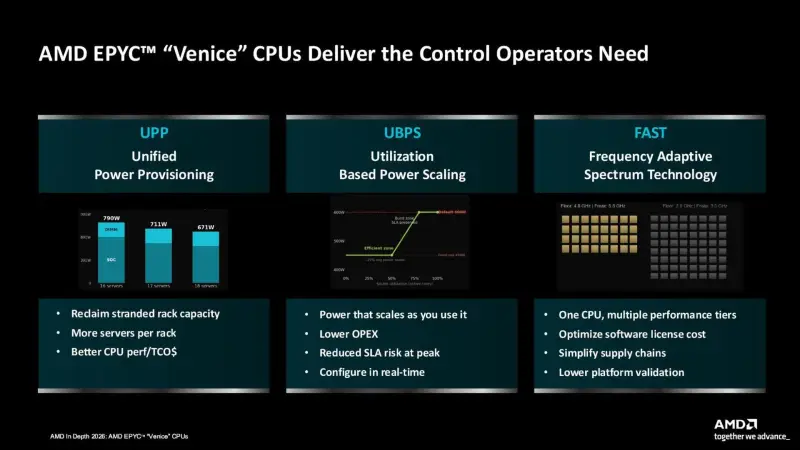
UPP, UBPS, and FAST: platform power features
Venice also adds several operational features that matter once the hardware is racked. None of them will make headlines, but they'll decide how much power a rack actually draws.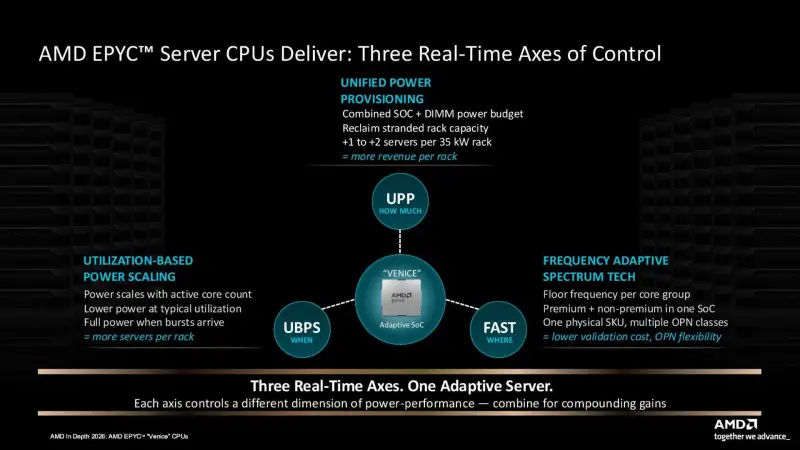
MEXT: flash as memory, with caveats
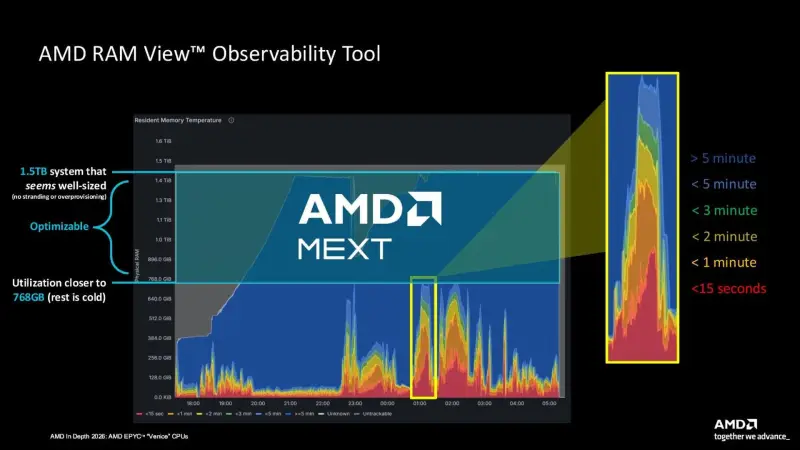
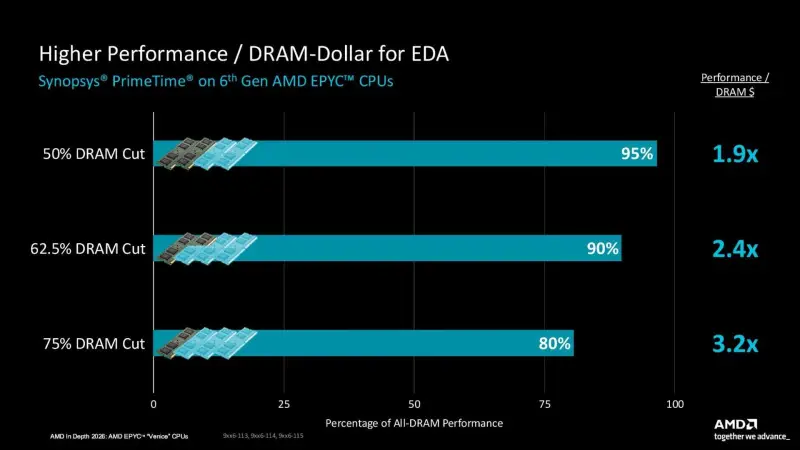
Venice is also the first EPYC generation where AMD will offer MEXT. AMD acquired the technology earlier this year and has been using it internally. With HPE, AMD is rolling out "MEXT ready" platforms that will be eligible for MEXT licenses later. Given how tight memory supply is right now, the pitch is easy to understand.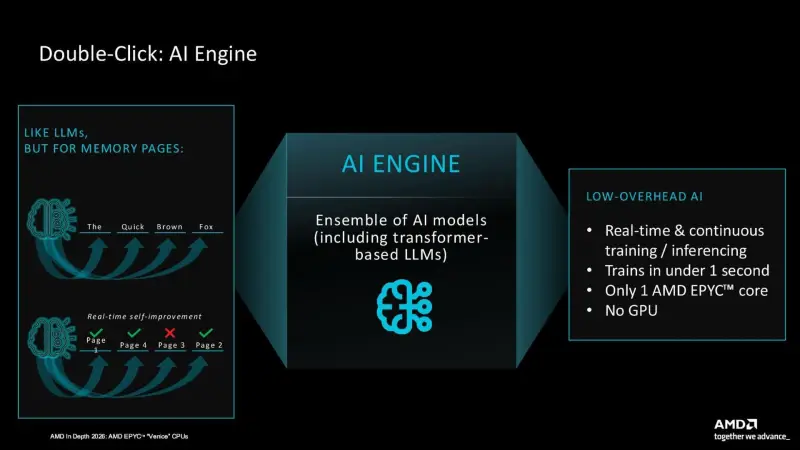
How we tested Venice
AMD gave us access to two Zen 6 Venice systems, both dual-socket servers. The first ran the dense EPYC 9996, a 256-core, 512-thread part per socket. That makes 512 cores and 1,024 threads across the 2P system. It's built for peak throughput under heavy concurrency. The second system used the EPYC 9686F, a 96-core, 192-thread CPU, for 192 cores and 384 threads in 2P form. The "F" suffix marks a high-frequency SKU meant for demanding single-threaded and per-core-heavy work, in contrast to the dense 9996 aimed at throughput. Those two chips represent AMD's two sides of Venice: maximum core count and maximum per-core speed.| Chip | Cores / Threads | Base / Boost Clock (GHz) |
Spec sheets set expectations, but they don't settle anything. Here's how the two Venice chips in this comparison line up against the rest of the SP7 lineup, with the clock and cache figures that matter most for throughput.
| Model | Cores / Threads | Base / Boost (GHz) | L3 Cache | TDP |
|---|---|---|---|---|
| EPYC 9996 | 256 / 512 | 2.55 / 4.1 | 1024 MB | 600W |
| EPYC 9966 | 192 / 384 | 2.9 / 4 | 768 MB | 600W |
| EPYC 9846 | 168 / 336 | 2.85 / 3.7 | 768 MB | 500W |
| EPYC 9756 | 128 / 256 | 3.15 / 4 | 512 MB | 500W |
| EPYC 9656 | 96 / 192 | 3.05 / 3.7 | 512 MB | 400W |
| EPYC 9686F | 96 / 192 | 3.4 / 5 | 384 MB | 500W |
| EPYC 9556 | 64 / 128 | 2.75 / 4.3 | 384 MB | 300W |
| EPYC 9586F | 64 / 128 | 3.75 / 5 | 384 MB | 500W |
Both chips use AMD's SP7 socket, the platform built for data centers and the higher core count SKUs. The upcoming SP8 socket goes after enterprise buyers instead, with fewer cores and fewer memory channels. That split tells you where AMD expects the volume to be.
EPYC 9996: density over clocks
The 9996 is a dense design built on Zen 6c cores, and its numbers reflect that. The 4.1 GHz boost clock is respectable, but the 2.55 GHz base is the figure to watch. Expect it to spend much of its time near that base in real deployments, not at the boost headline.
What you do get is a massive 1,024 MB pool of L3 cache and a 600W rated TDP. That TDP can be manually adjusted anywhere between 400W and 600W, which gives operators a real knob to trade power for performance.
EPYC 9686F: the one to watch
The 9686F is where AMD's Venice claims get tested. It's one of only two chips in the SP7 lineup that boosts to 5 GHz, and it does it with 96 cores and a 500W TDP. Like the 9996, it can run between 400W and 600W.
This is the SKU AMD has leaned on hardest, pitching it as a published Venice benchmarks entry labeled as a "96-core HF" model. And that's a deliberate choice. Honestly, the 9686F is the more interesting chip of the two, and not just because of the clock speed.
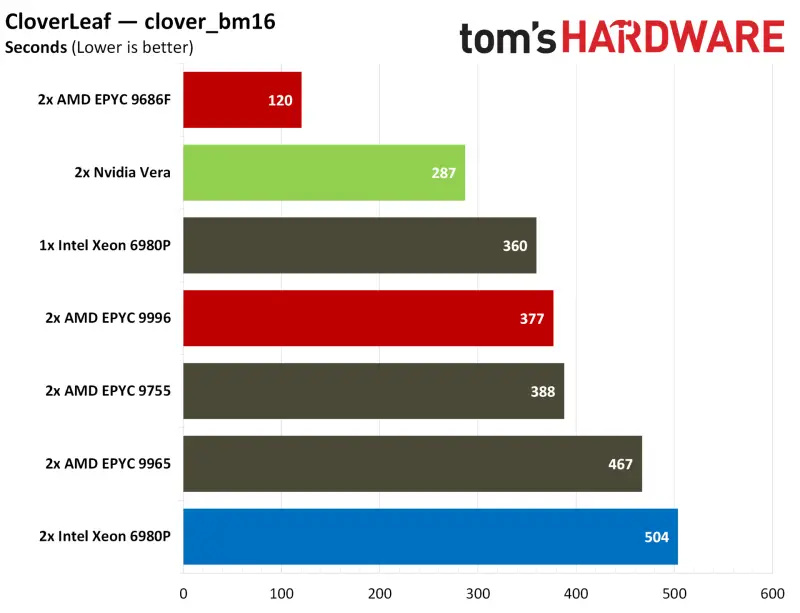
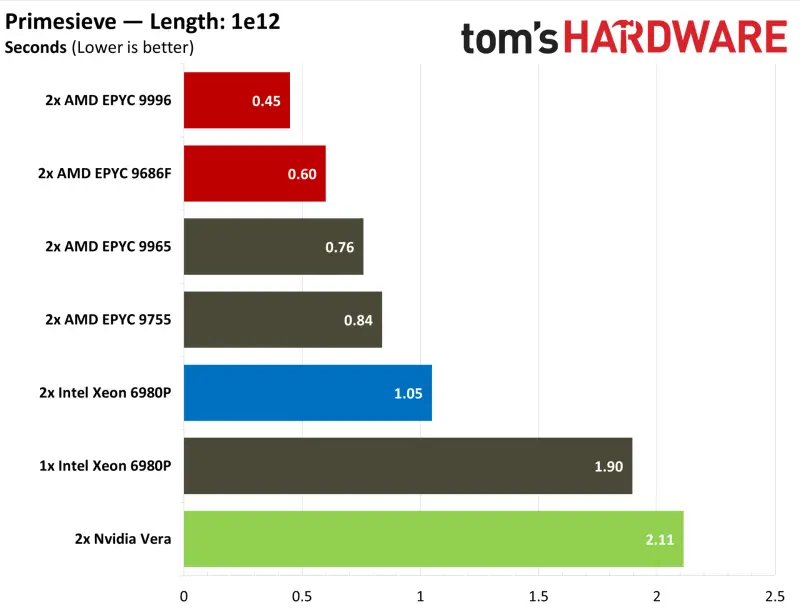
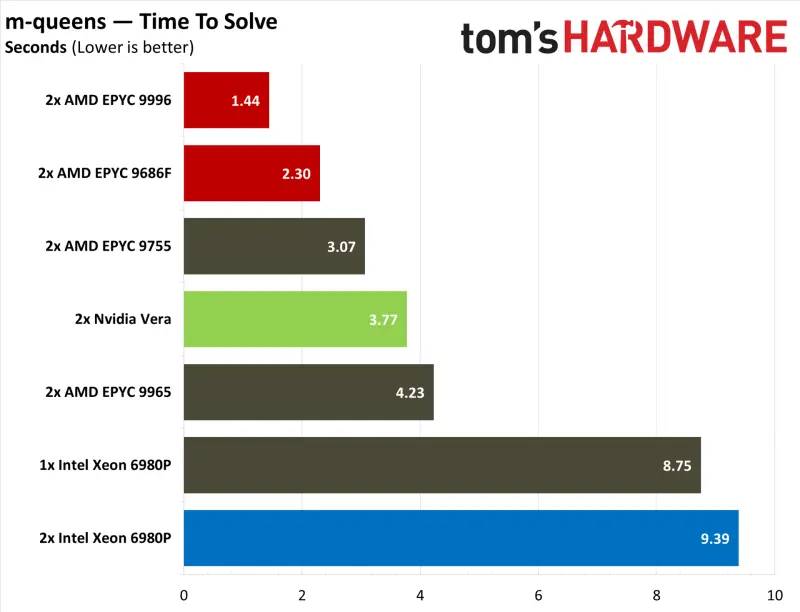
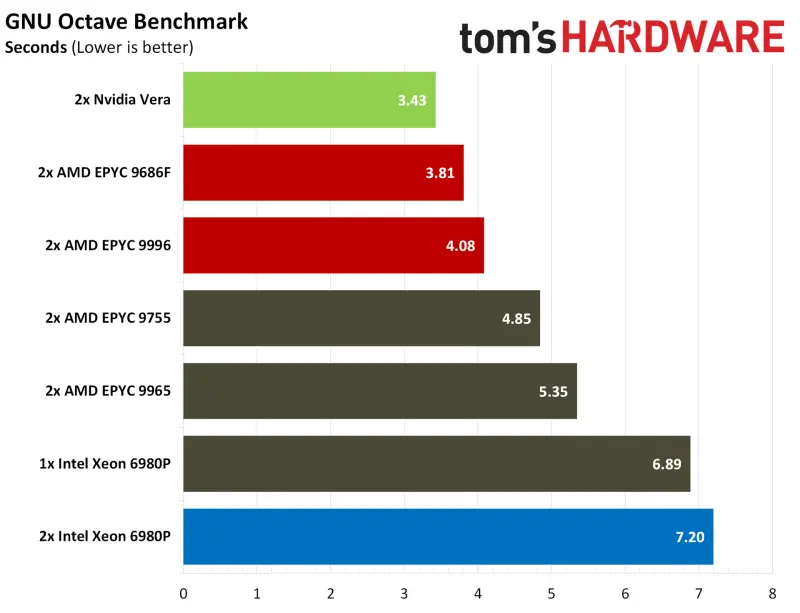
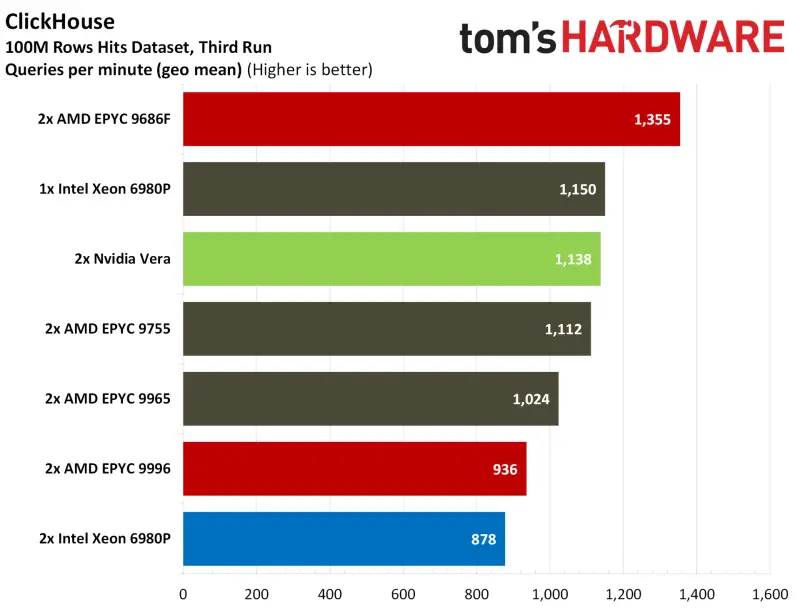
It's squarely aimed at Nvidia's Vera CPU, and not only on core count. The two trade wins across several benchmarks. AMD is positioning the 9686F as its "agentic CPU" in the Venice lineup, which mirrors how Nvidia has pitched Vera. If you're evaluating hardware for agent workloads, this is the matchup that matters.
Test platforms and the memory story
| Test Platform | Memory | Tested Processors |
|---|---|---|
| 2P AMD Nigeria reference platform | 32 x 64 GB (2 TB) SK hynix DDR5-12800 ECC MRDIMM | AMD EPYC 9996, EPYC 9686F |
| 2P AMD Volcano reference platform | 24 x 64 GB (1.5 TB) SK hynix DDR5-6000 ECC RDIMM | AMD EPYC 9965, EPYC 9755 |
| 2P Supermicro SYS-222HA | 24 x 64 GB (1.5 TB) Micron DDR5-8800 ECC MRDIMM | Intel Xeon 6980P |
| 2P Nvidia MGX Vera reference platform | 16 x 96 GB (1.5 TB) Samsung LPDDR5-9600 ECC SOCAMM2 | Nvidia Vera |
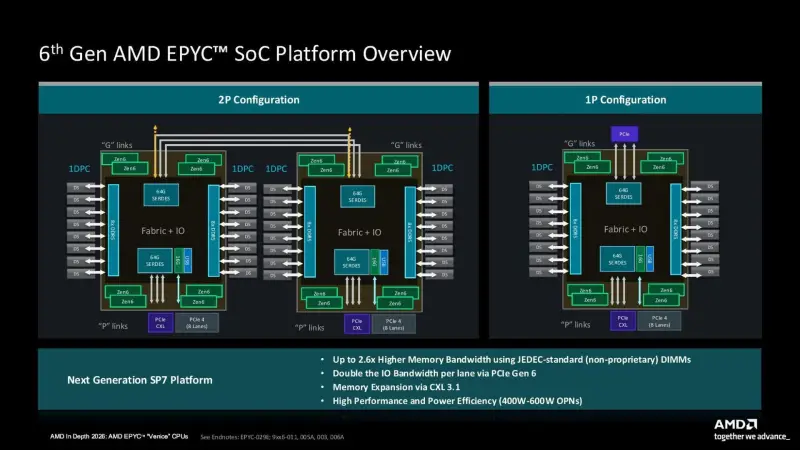
The Nigeria platform is the one that carried the Zen 6 results. It ran top-end DDR5-12800 MRDIMMs, with 32 sticks arranged to fully saturate the 16 memory channels. That's a big step up in memory support, and it's central to Venice. It matters most for the 9686F, because that's the chip going head-to-head with Vera.
Vera takes a different route. Its LPDDR5 SOCAMM2 modules hit higher transfer rates than standard RDIMMs while staying field-replaceable. But it does this across a fairly modest eight-channel setup. Nvidia's bet is that Vera's topology moves data across the chip well enough that it doesn't need more channels.
AMD's design goes the other way. Its distributed architecture needs more memory bandwidth to feed the cores, so it doubles the channels and pushes higher transfer rates through MRDIMMs. Which raises the question of cost and power at the platform level, and that's a question the numbers here don't answer.
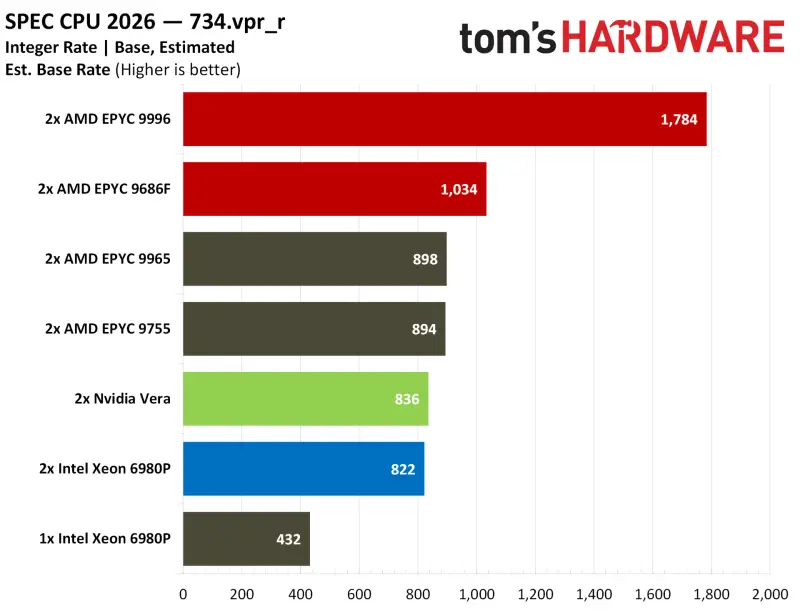
SPEC CPU 2026 estimates
SPEC CPU 2026 is the de facto industry benchmark for server CPUs, so it's where we start. The numbers below are estimates. They come from real SPEC runs, but they haven't been submitted to the SPEC committee, which is why they carry that label.
For the throughput suites, intrate and fprate, we ran as many copies of each application as the chip had threads. Everything ran on Ubuntu Server 26.04 with Linux kernel 7.0. We used GCC 15.2 for every system except the Venice chips, which got GCC 16, because that's the release with official Zen 6 support.
That mismatch would normally be a problem, so we checked it. Regression testing against GCC 15 showed only minor differences, nothing that changes the standings. Using GCC 16 also kept the optimization flags consistent across the Venice parts. We used common GCC flags, fast link-time optimization, and march/mcpu settings to expose the right instruction support, and jemalloc as the memory allocator on every system.
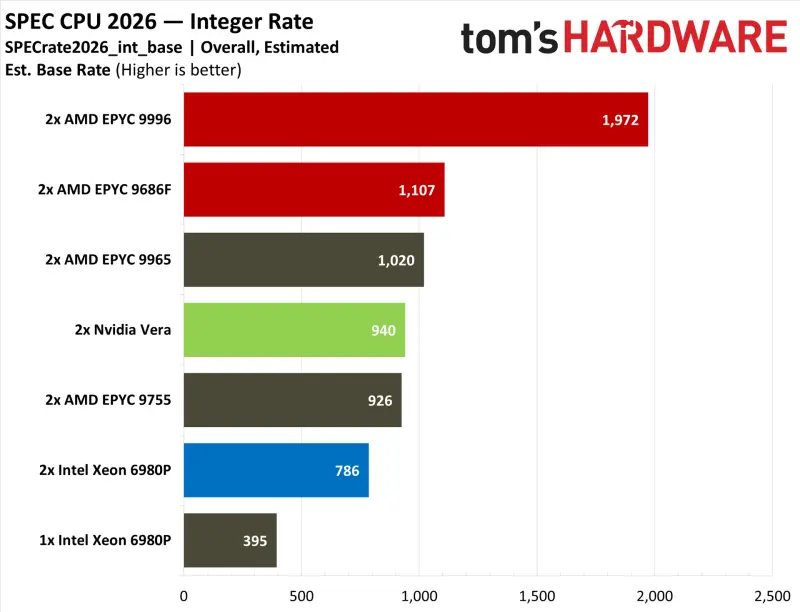
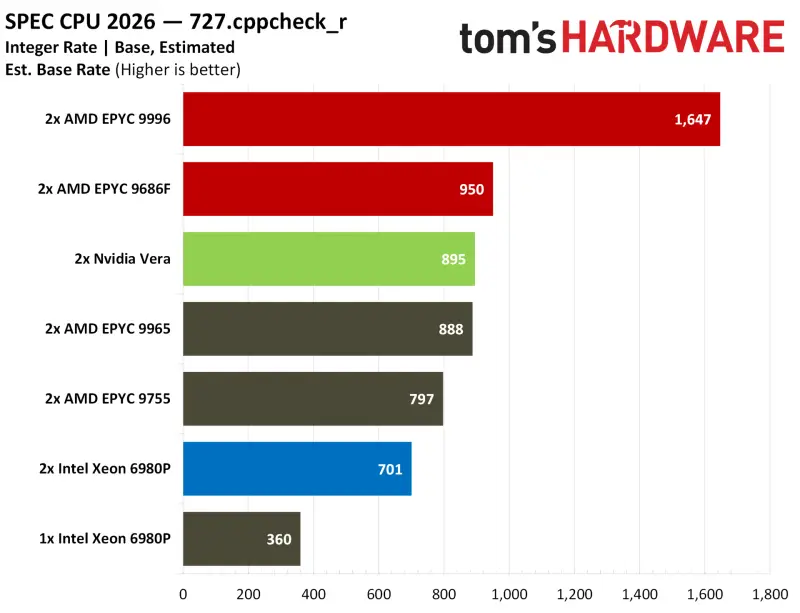
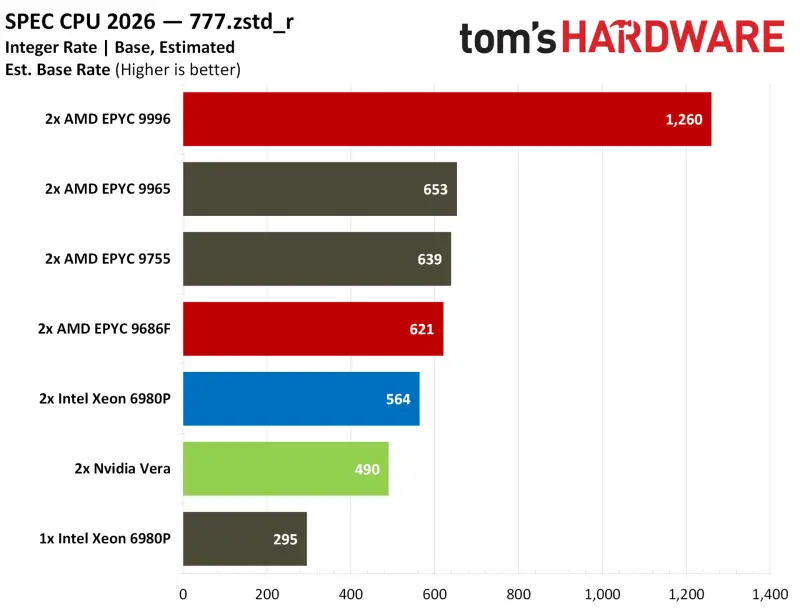
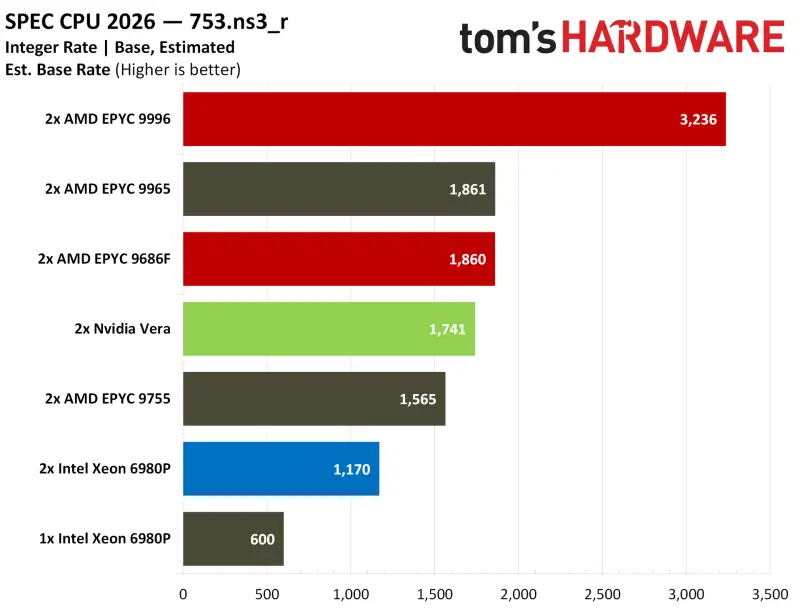
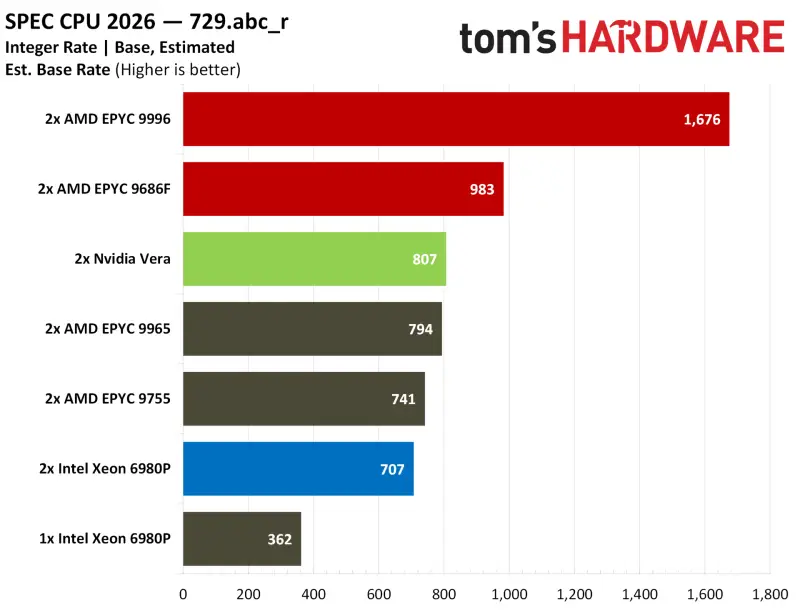
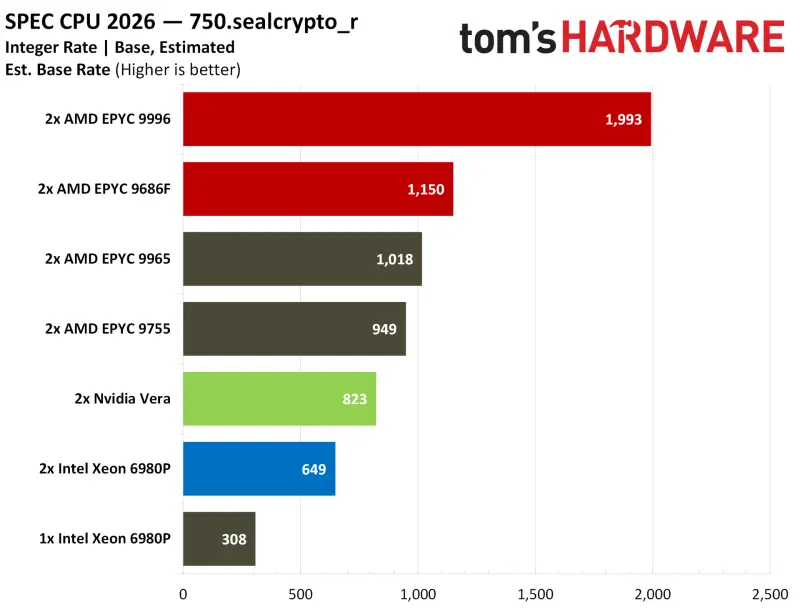
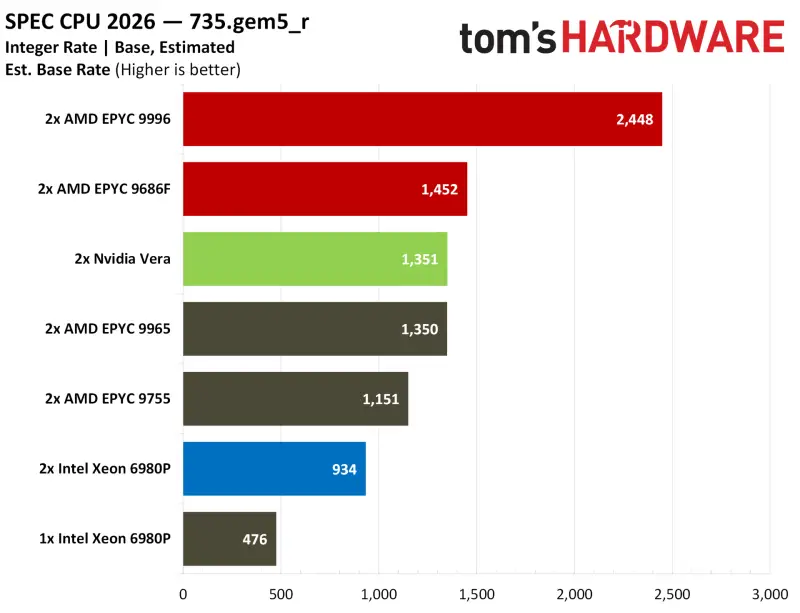
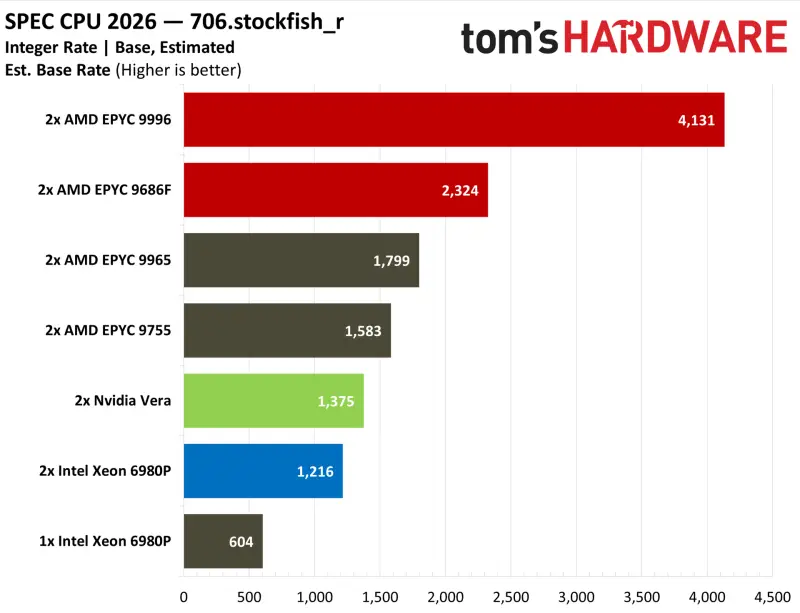
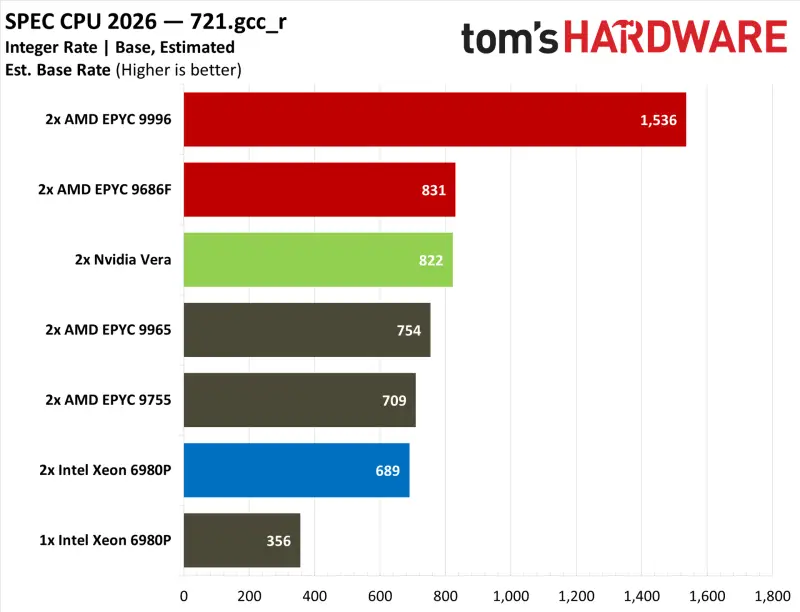
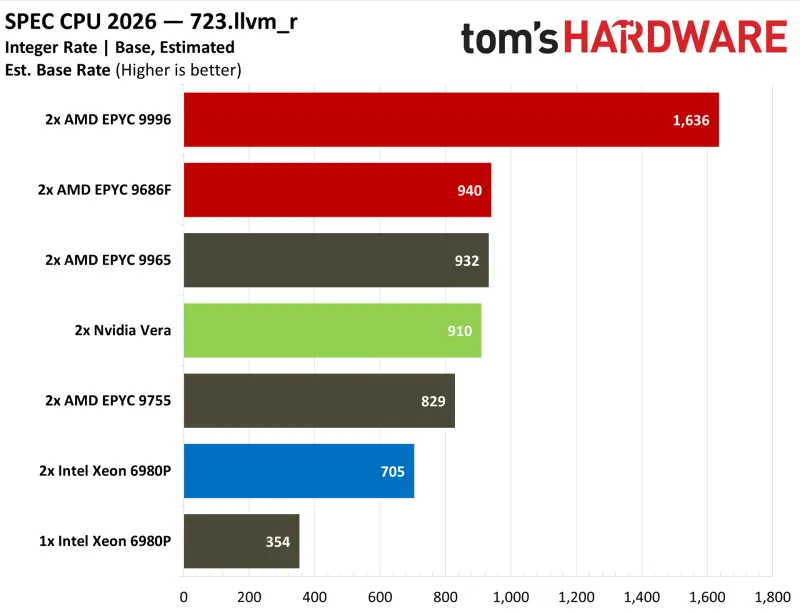
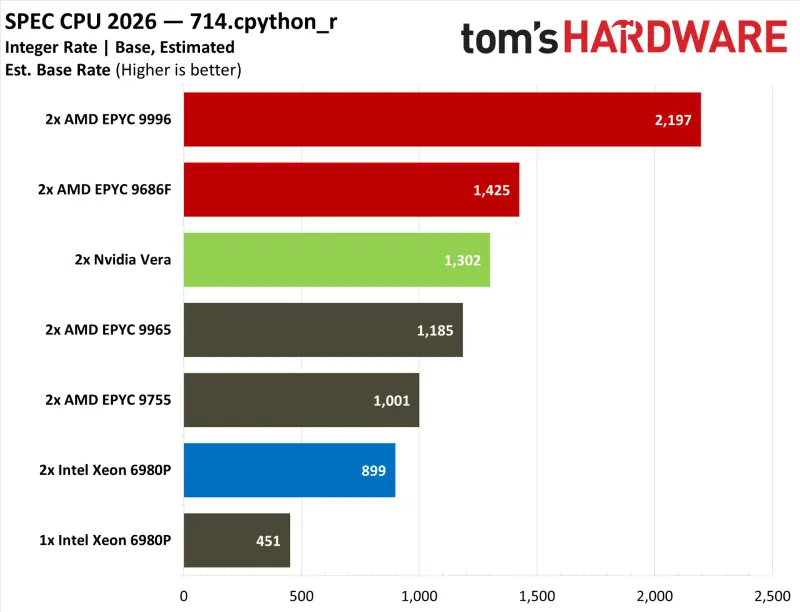
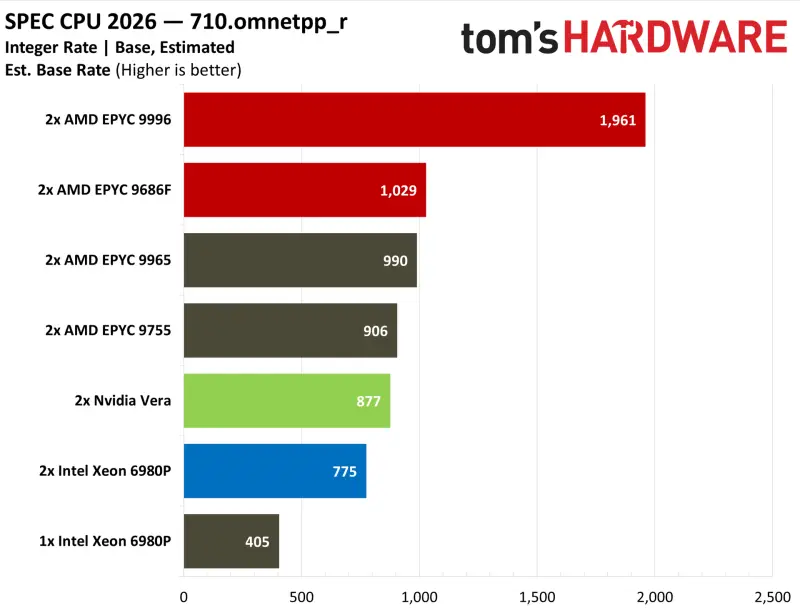
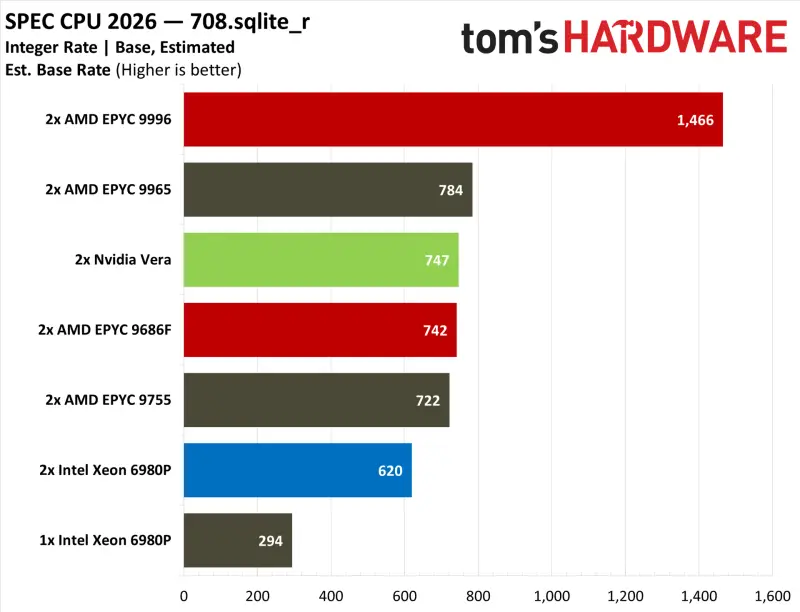
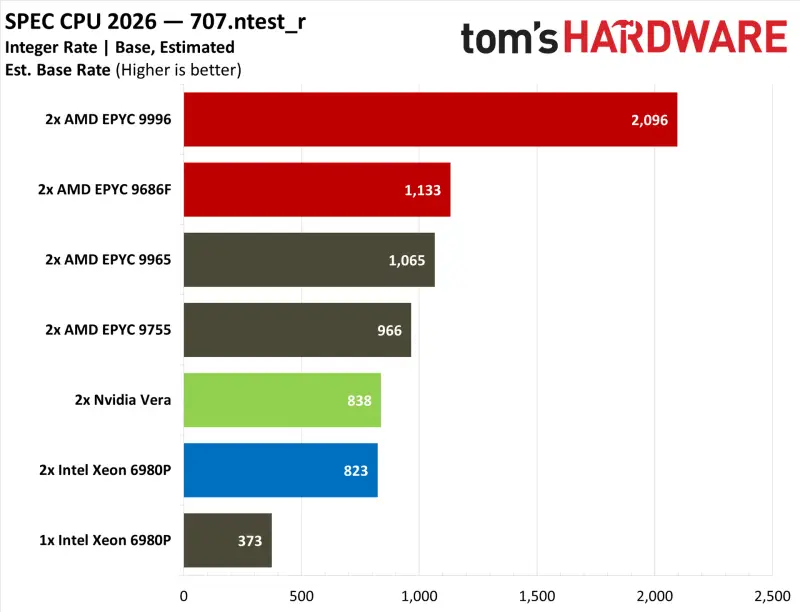
The intrate results set the tone, especially for the 9996. In a 2P configuration it exposes 1,024 threads, and that multiplies Zen 6's per-core gains across a much larger pool. Against last-gen's top-end EPYC 9965, the 9996 scores 93% higher. That's a big number, but it needs context.
Throughput benchmarks reward how much work gets done and how fast. The 9996 gets the thread-count boost on top of the core-level improvements, so the gain compounds. But it isn't uniform. The 93% lead shows up in this test, not across the board.
The 9686F tells a more nuanced story. It doesn't double the previous generation, and that's fine for AMD, though it's not the headline. We didn't have a 9575F to make a clean gen-on-gen comparison. The closest proxy was the EPYC 9755, with 128 cores and a 4.1 GHz boost. Against that chip, the 2P 9686F comes out 19% ahead, despite having 32 fewer cores per socket.
The more pointed result is against Nvidia. The 9686F is 17% ahead of Vera in intrate. Vera holds its own against the x86 field, though, as its matchup against the 9755 and Intel's flagship Granite Rapids-AP 6980P shows.
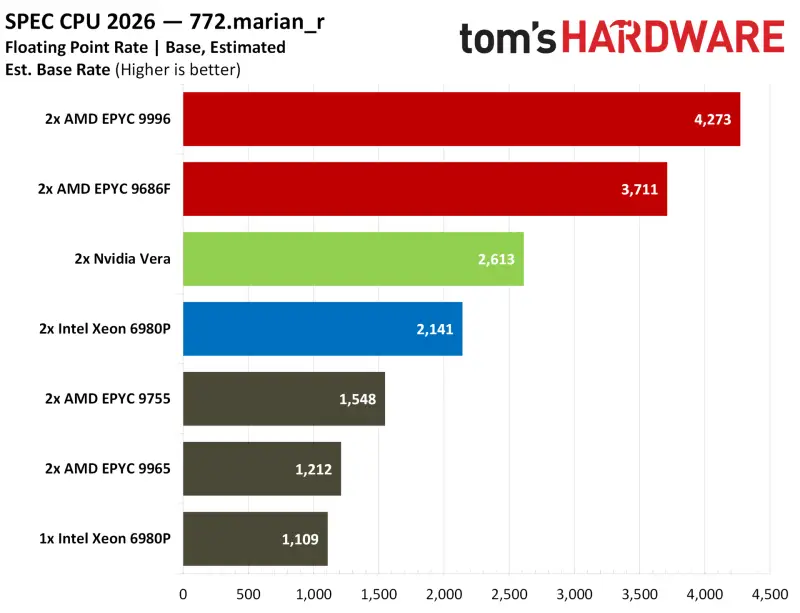
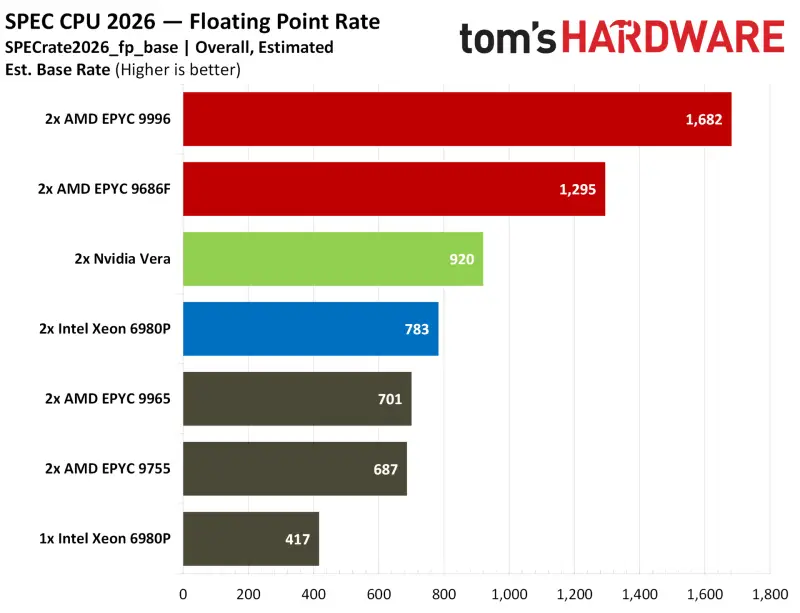
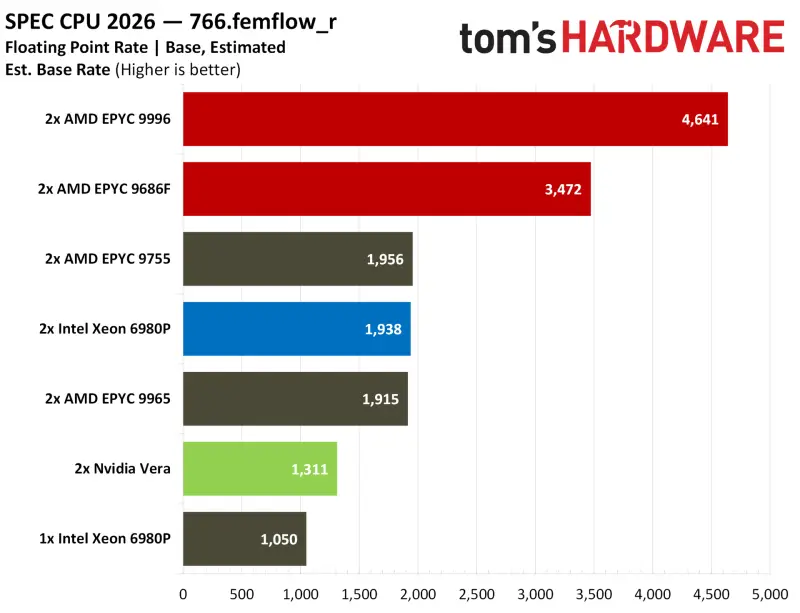
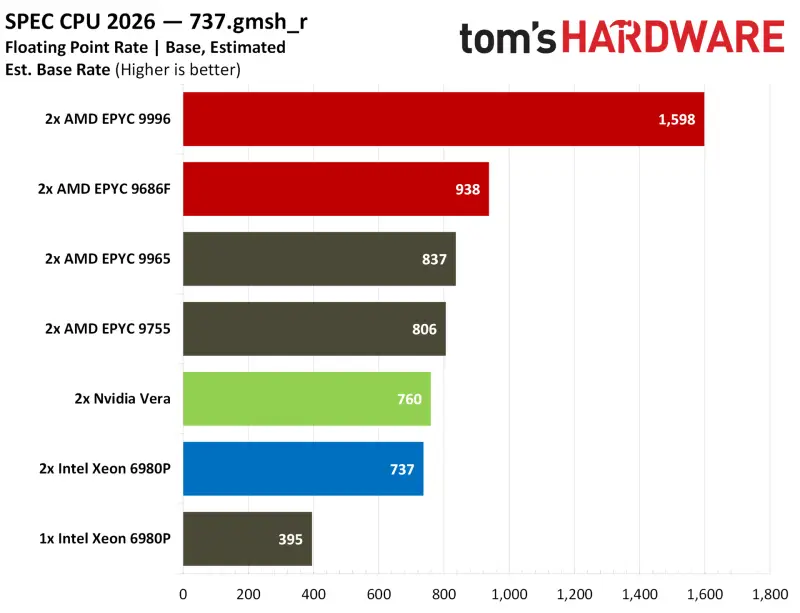
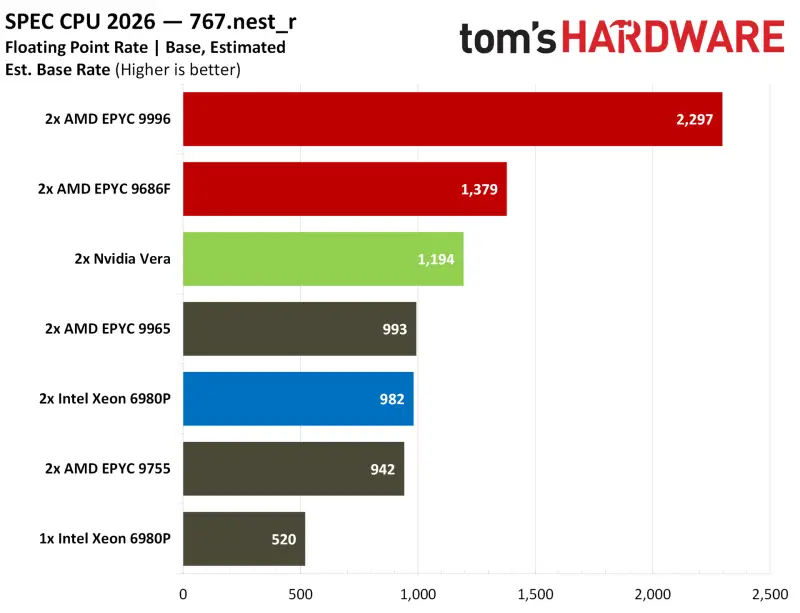
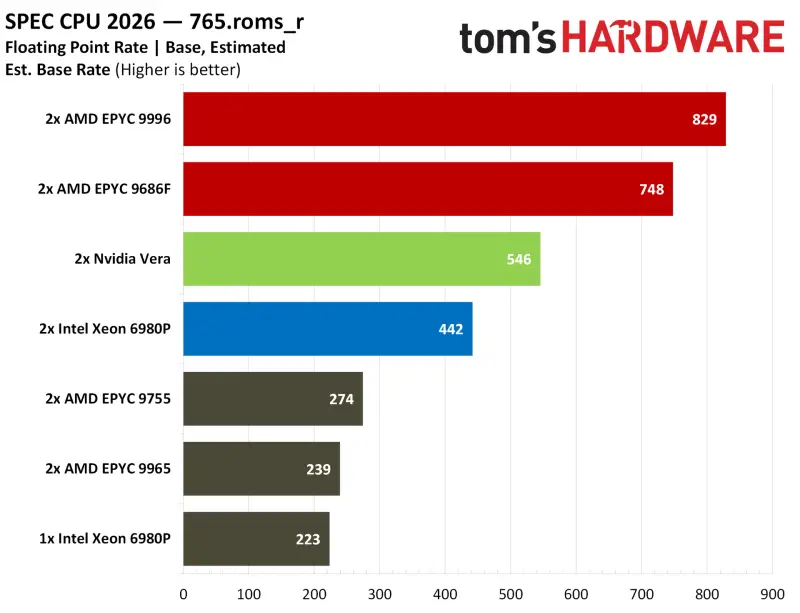
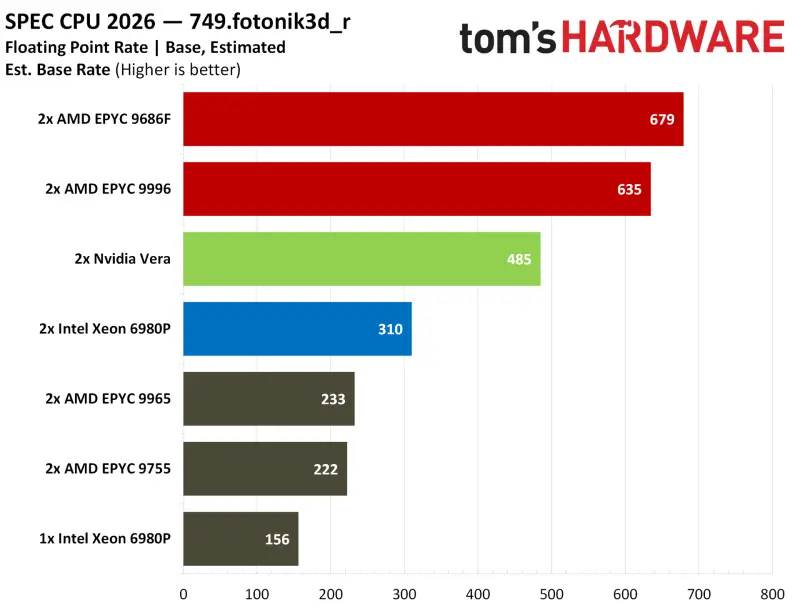
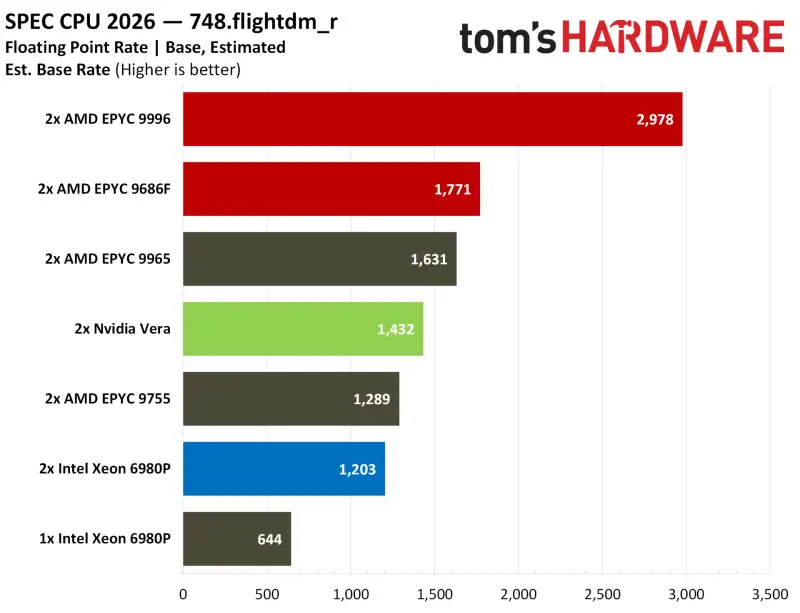
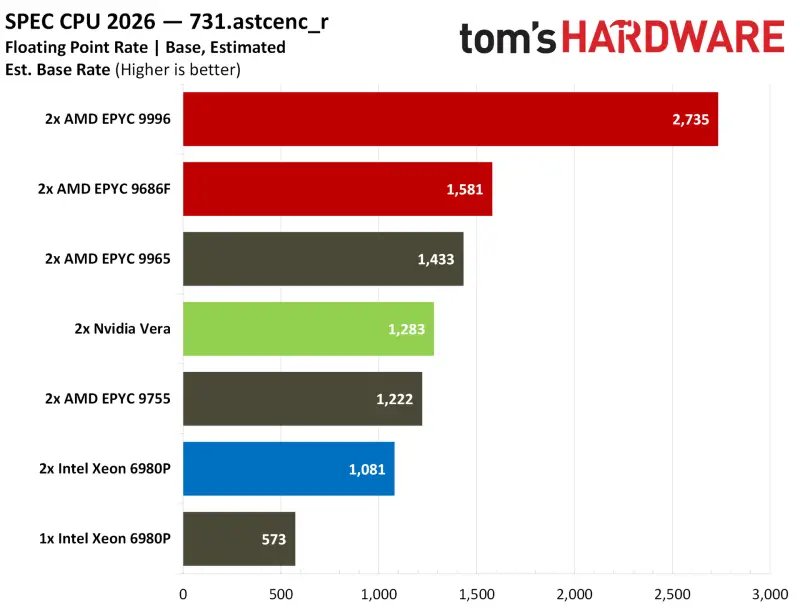
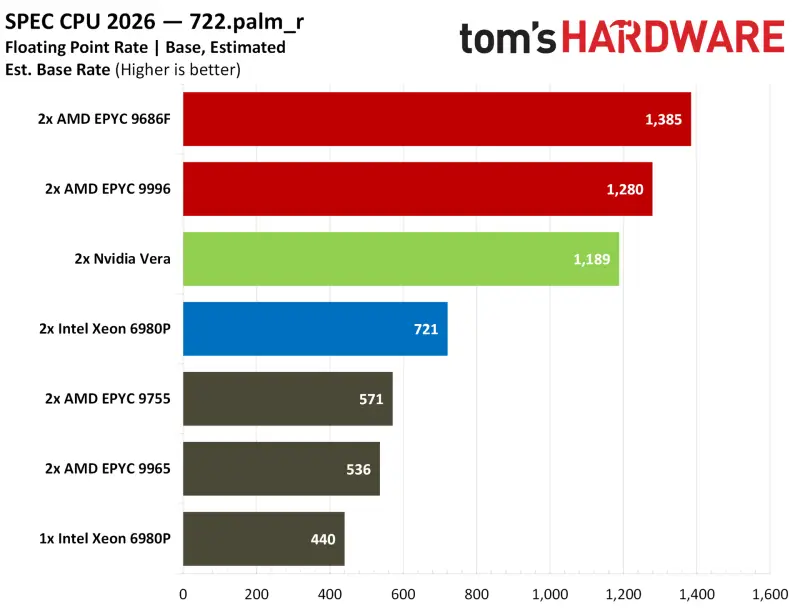
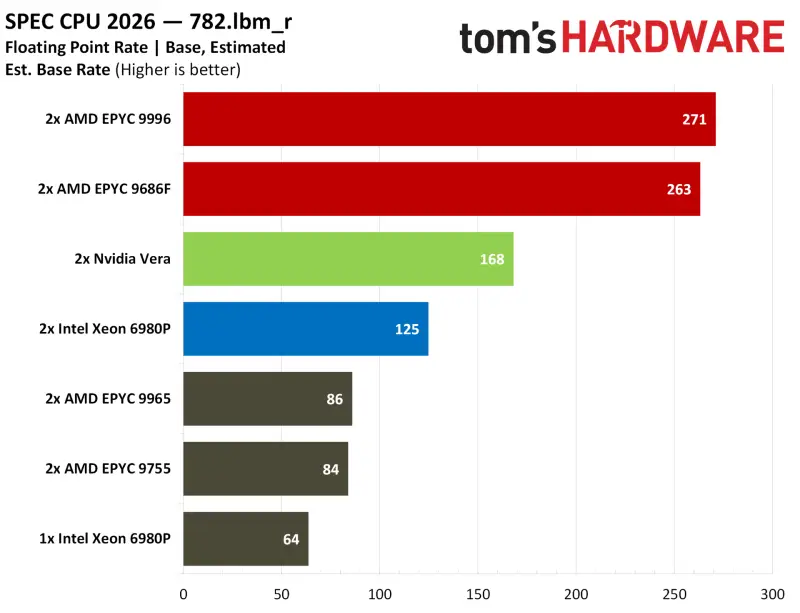
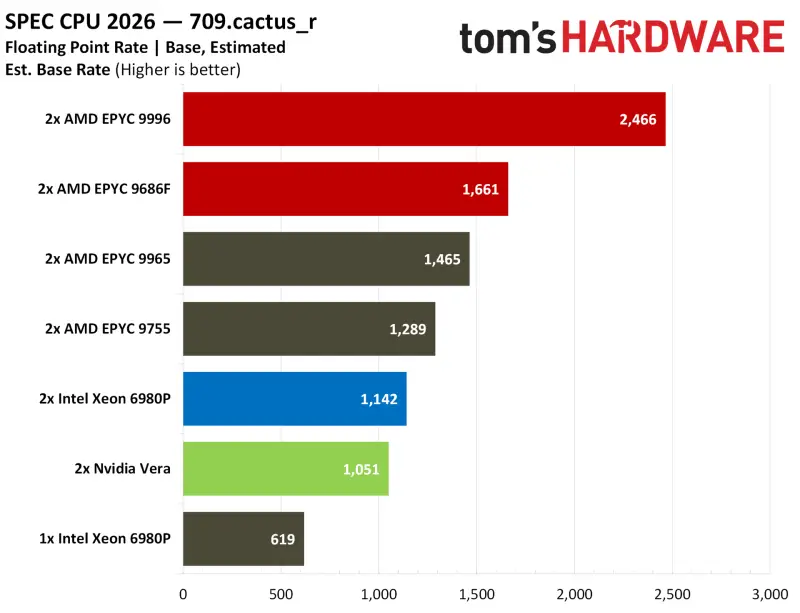
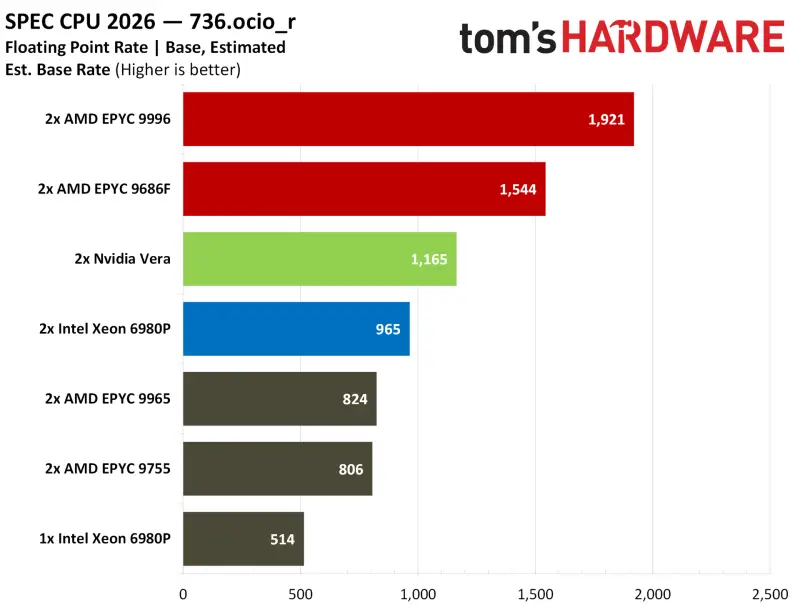
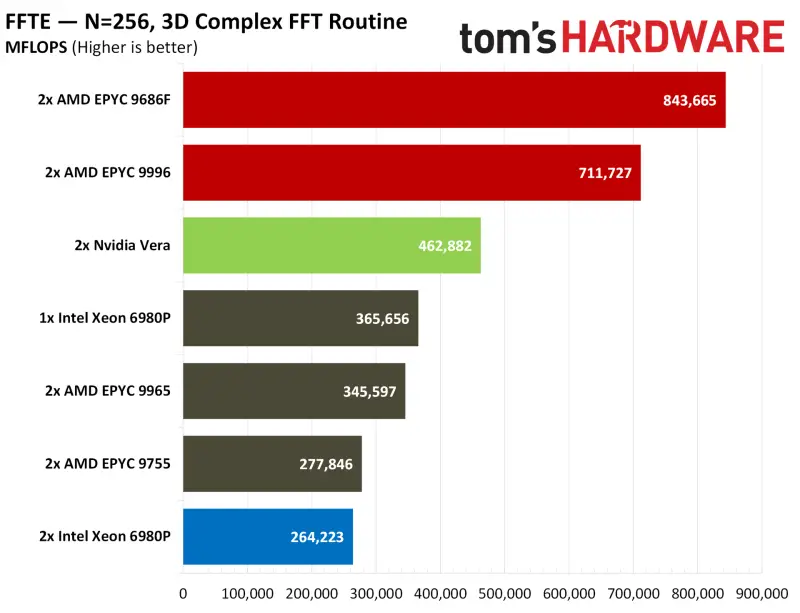
Floating point is where AMD's vector engine work shows. The gap between the 9996 and 9686F is smaller here, and neither chip is held back. The 9686F pushes close to the 9996's numbers, and both Zen 6 parts pull well clear of the field.
Compared with Zen 5, AMD more than doubled the fprate score. That's a serious generational jump. Against Vera, the 9686F leads by 40% in fprate, even though Vera's core count is 88 and the 9686F's is 96. That's a small core-count gap doing a lot of work. Intel's Granite Rapids-AP isn't really in the conversation on raw performance, but Intel has increased production of its server parts anyway, a sign of how tight CPU supply has become.
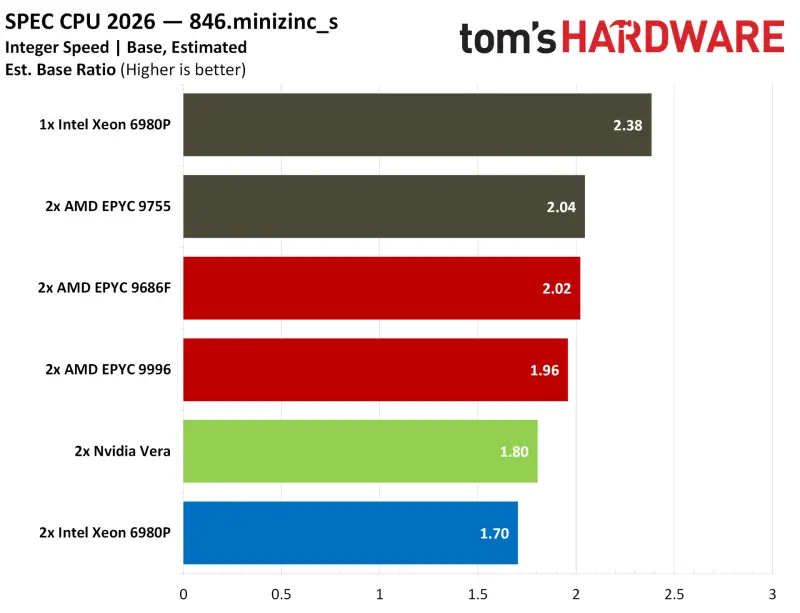
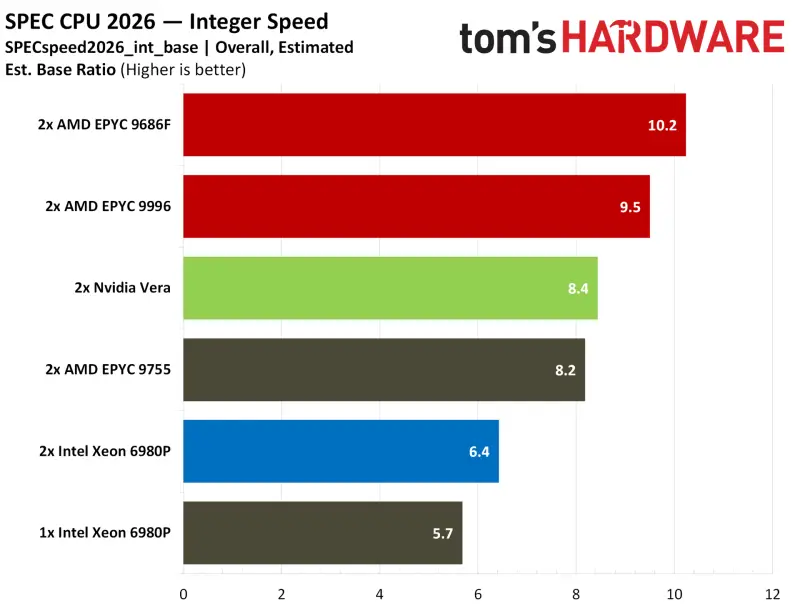
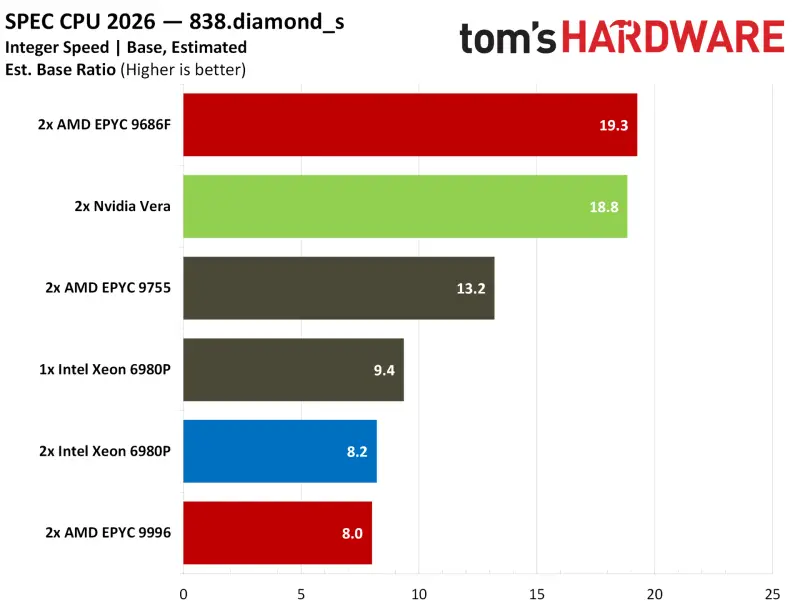
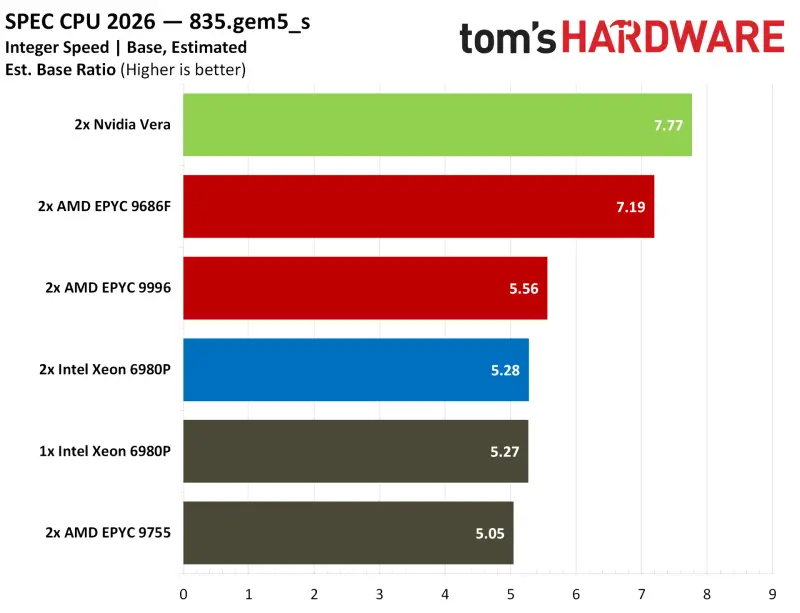
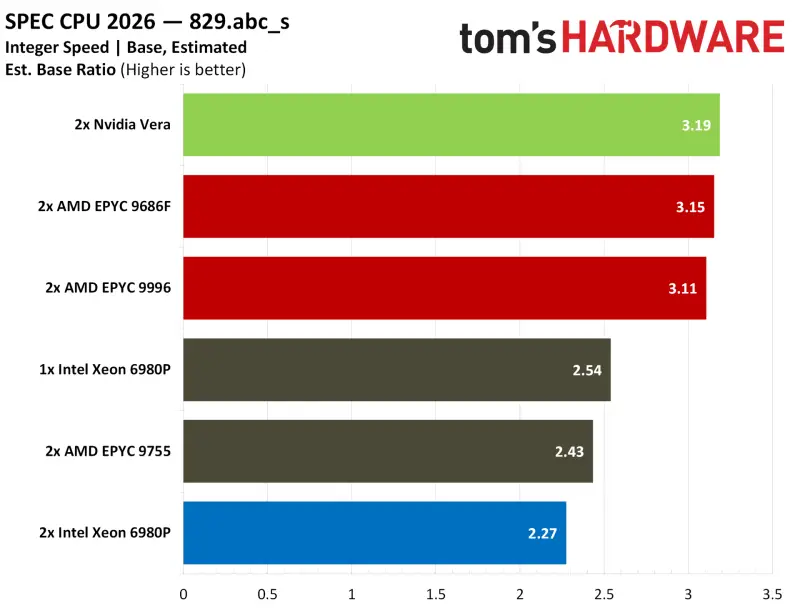
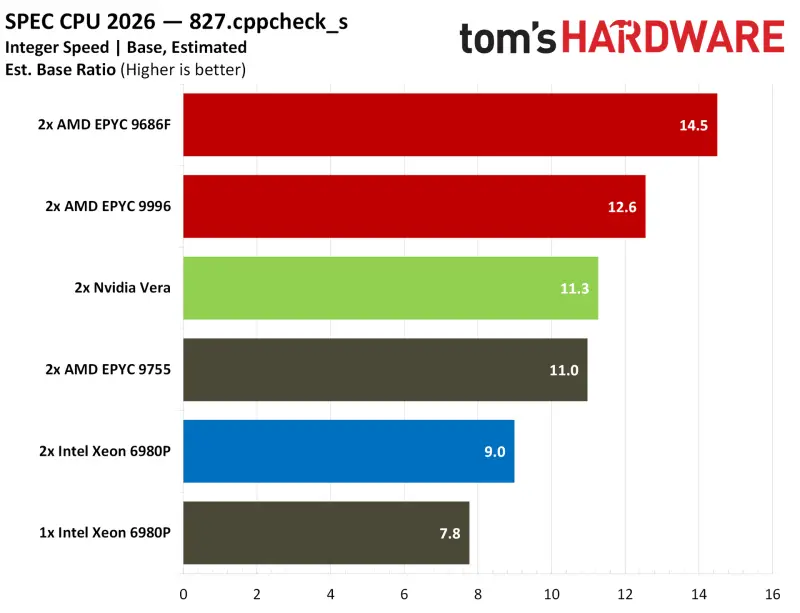
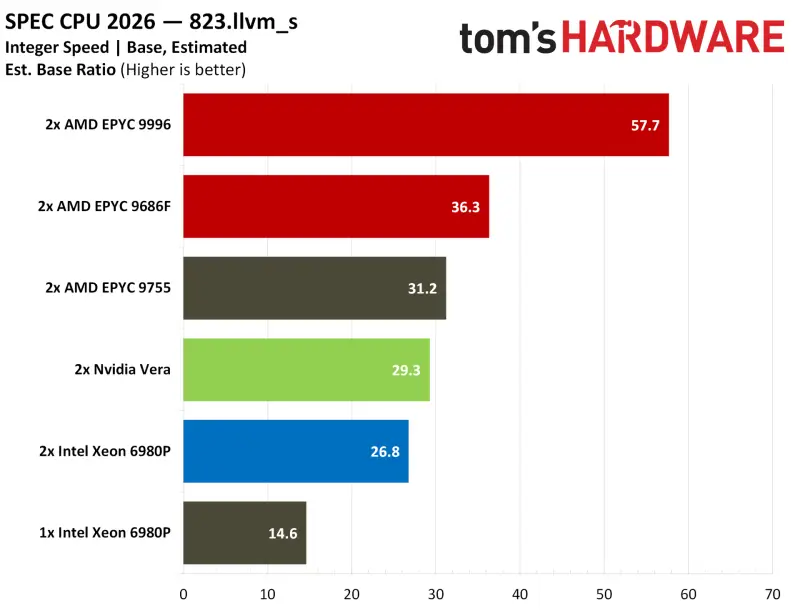
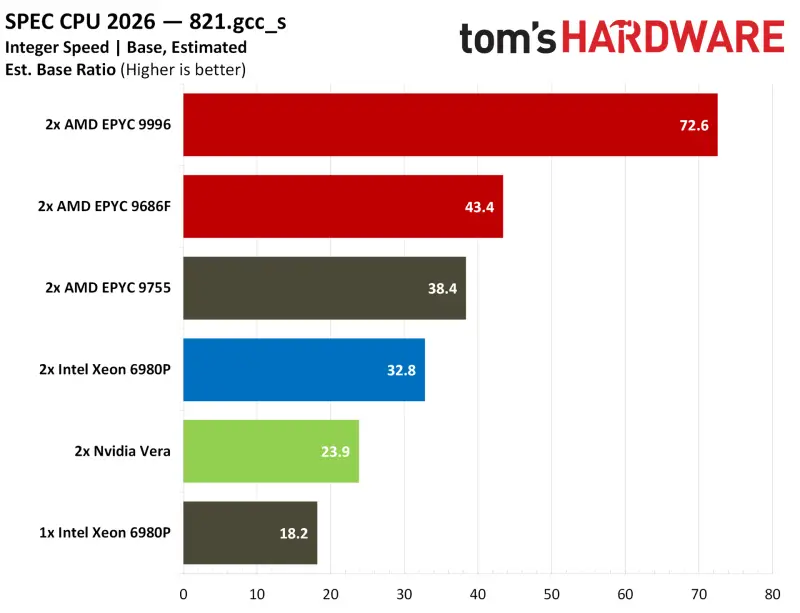
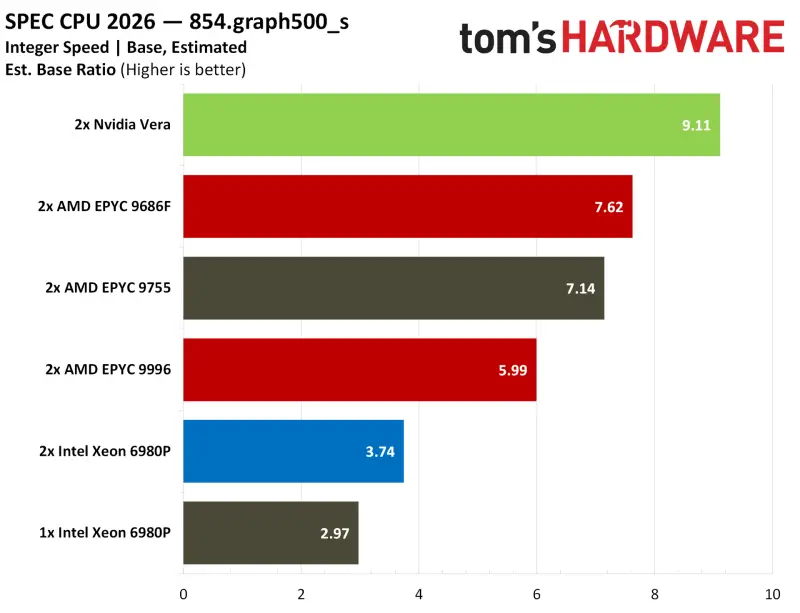
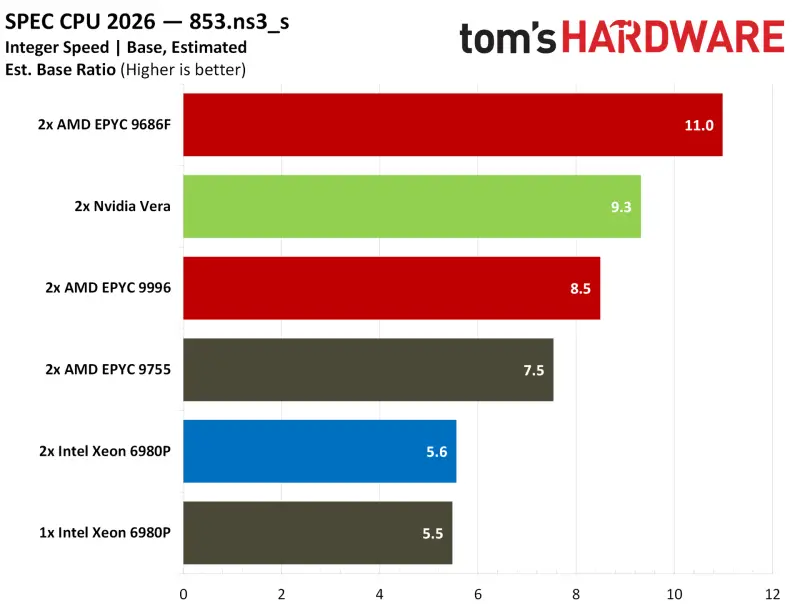
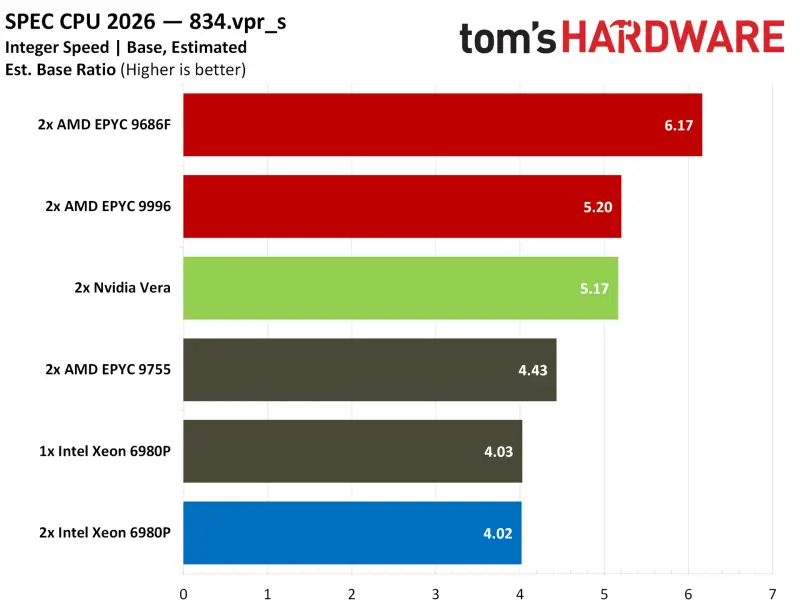
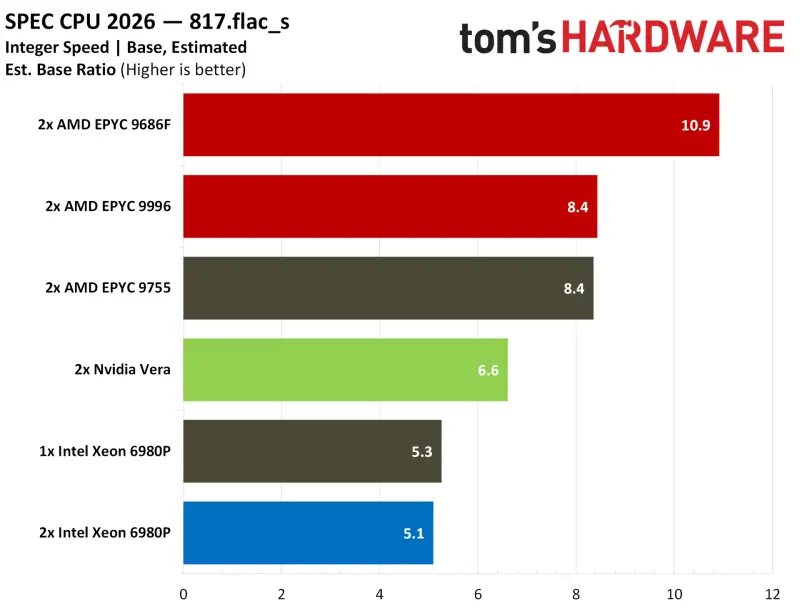
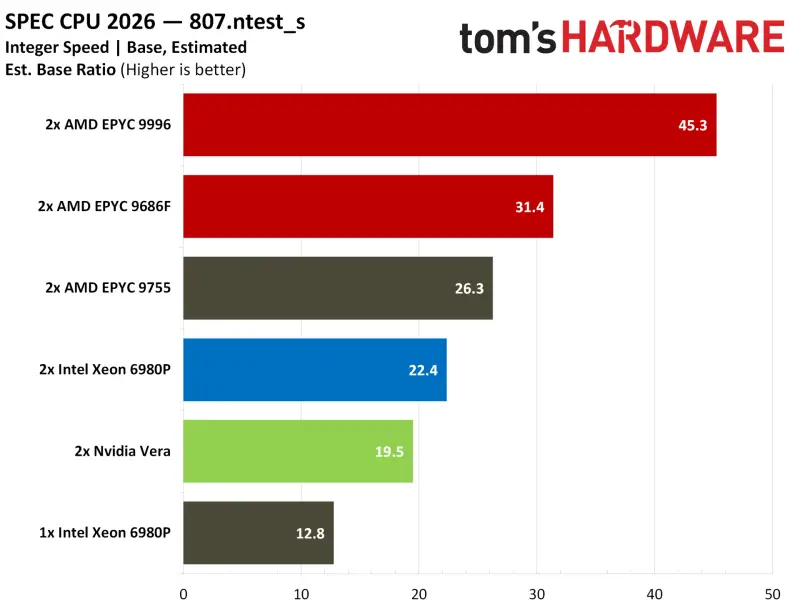
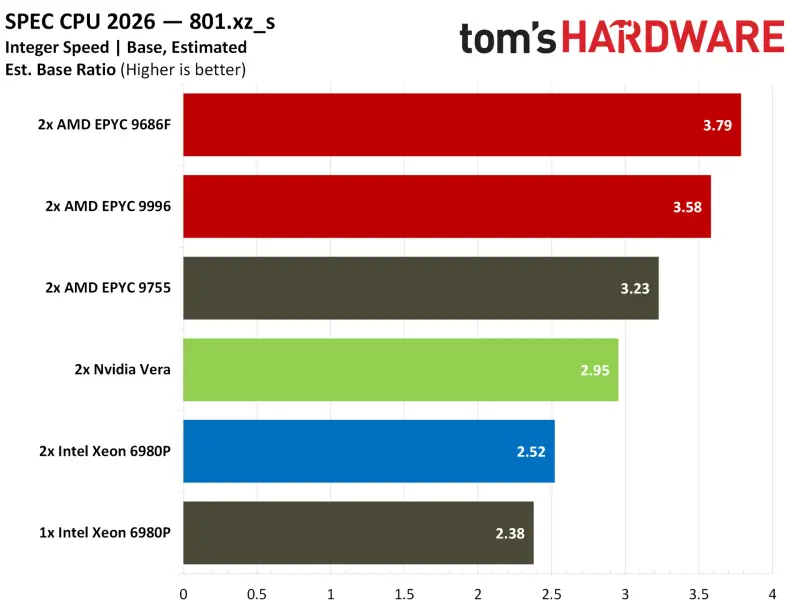
Throughput is the more honest test of how these chips get deployed, with many application copies running at high concurrency. SPEC's speed suite asks a different question: how fast one application runs when it has the whole chip. That's closer to how a client CPU gets judged.
Here the 9686F's 5 GHz clock does what you'd expect. In the integer speed suite, the frequency-optimized part is 21% ahead of Vera in a 2P configuration. The 9996 holds up well too, falling short of the 9686F despite having much more inter-CCD communication to manage. That's a meaningful result for a chip built around density.
Zen 6's gains stack. The new microarchitecture brings an optimized vector path. There are more cores per CCD. Memory speeds go up, and so do channel counts. Each of those is a solid but unremarkable improvement on its own. Put them together on a workload that can use all of them, and the generational jump looks a lot bigger.
Python and memory bandwidth in agentic workloads
Two performance vectors matter most for agentic workloads right now: memory performance and Python performance. Most agent frameworks are built in Python, with LangGraph and CrewAI as prominent examples. Alternatives written in TypeScript and Rust are starting to show up, but Python still carries the weight. If you're buying CPUs for agents today, Python throughput isn't optional.
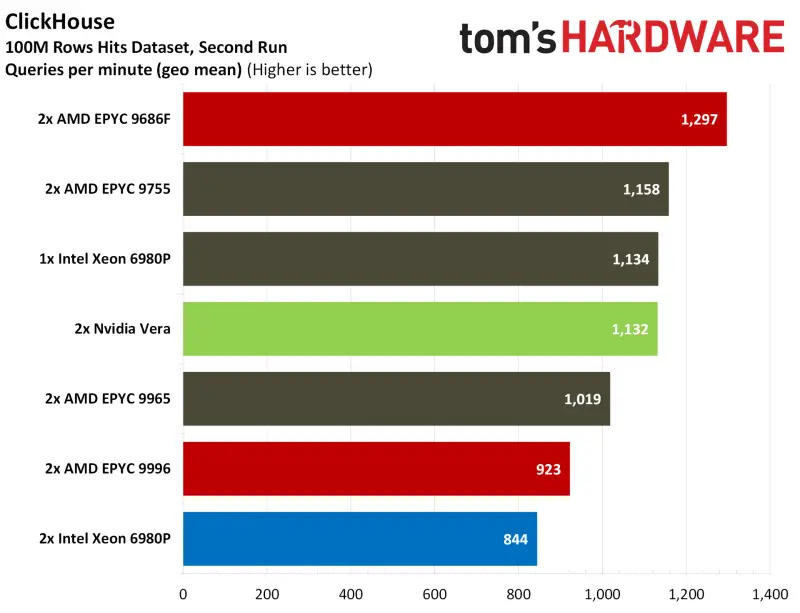
Memory bandwidth matters too, particularly for agents that query large databases. That holds whether the data lives in a traditional SQL relational database or a non-relational one. It's the reason the platform-level memory configuration above isn't a footnote.
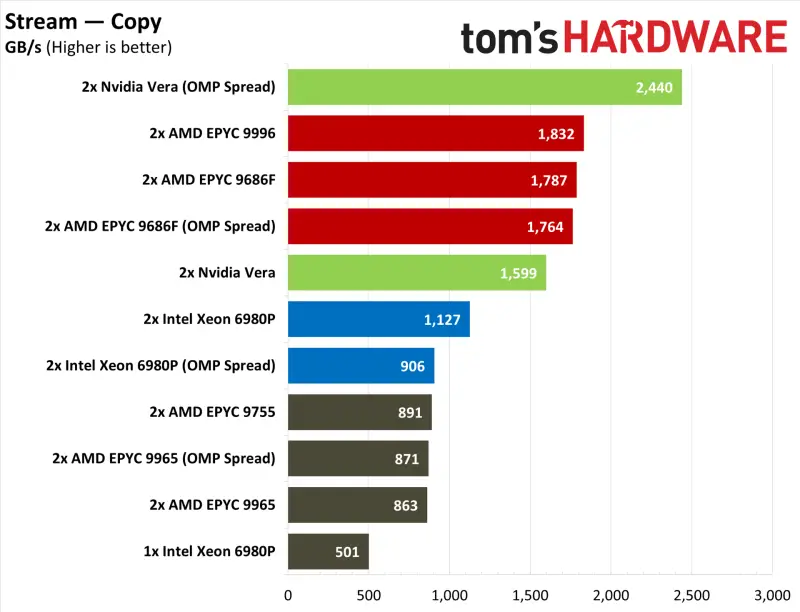
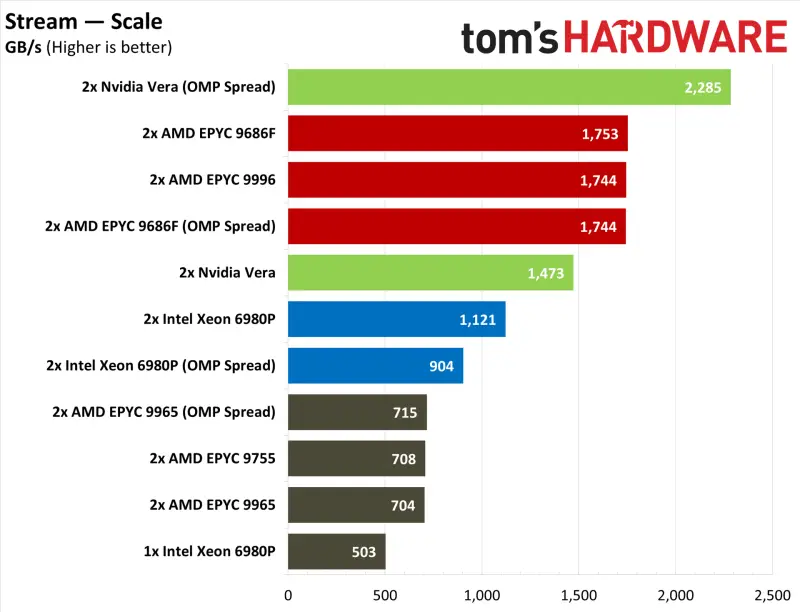
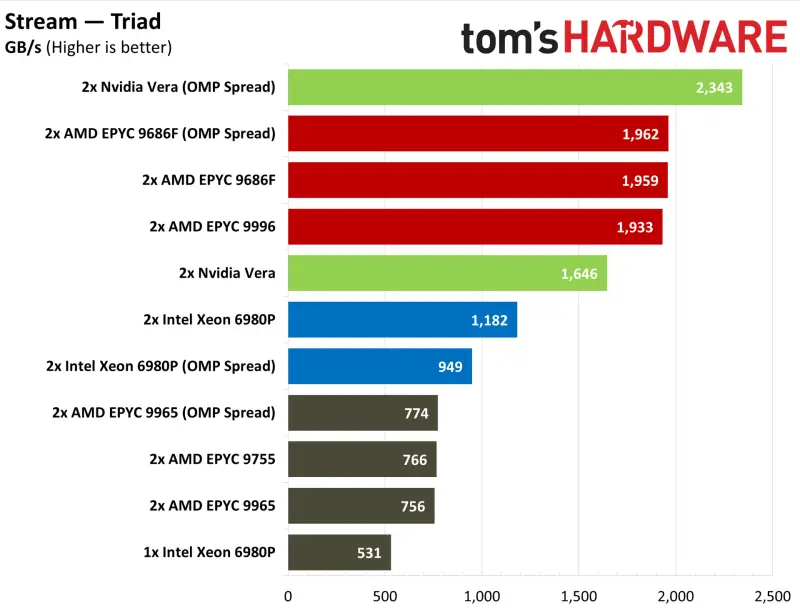
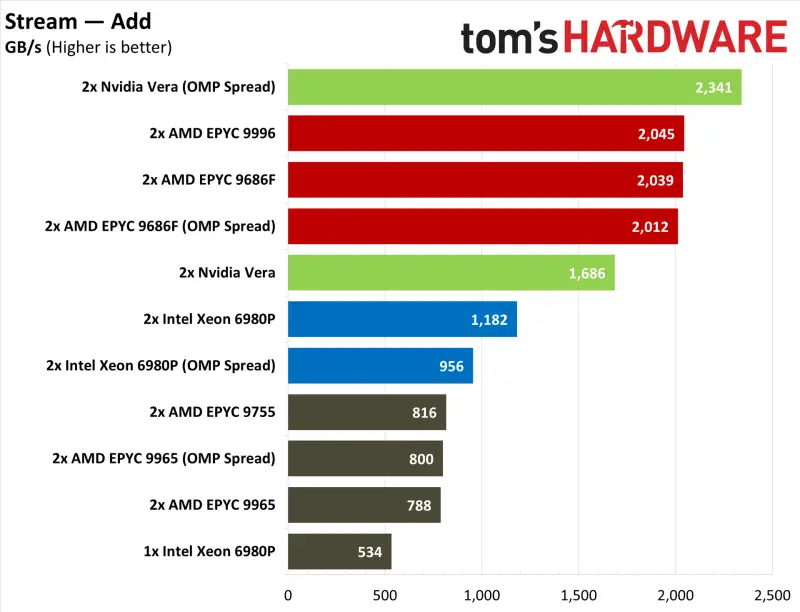
Start with STREAM, the memory bandwidth benchmark that nearly everyone in data center work still uses as a baseline. Here AMD's Venice parts beat Nvidia's Vera by somewhere between 11% and 19%, depending on the test. That's a real gap, but the number depends heavily on how you pin the threads. Under the OpenMP "true" process binding policy, each process is locked to the thread it started on, which keeps the scheduler from shuffling work around and muddying the results. Vera holds its own under that setting. The interesting part comes when you change the policy.
The "spread" policy also binds processes, but it scatters them across the chip, placing them as far from one another as possible. AMD's chips gain nothing from this. Intel's Granite Rapids-AP actually slips slightly. Vera is the outlier: its mesh cache and monolithic die let it convert spread placement into a large performance jump, and it finishes well ahead of the field. If your workload resembles that pattern, the Vera result matters more than the headline AMD lead suggests.
Memory bandwidth and the MBW results
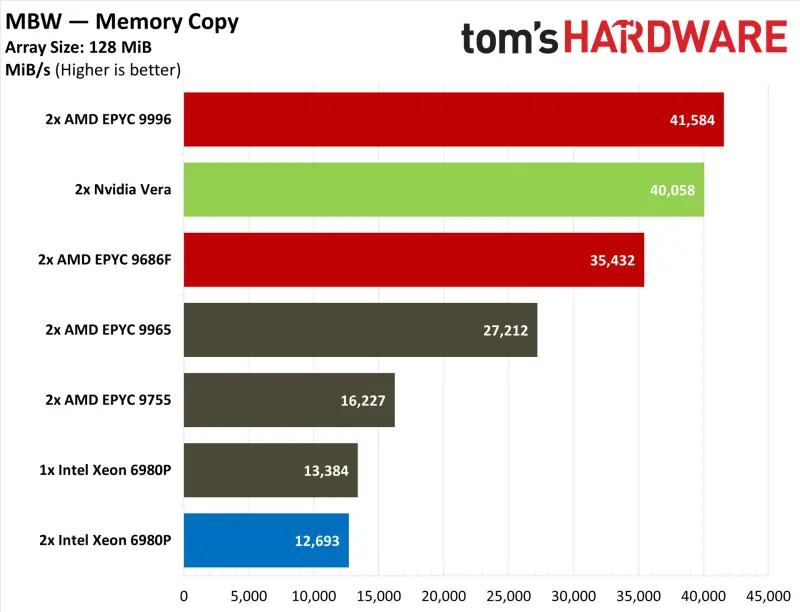
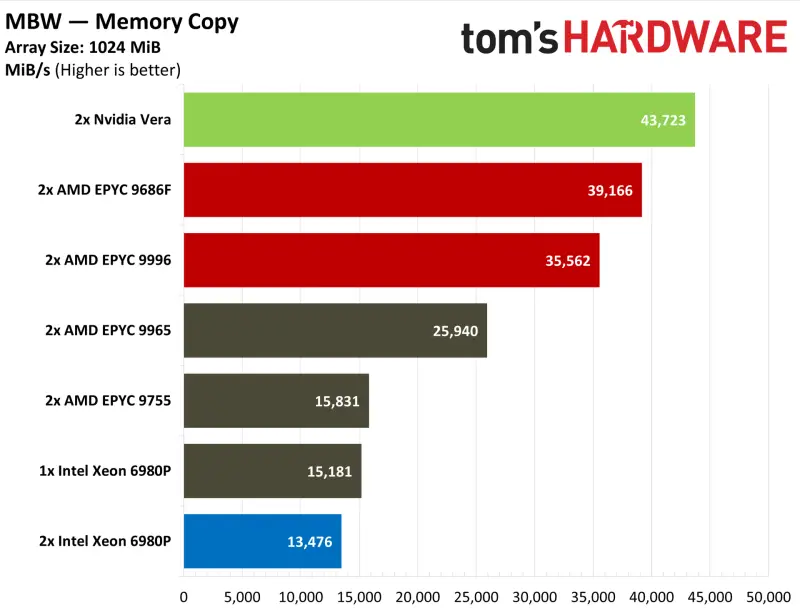
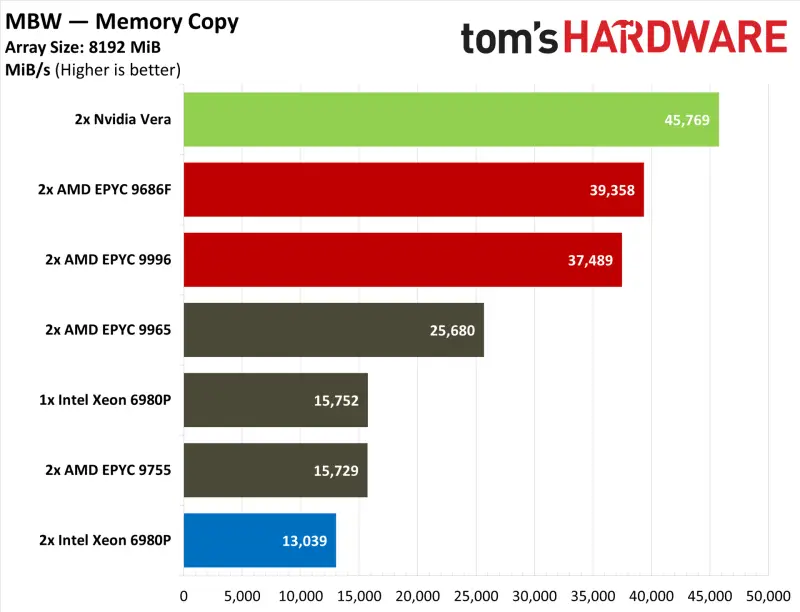
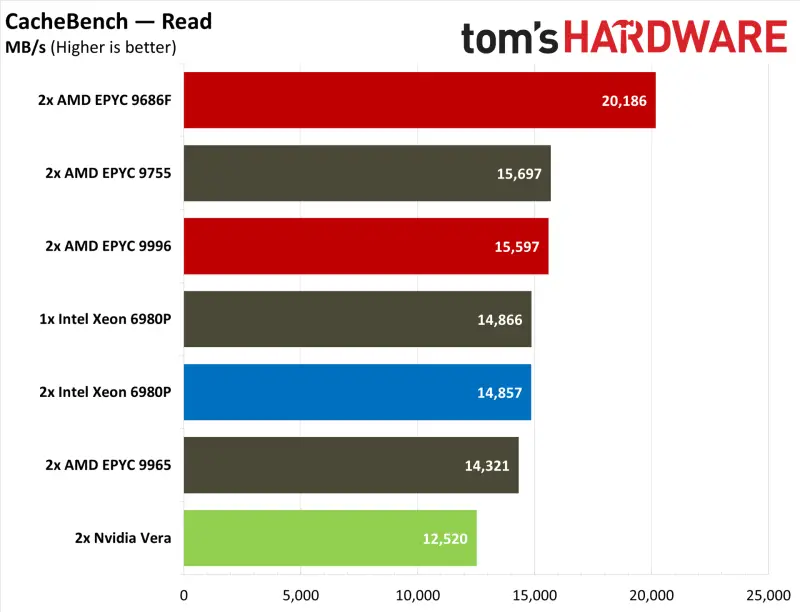
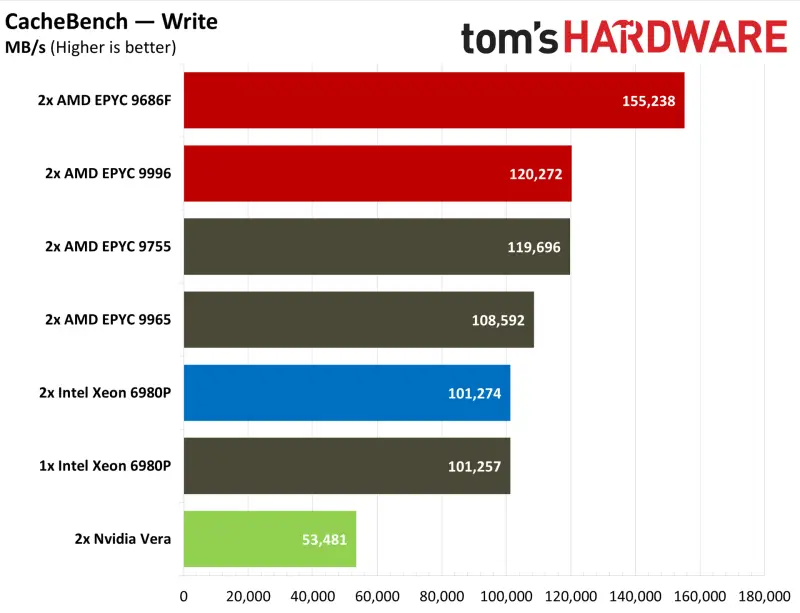
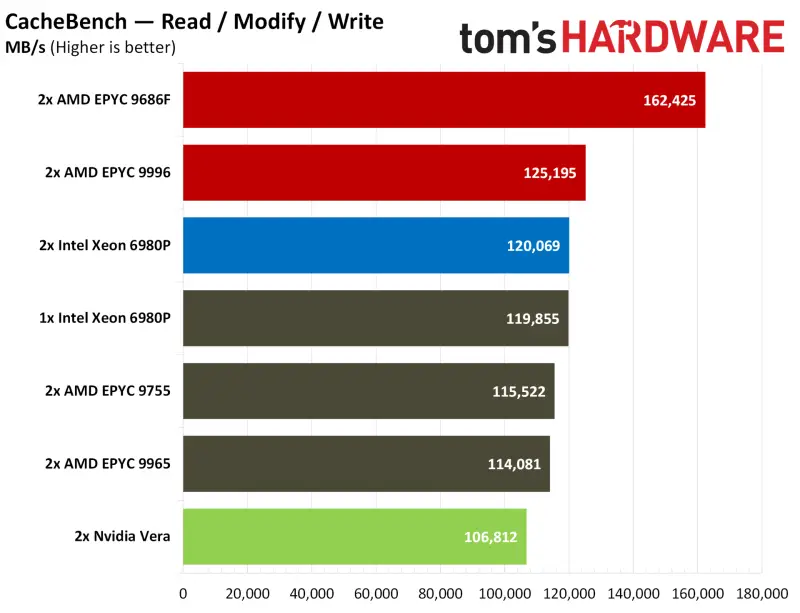
The MBW results tell a more split story. At a small 128 MB array size, the pair of EPYC 9996s edges out Vera. Push the array larger and Vera takes first place. AMD has clearly closed the gap on the memory side, with 16 memory channels and support for 12,800 MT/s MRDIMMs. Still, Vera's topology and an already strong memory subsystem keep it on top where it counts. Credit AMD for narrowing the gap; it hasn't closed it.
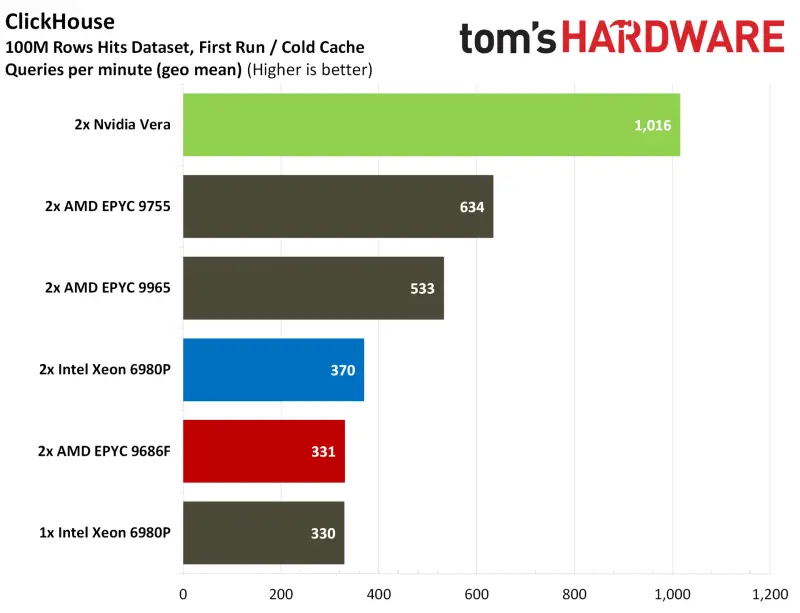
Python: where AMD pulls away
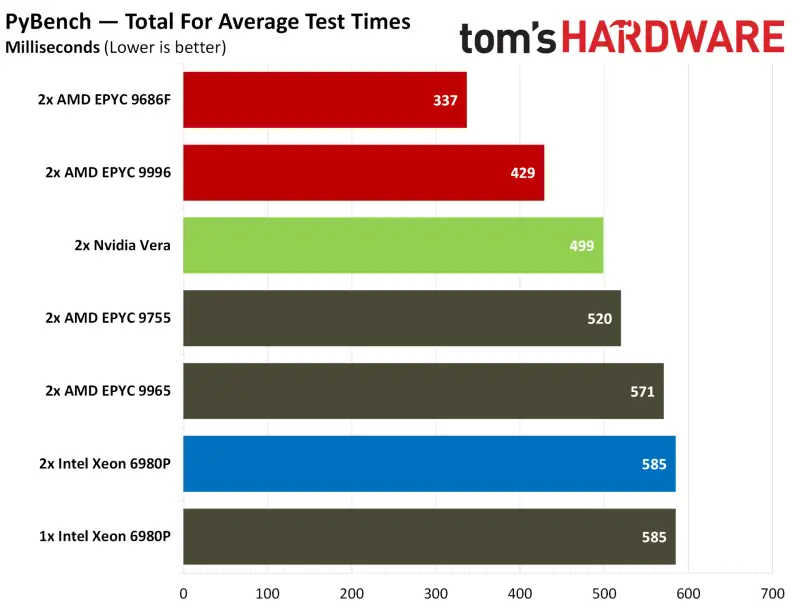
The memory differences fade once you move to Python, which is a far more contested field. PyBench gives the broad picture. Across the suite, the EPYC 9686F is 32% faster than Vera, while the EPYC 9996 settles for a 14% lead, held back by its lower boost clocks. Gen-on-gen, the 9996 is 24% ahead of the EPYC 9965. The 9686F lands 35% ahead of the 9755, but a good chunk of that comes from its boost clock running 900 MHz higher. That's a frequency story as much as an architecture one.
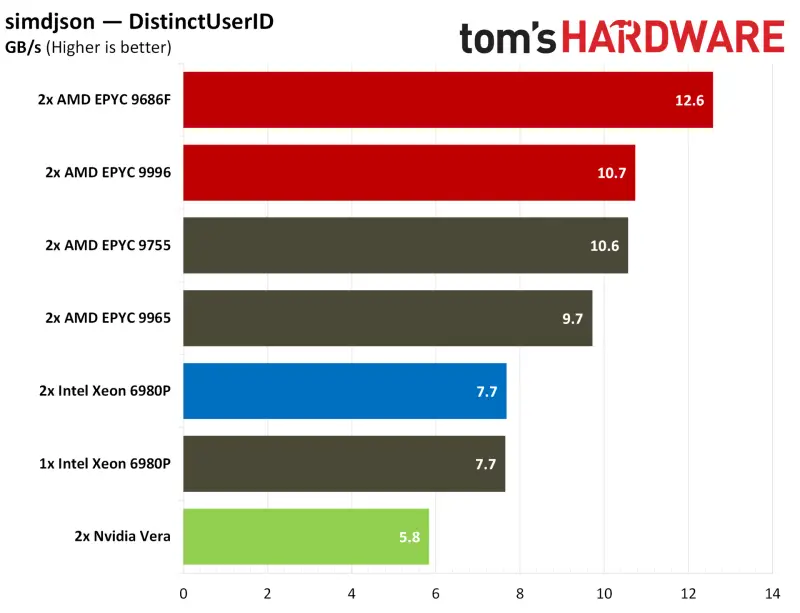
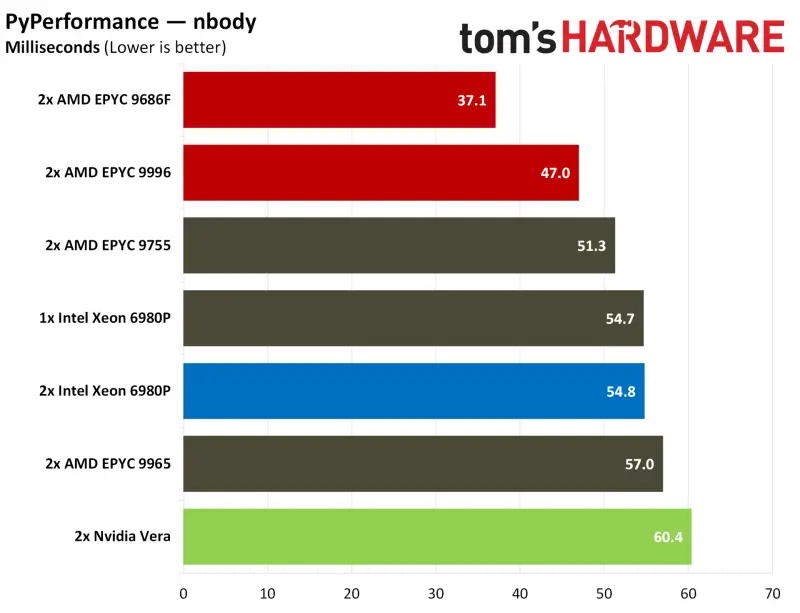
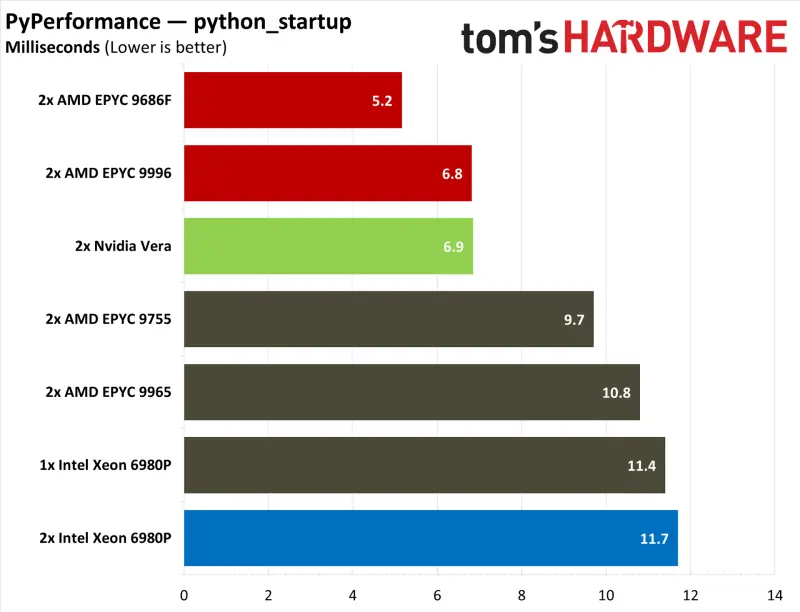
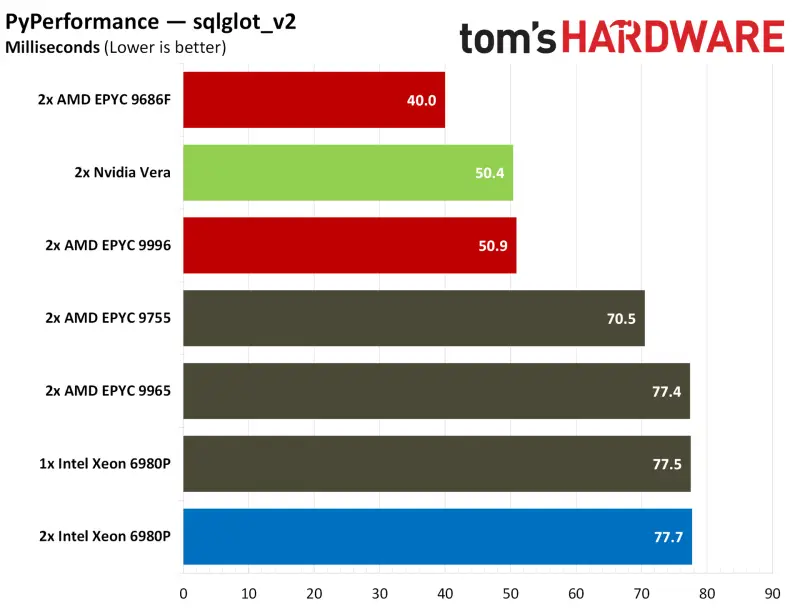
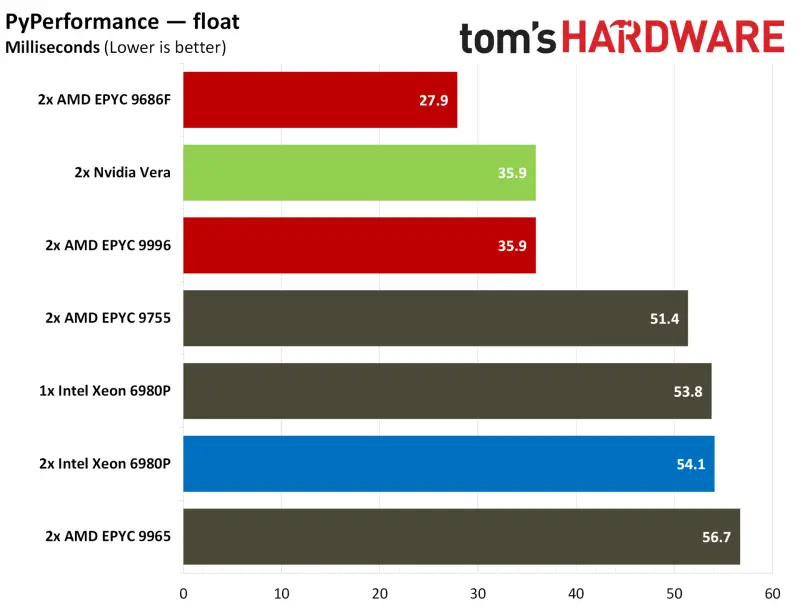
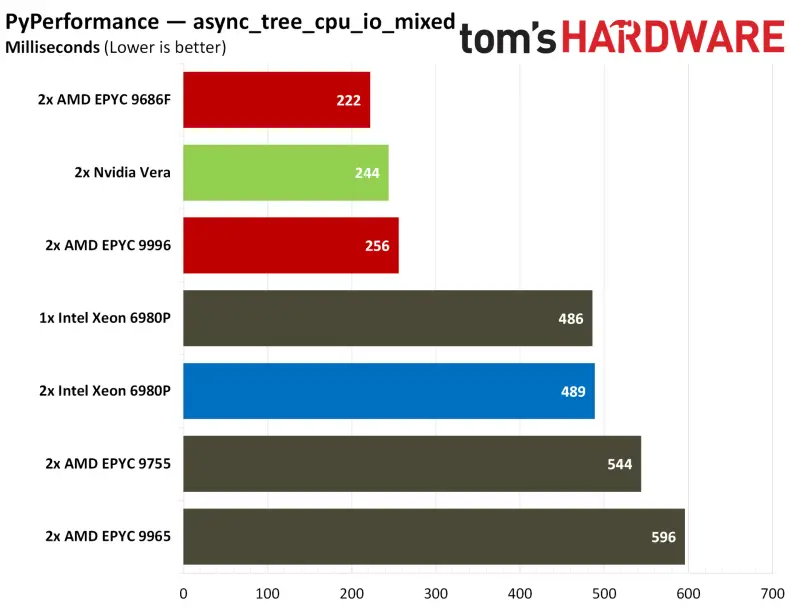
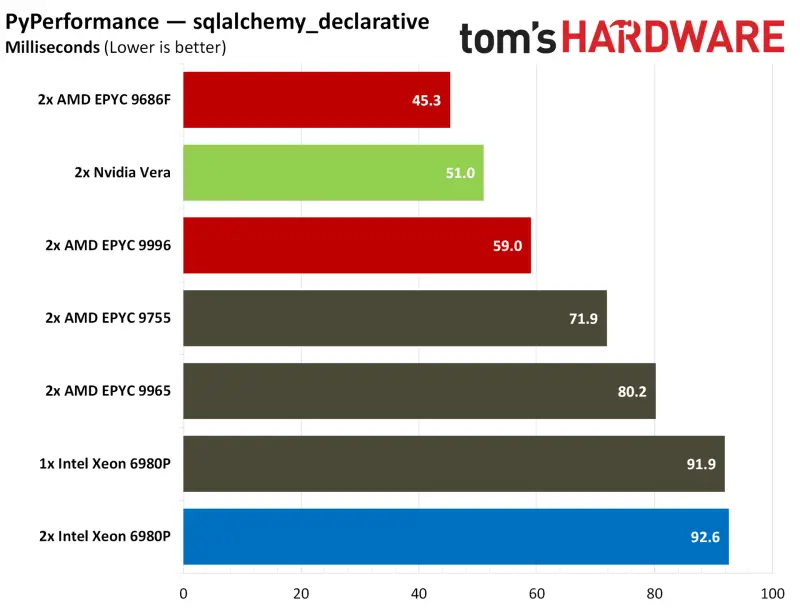
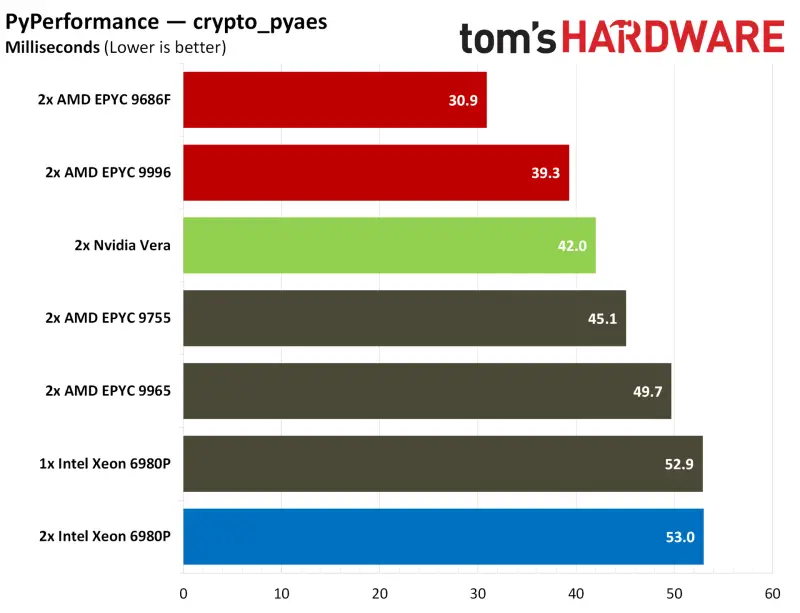
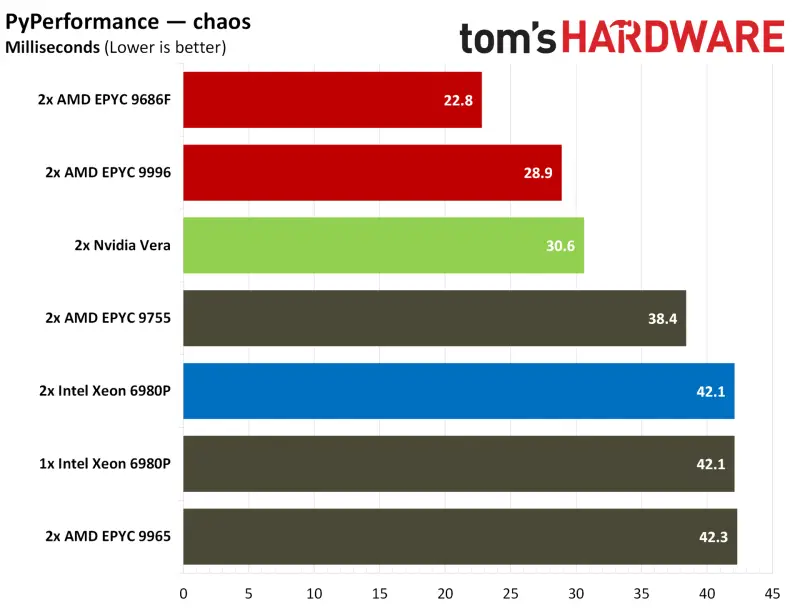
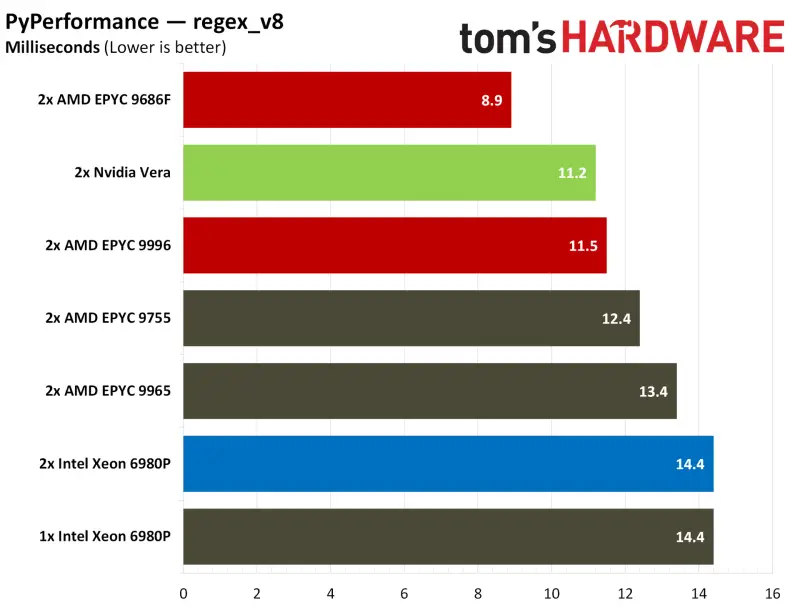
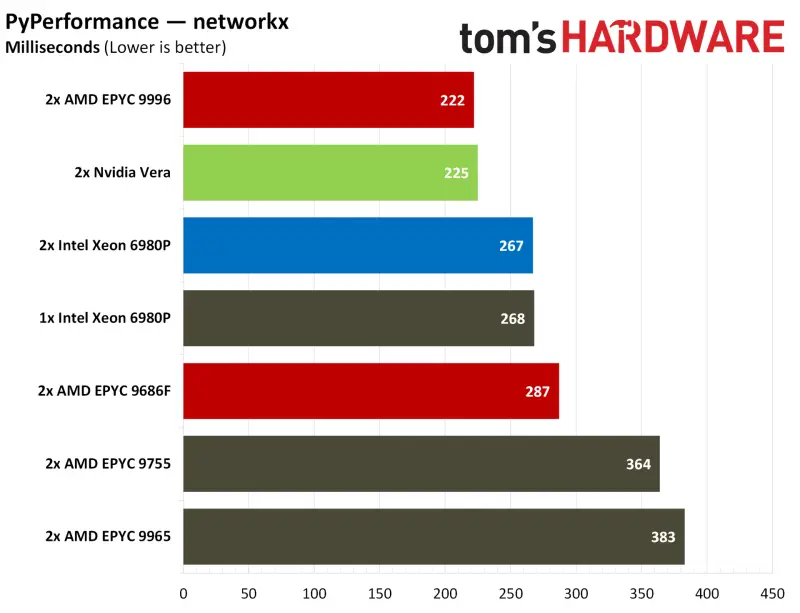
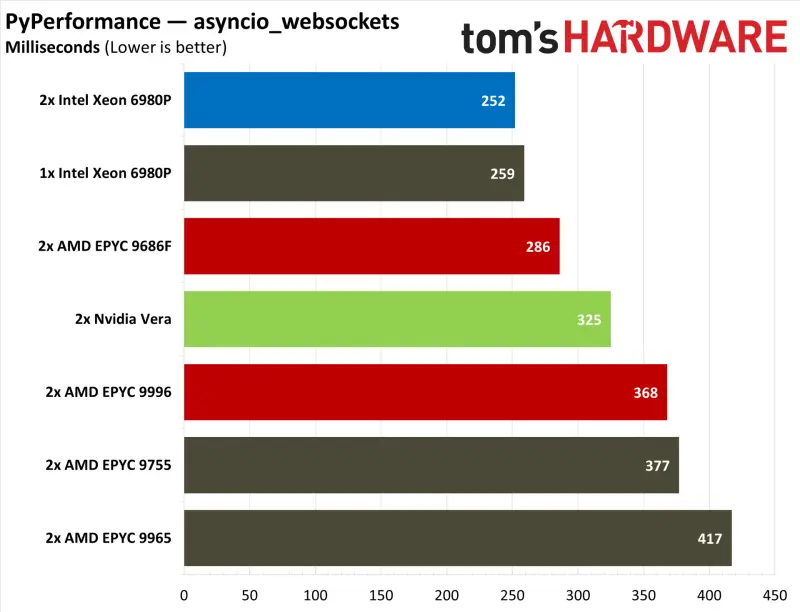
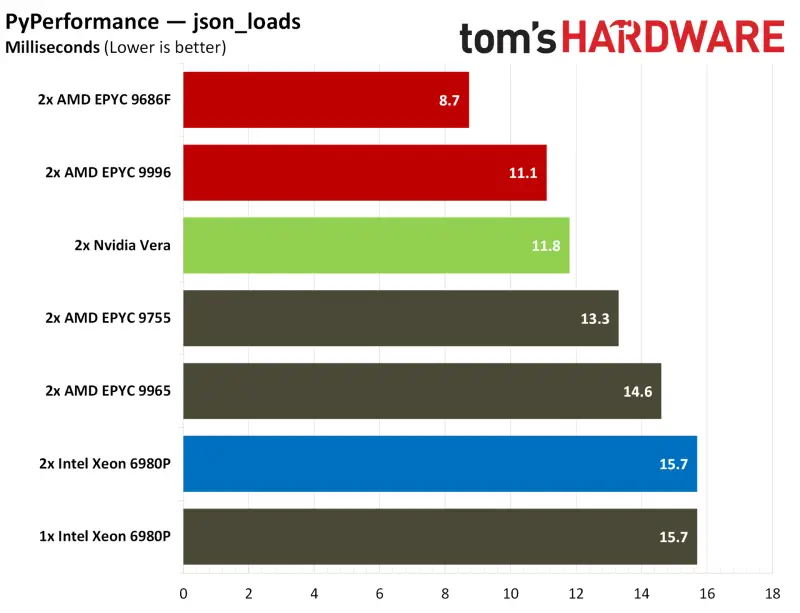
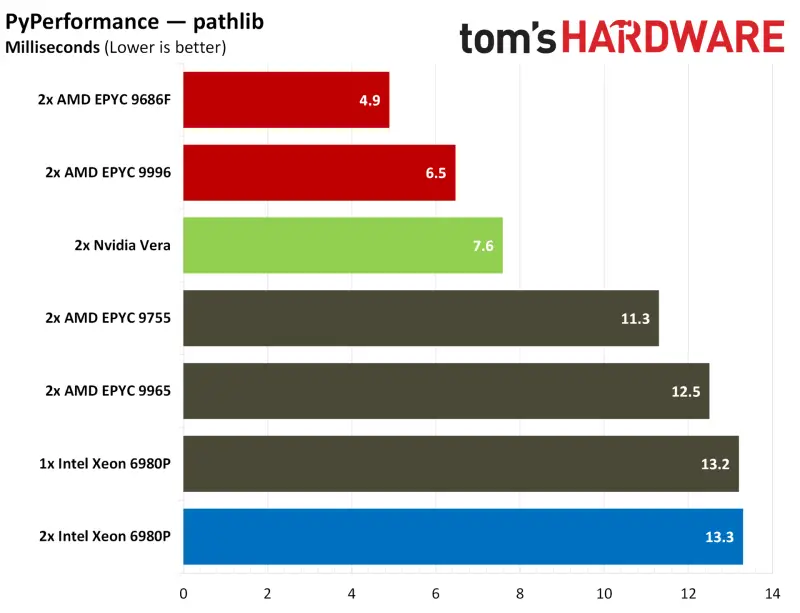
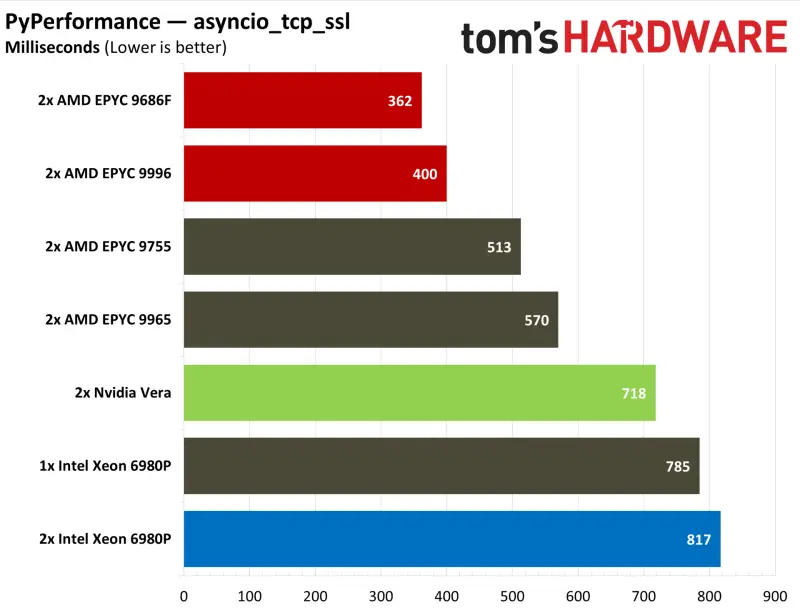
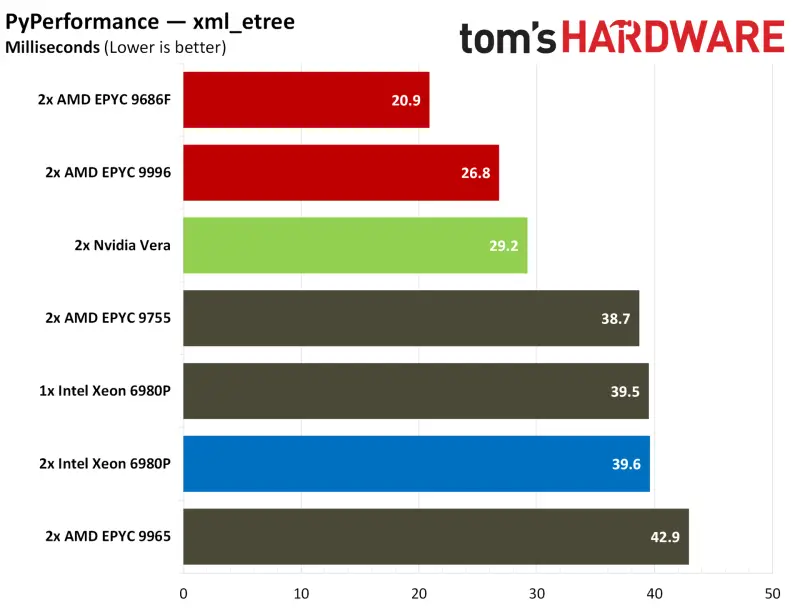
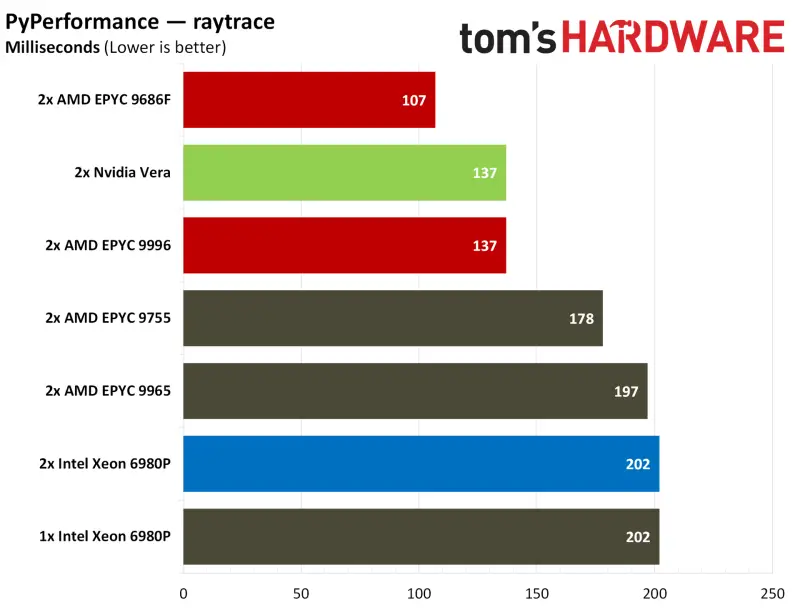
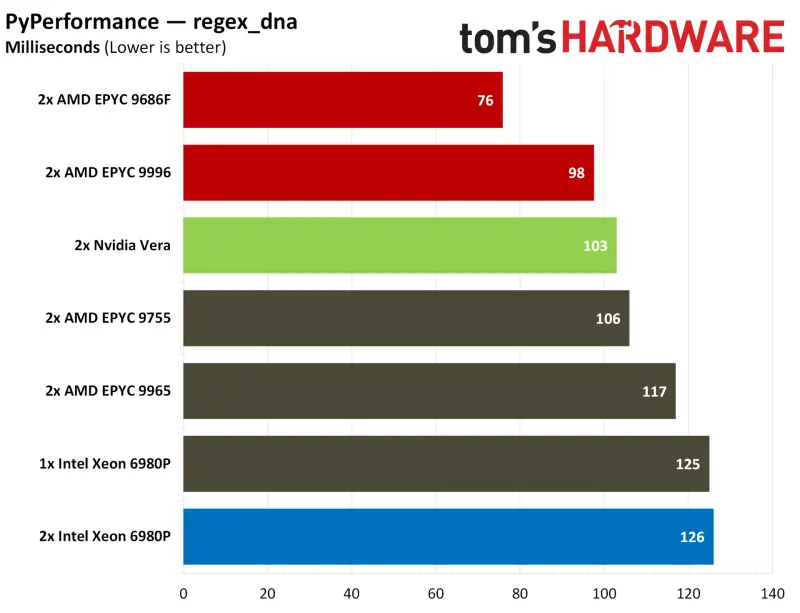
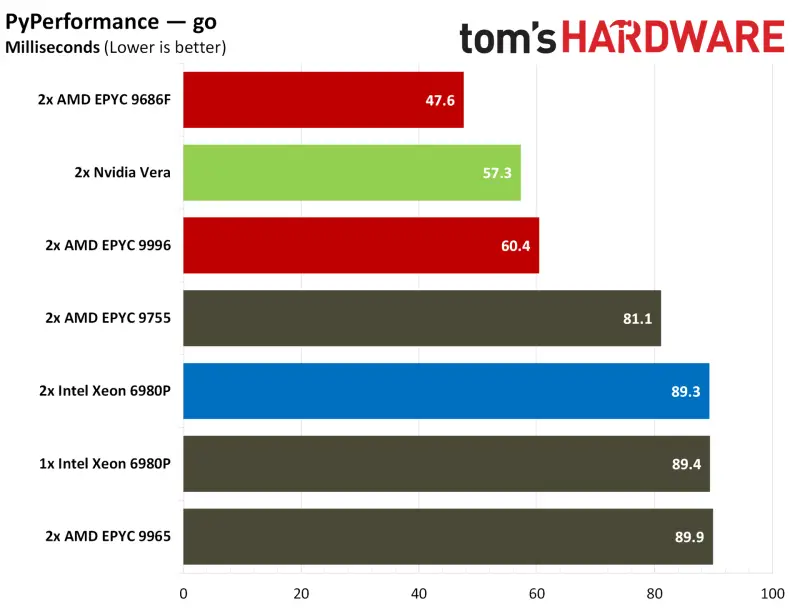
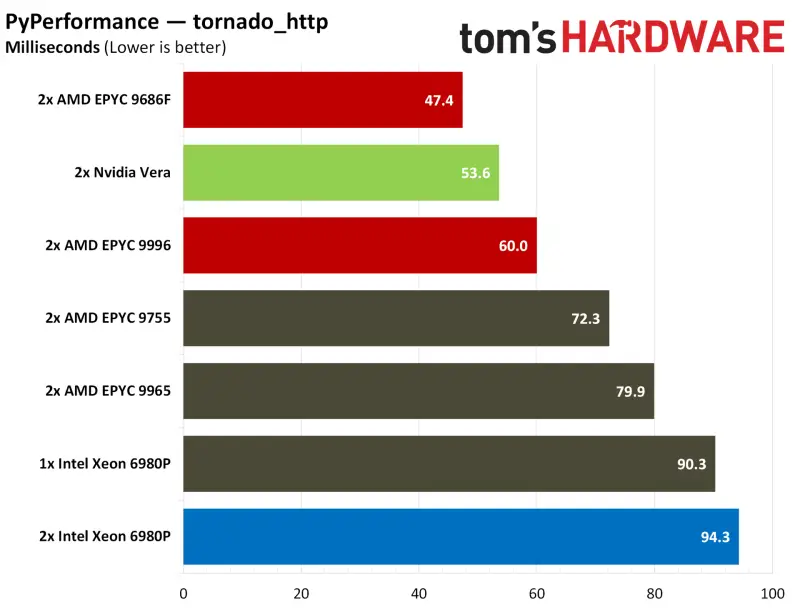
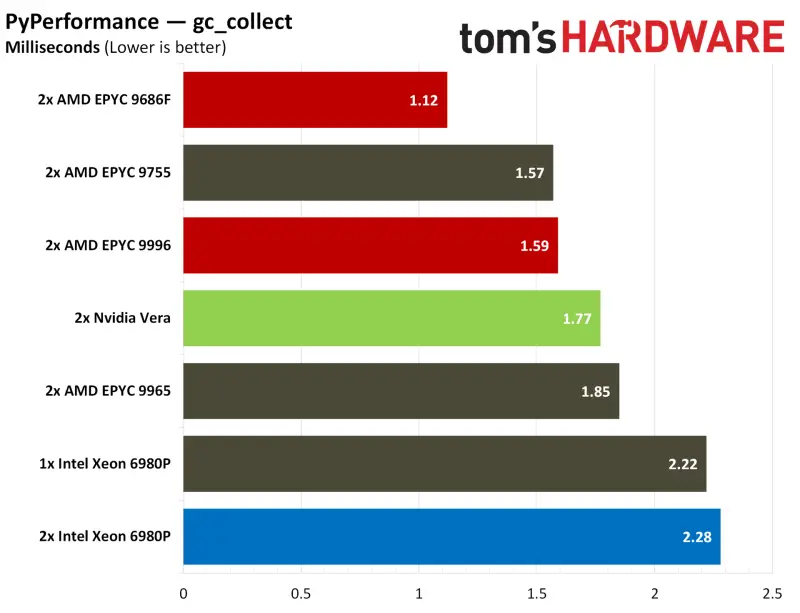
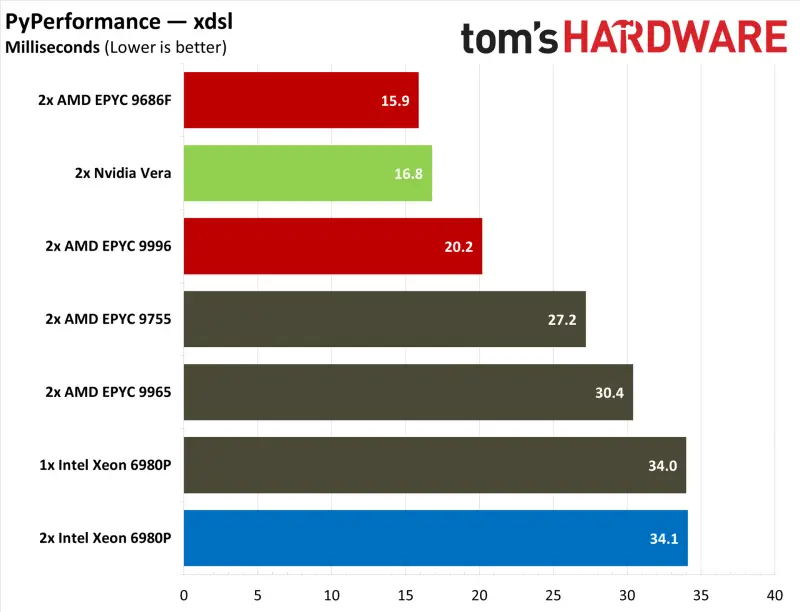
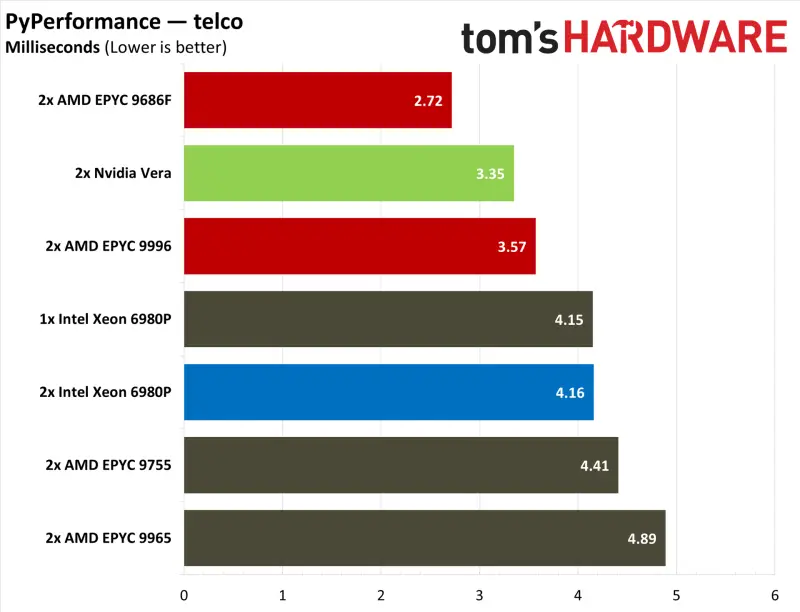
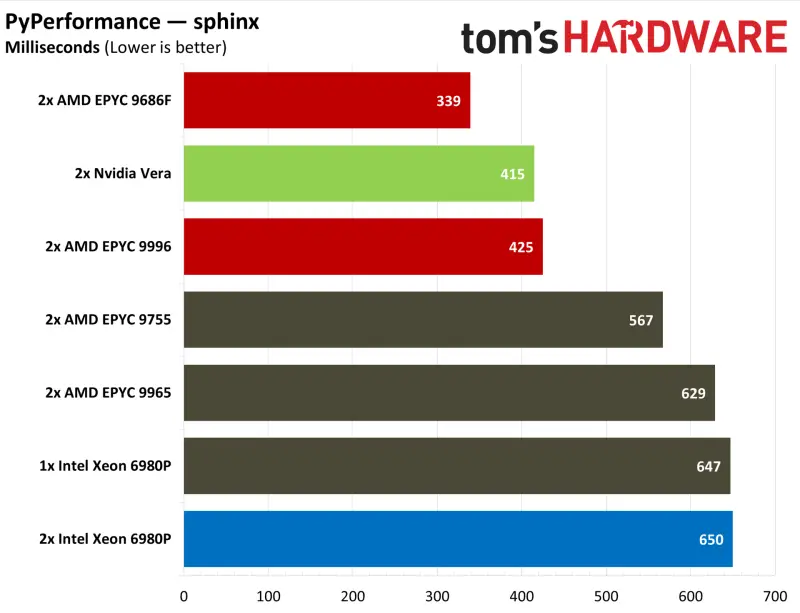
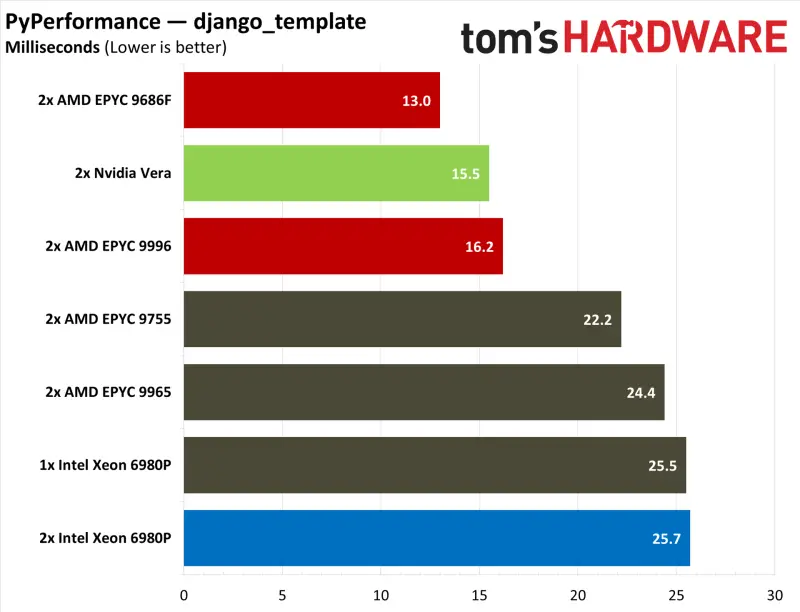
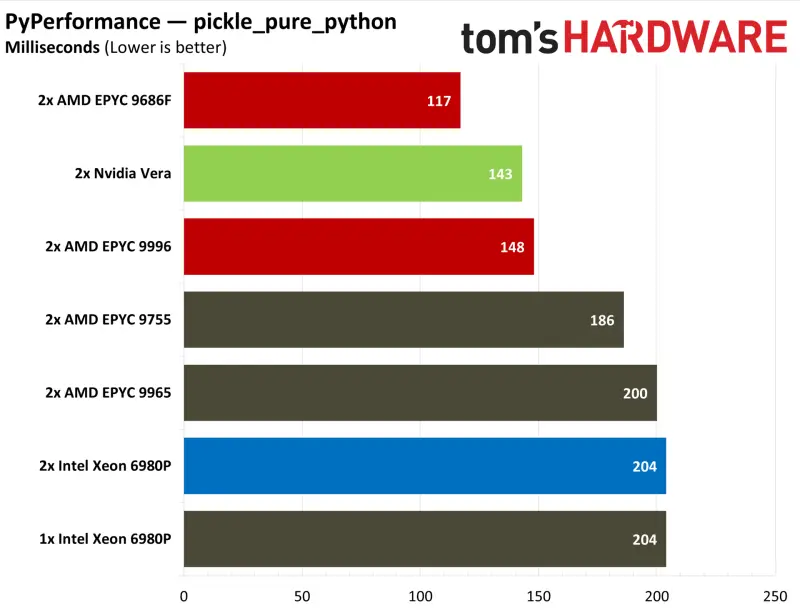
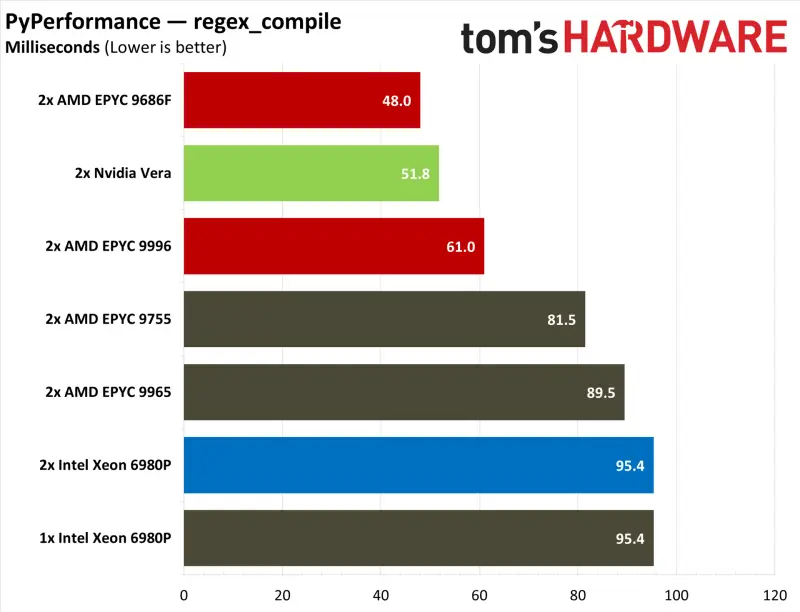
PyPerformance drills into individual Python applications and functions, and the same pattern holds. Other CPUs shuffle around the rankings, but the EPYC 9686F leads by a clear margin across most of the tests. That's not surprising. Python leans heavily on a single thread at stock settings, and the 9686F's clock advantage pays off directly there.
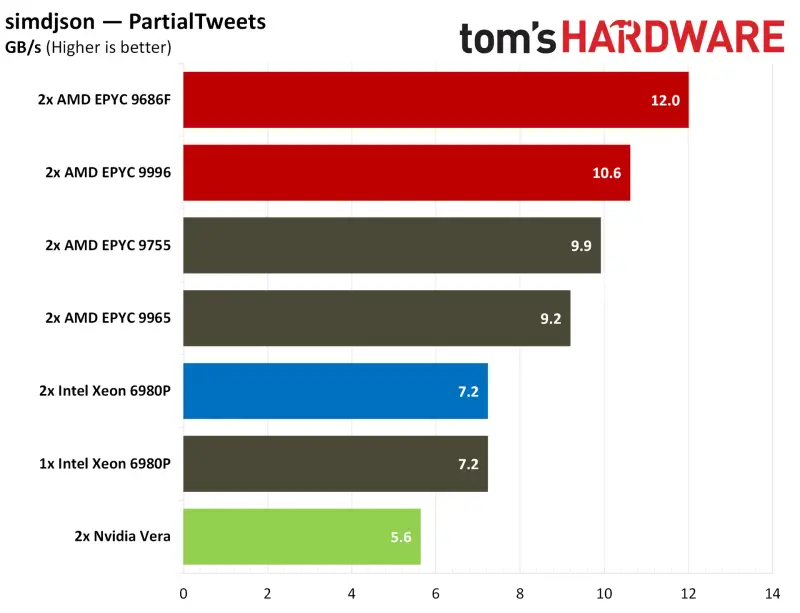
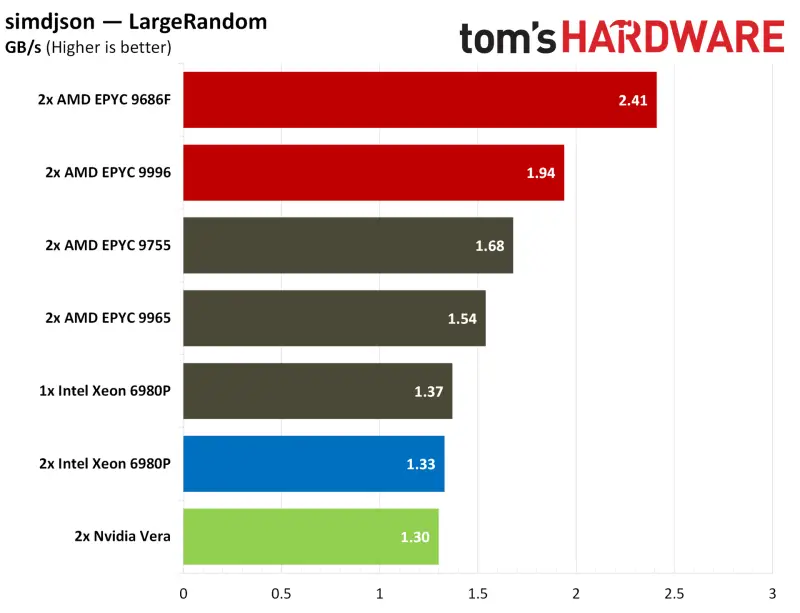
The exception worth your attention is the networkx benchmark, where the throughput-oriented 9996 takes the top spot and matches Nvidia's Vera. Vera is an impressive chip, especially given Nvidia's short history in data center CPUs and a spec sheet that doesn't look aggressive on paper. But Venice makes a strong case that the CPU market is AMD's to win, or to lose.
Compression and rendering: AMD's home turf
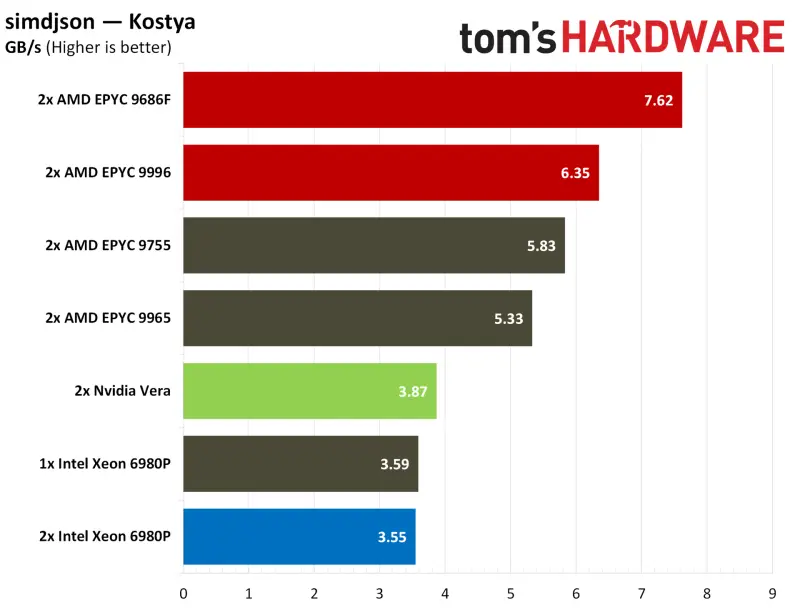
Stepping outside the agentic AI conversation for a moment, AMD keeps proving itself as the leader in general-purpose data center work, and Venice continues that run. Some of these workloads touch agentic AI depending on how an agent is built. Database speed matters, for instance, if an agent spends its time querying a database. We're keeping the analysis broad, though, because EPYC chips will run a wide mix of jobs, and much of that mix has nothing to do with agents.
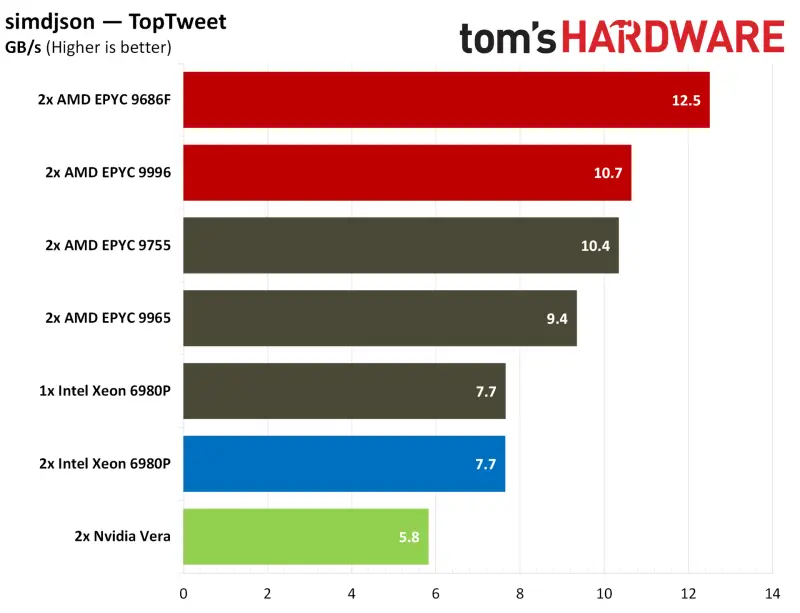
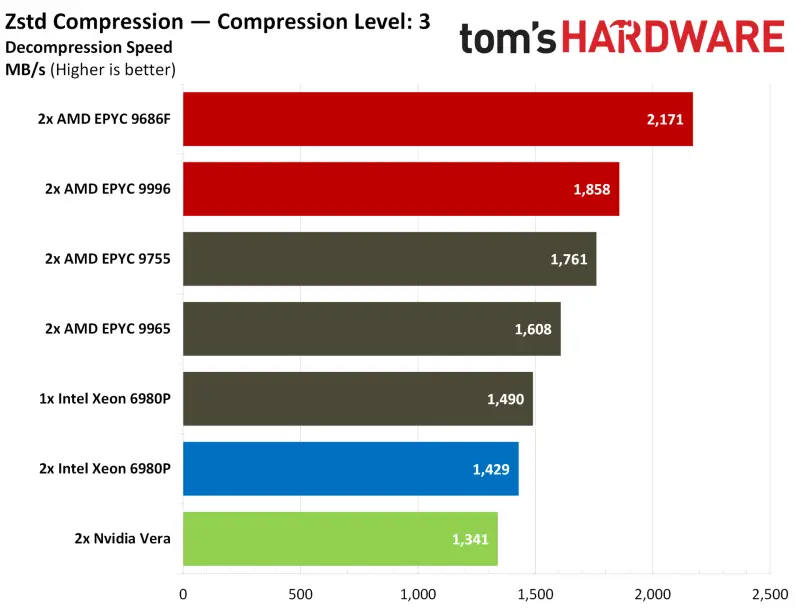
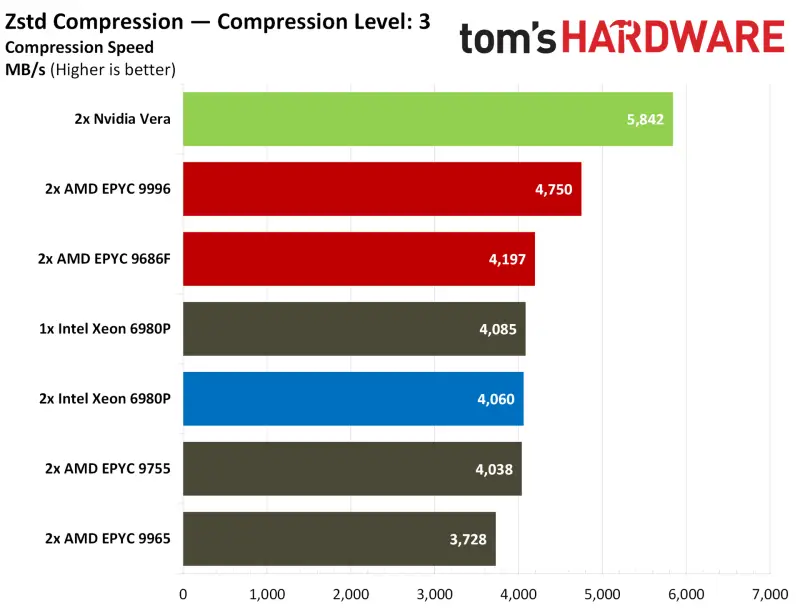
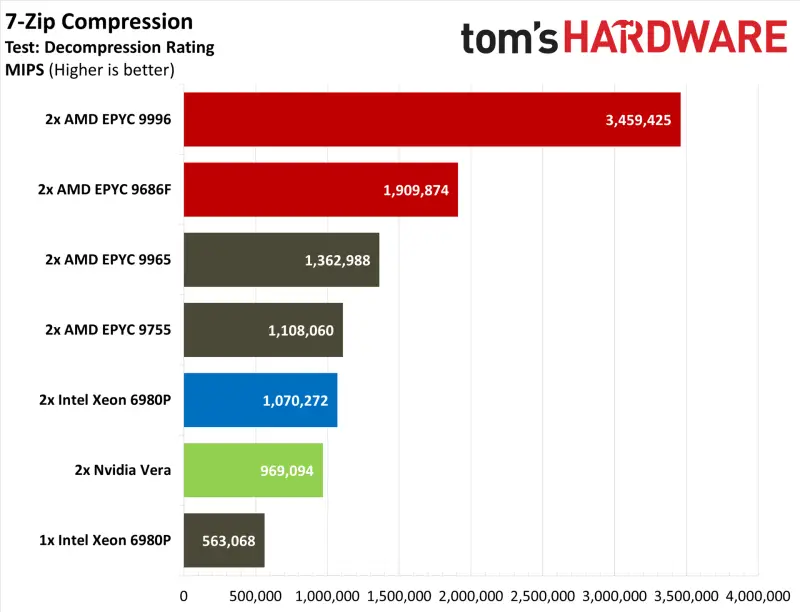
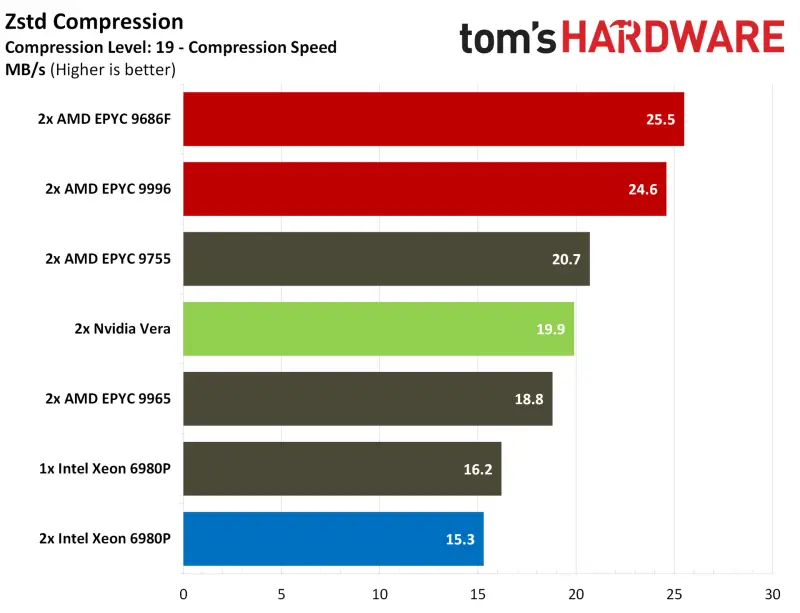
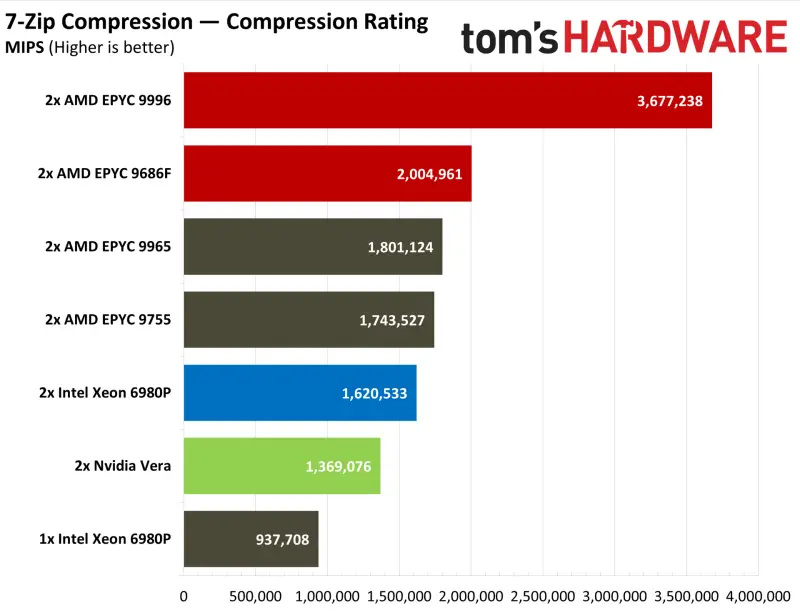
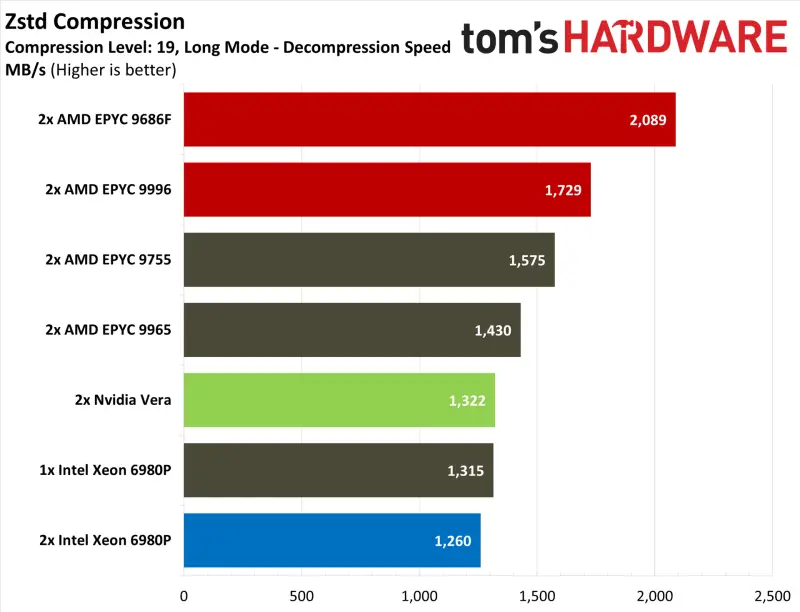
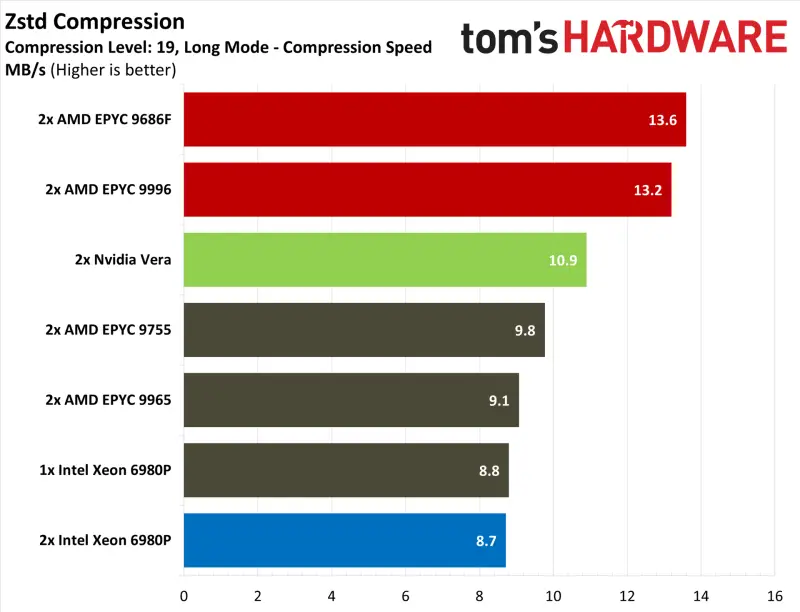
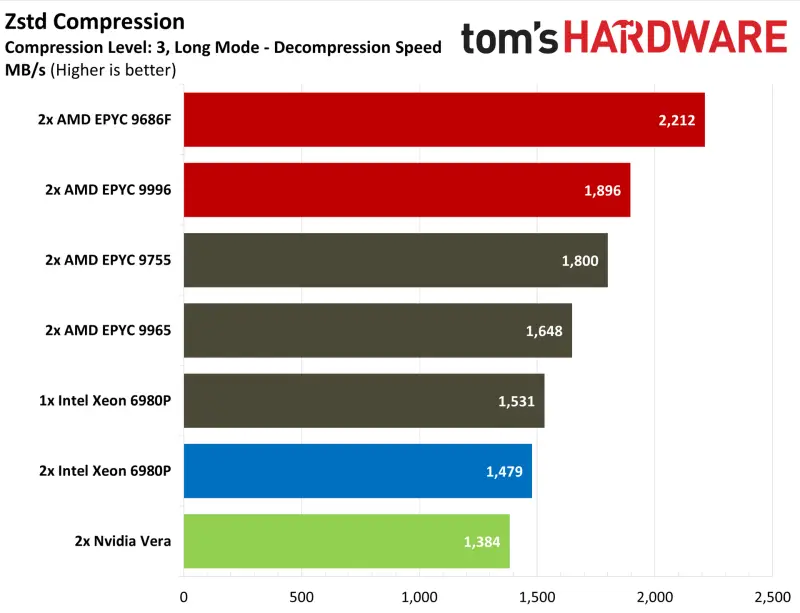
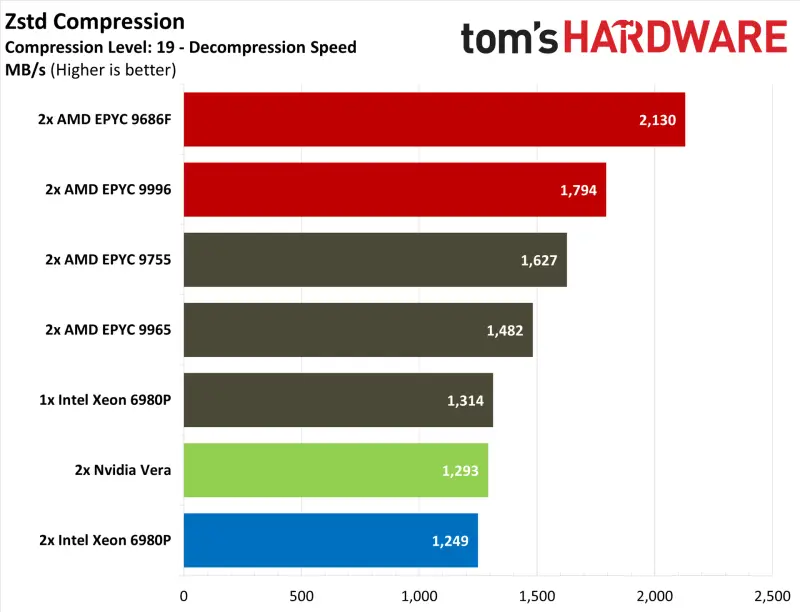
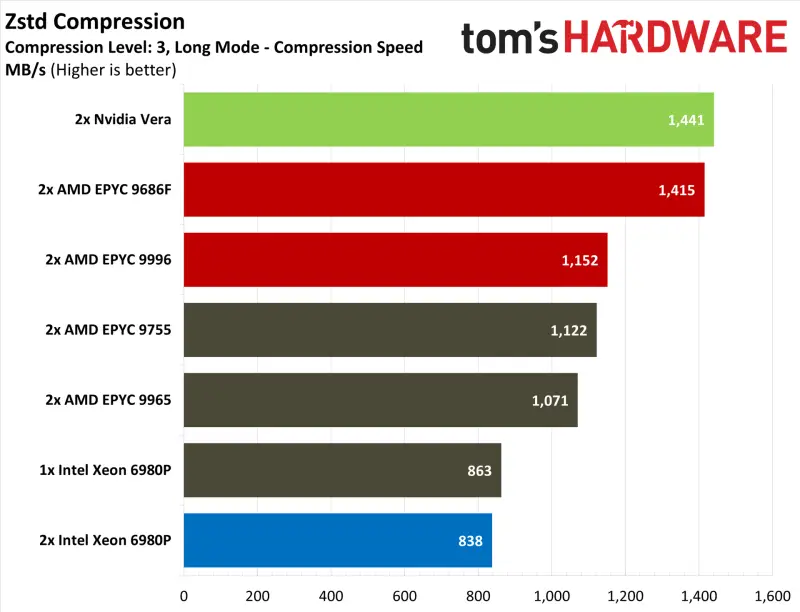
On compression, AMD generally owns the top of the charts for both compression and decompression throughput, and zstd and 7-Zip follow that pattern. Vera grabs an early lead in zstd at the lowest compression level. That advantage evaporates quickly, though. Its weak decompression shows up even at level 3, and at level 19 AMD wins outright while Vera drops further back on decompression.
Long mode is where things get uncomfortable for Vera. The rankings hold steady, but Vera's results decline under sustained compression, while AMD keeps far more of its speed. At level 3, Vera and the EPYC 9686F are within measurement noise of each other. On decompression, Vera lands at the bottom of the pack.
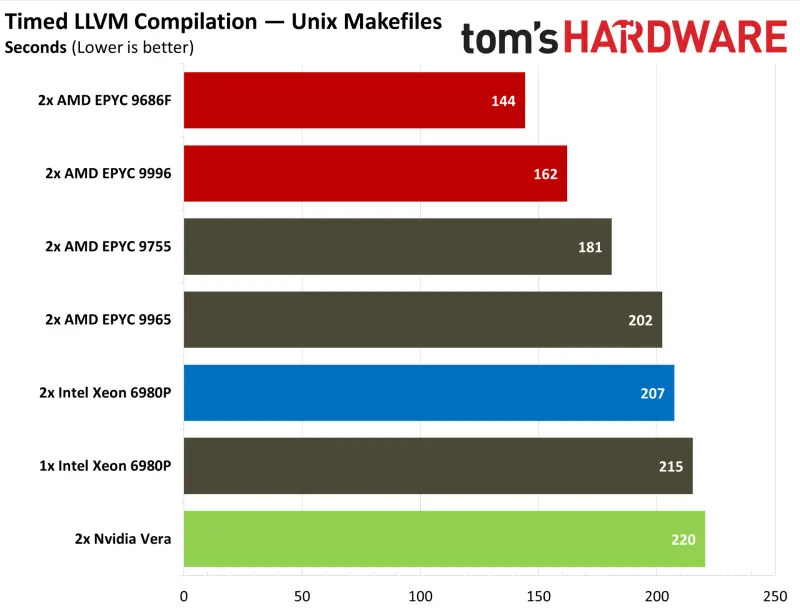
7-Zip has been AMD's stronger suit for years, and these charts make the point bluntly. The gaps against Vera are multiplicative, not incremental, and Intel's Granite Rapids-AP barely registers as competition. What makes this more striking is that Zen 6 already posts high baseline numbers across a wide range of workloads, and compression is compounding on top of that.
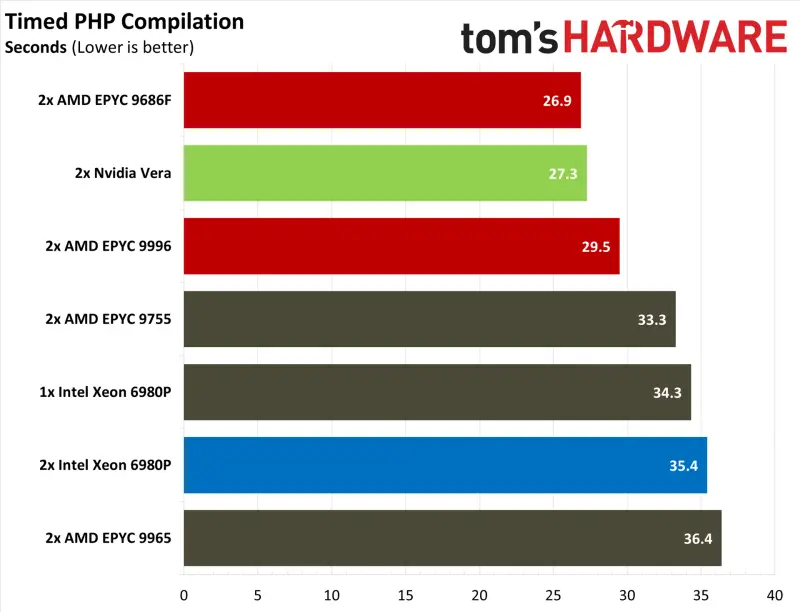
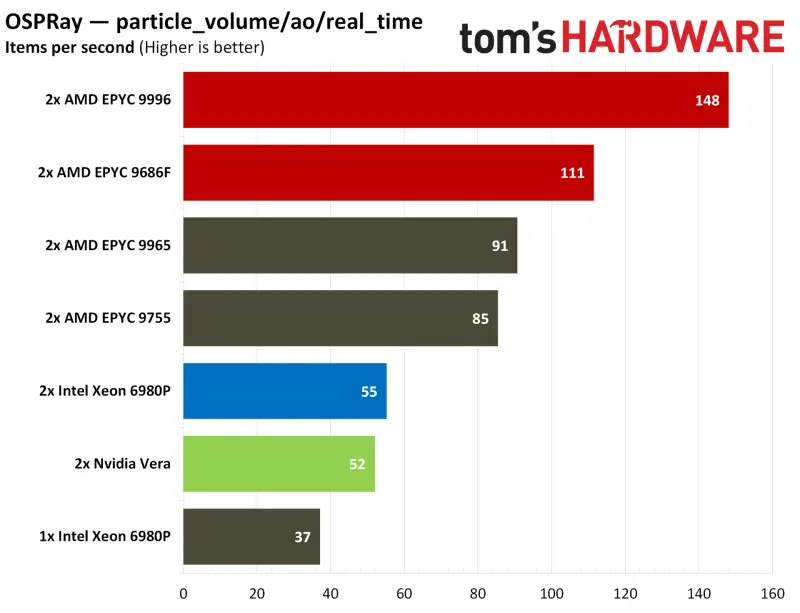
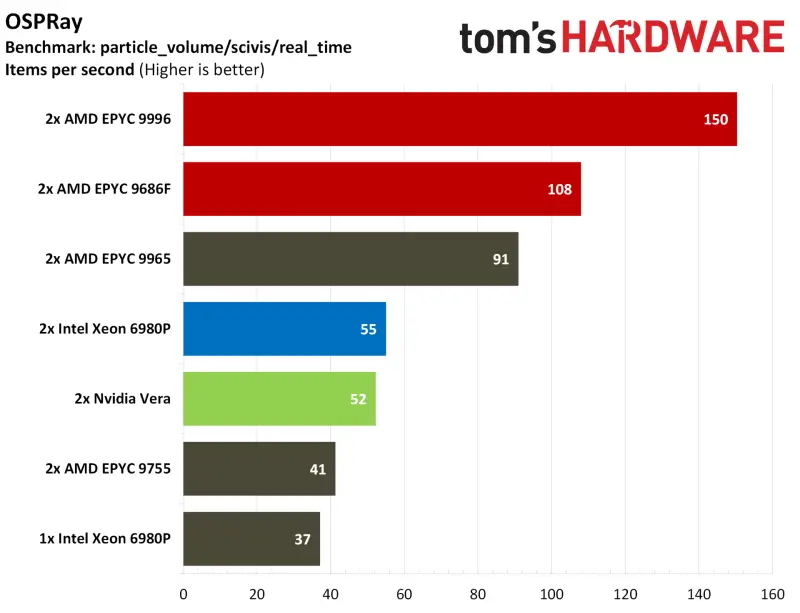
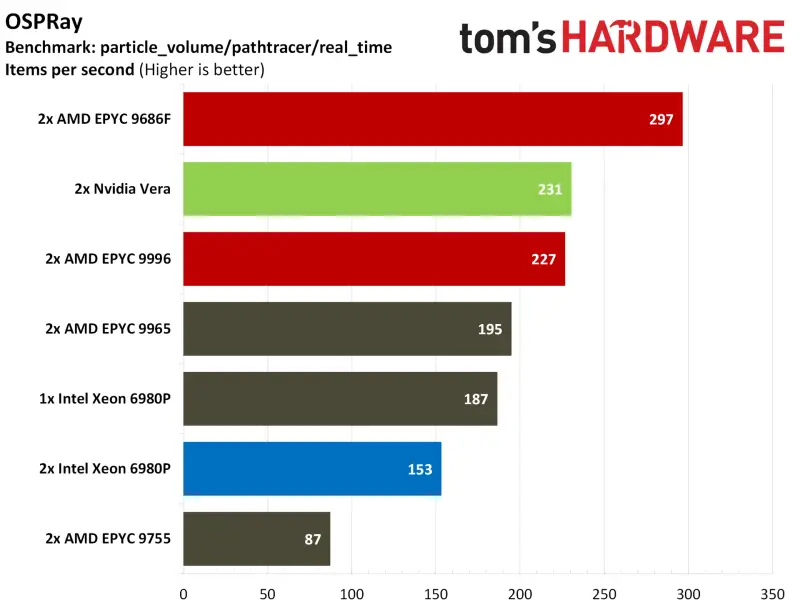
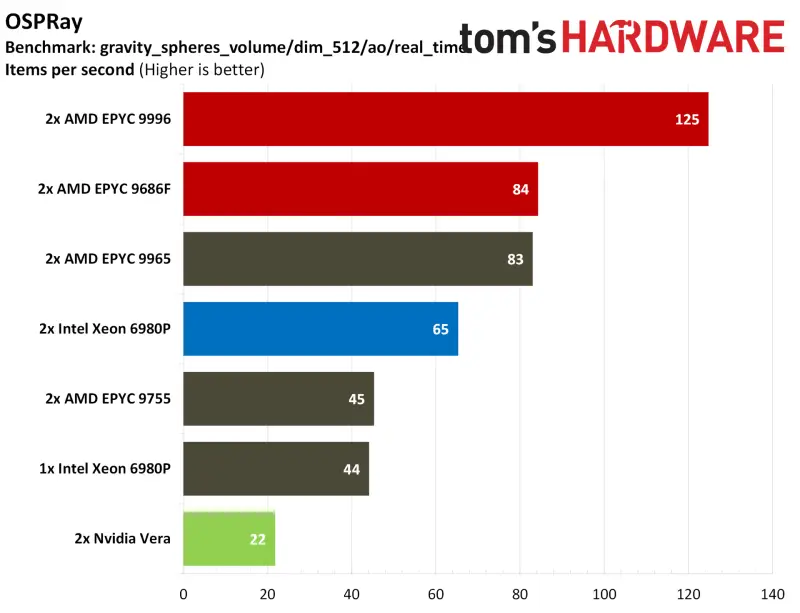
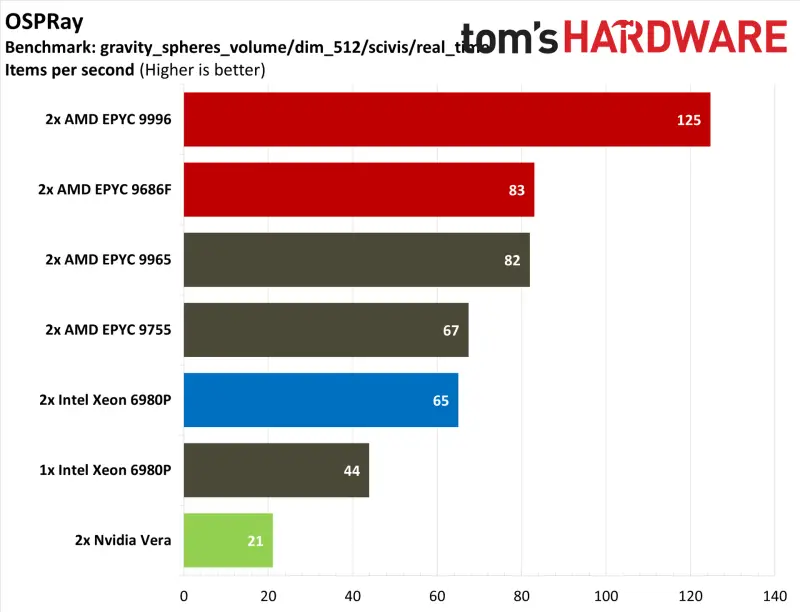
Blender shows the biggest generational jump. The EPYC 9996 beats the EPYC 9965 by somewhere between 30% and 40%, depending on the scene. The gains hold even in demanding scenes like Barbershop, where render times are measured in minutes rather than seconds on many chips. There, the 9996 finishes 35% faster than the 9965. The 9686F matches the 9965 despite having half the cores, which says more about per-core efficiency than the core count suggests. Vera doesn't appear in the Blender results because no native Arm build exists.
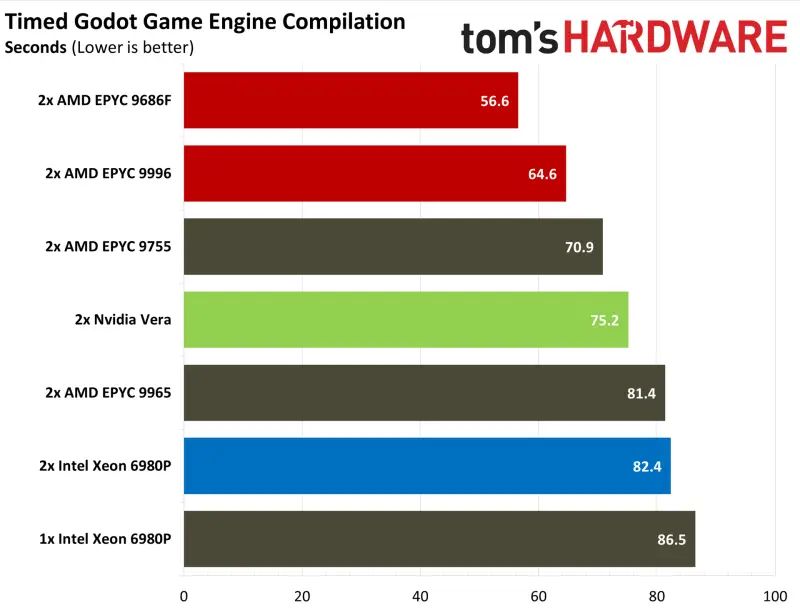
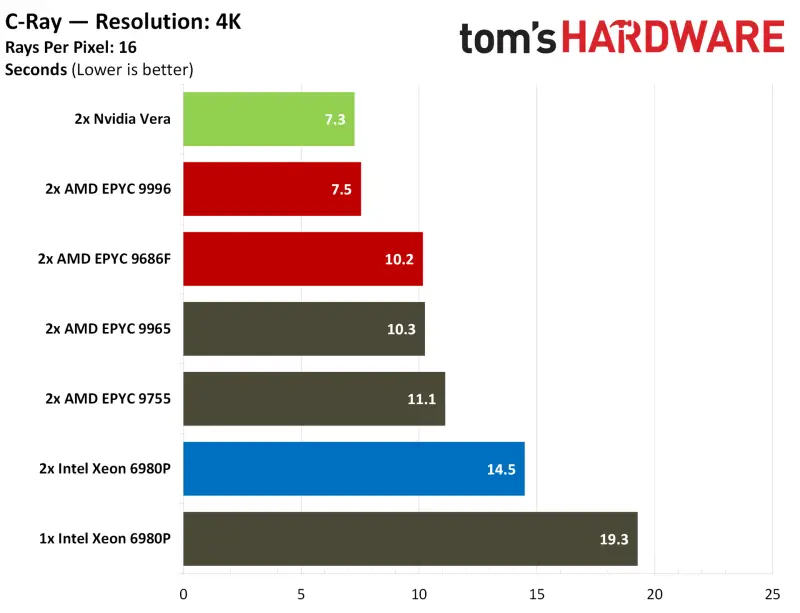
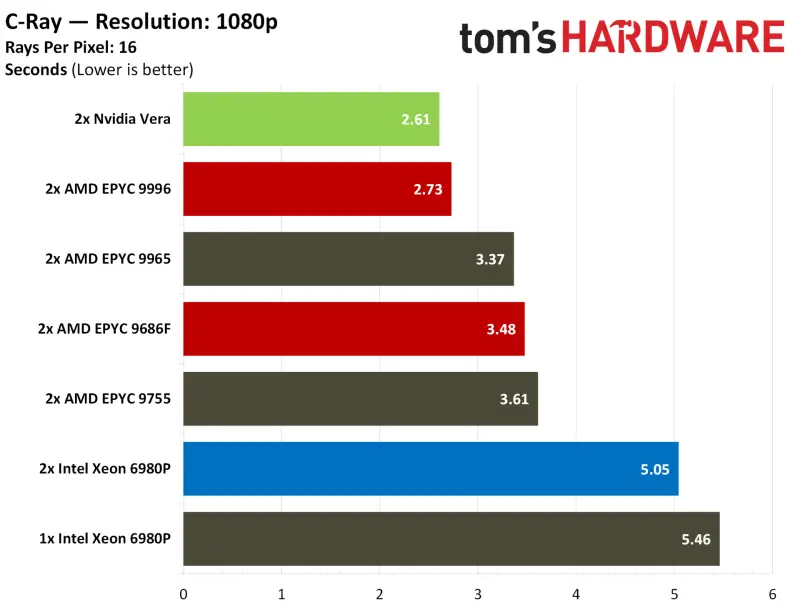
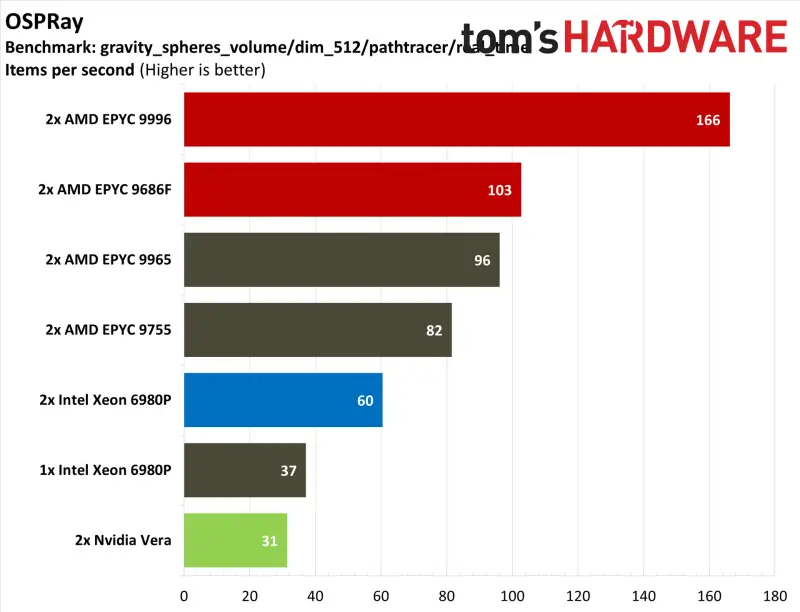
C-Ray is a different story. Vera keeps the top spot at both 4K and 1080p, though a dual EPYC 9996 configuration sits close behind. OSPRay flips the result. AMD posts clear leads in real-time ambient occlusion, scientific visualization, and path tracing. The 9996 nearly triples the performance of the Xeon 6980P and Vera in ambient occlusion and scientific visualization, which are the kind of margins that stop being a rounding error.
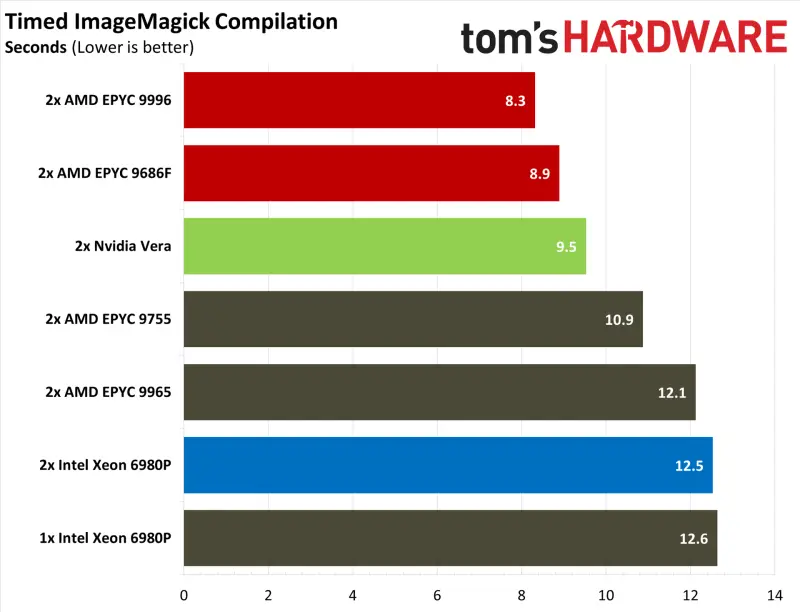
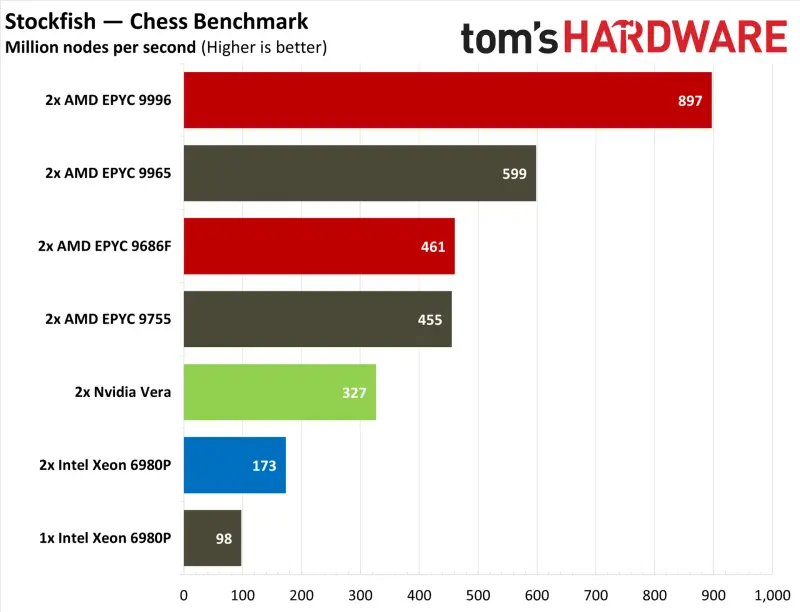
The reworked vector engine in Venice becomes most visible in the dim_512 tests. Those workloads hammer both the vector units and memory bandwidth at once, so they expose whether a chip's gains hold up under real pressure.
Java and database workloads
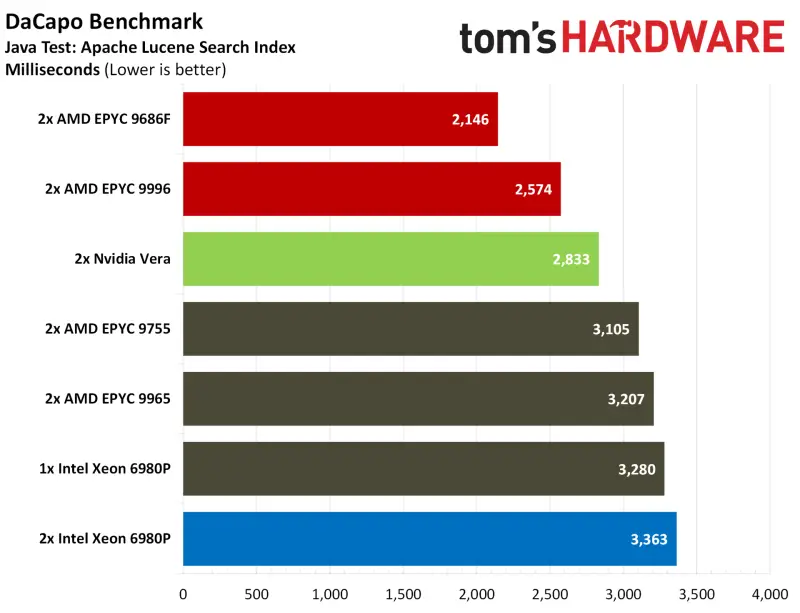
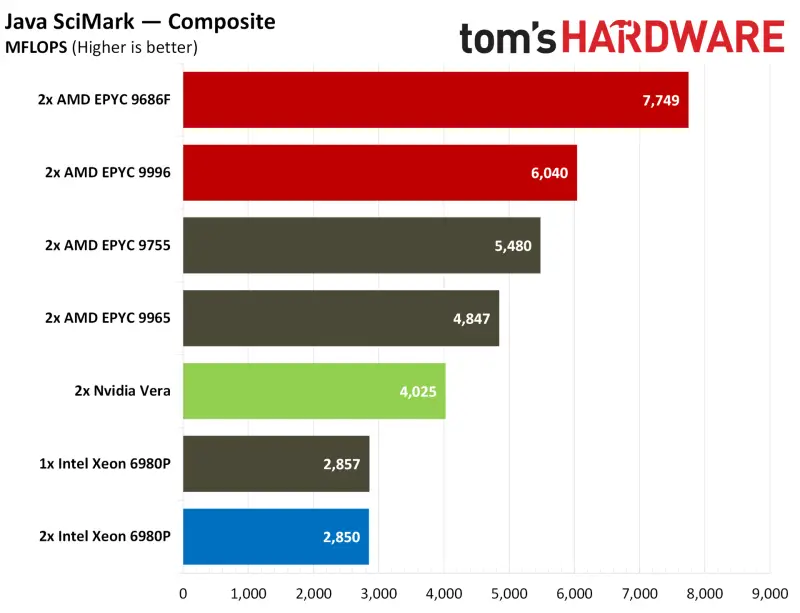
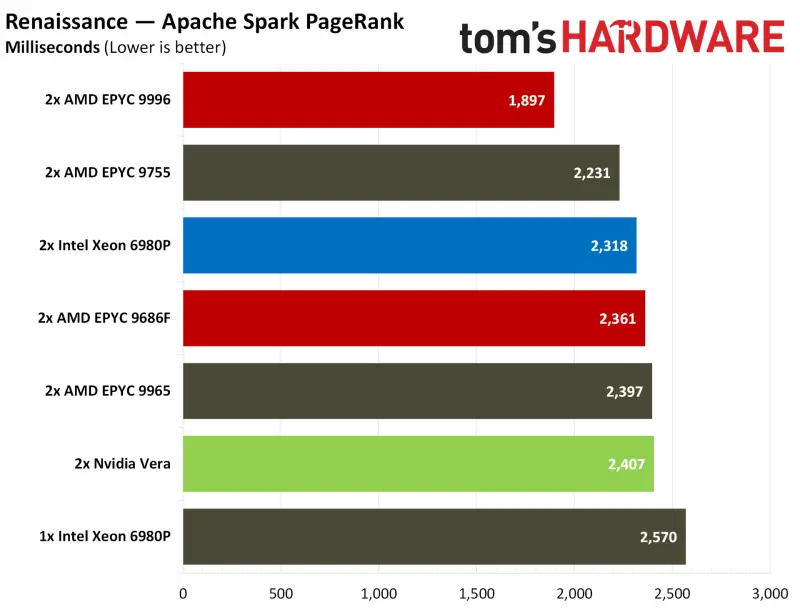
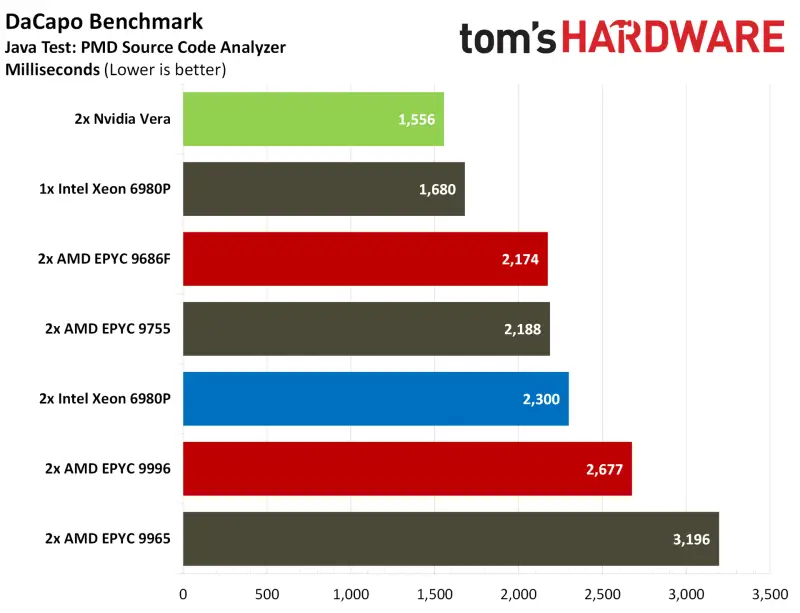
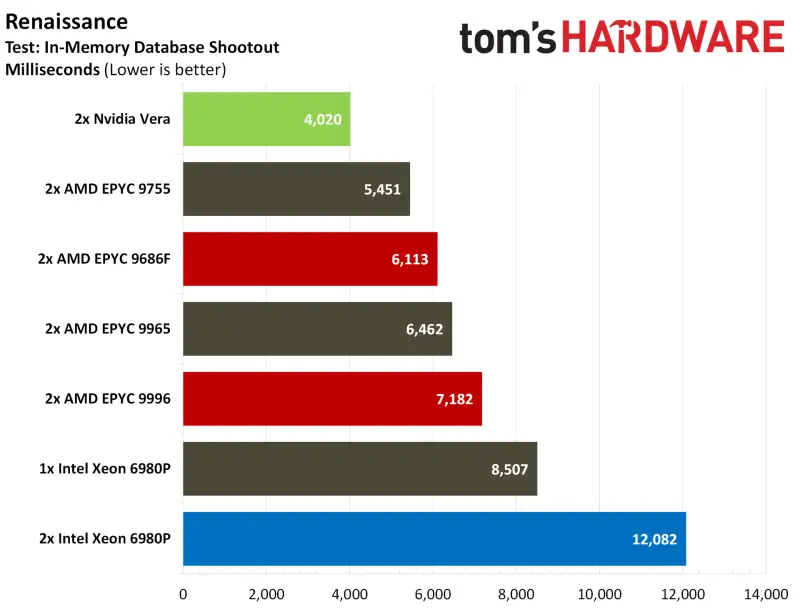
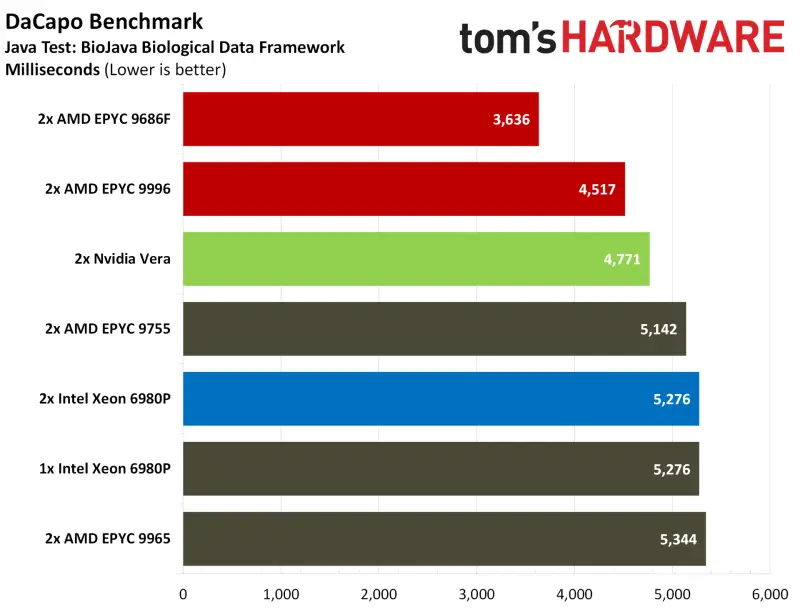
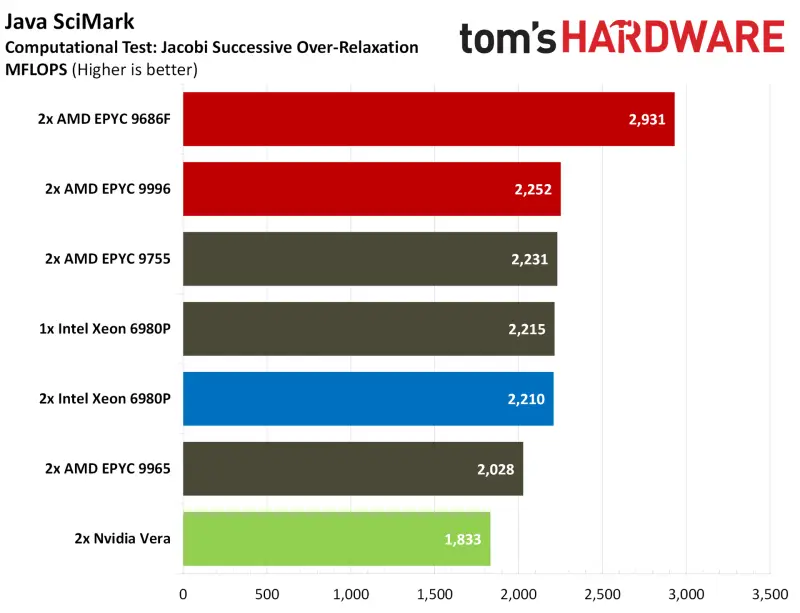
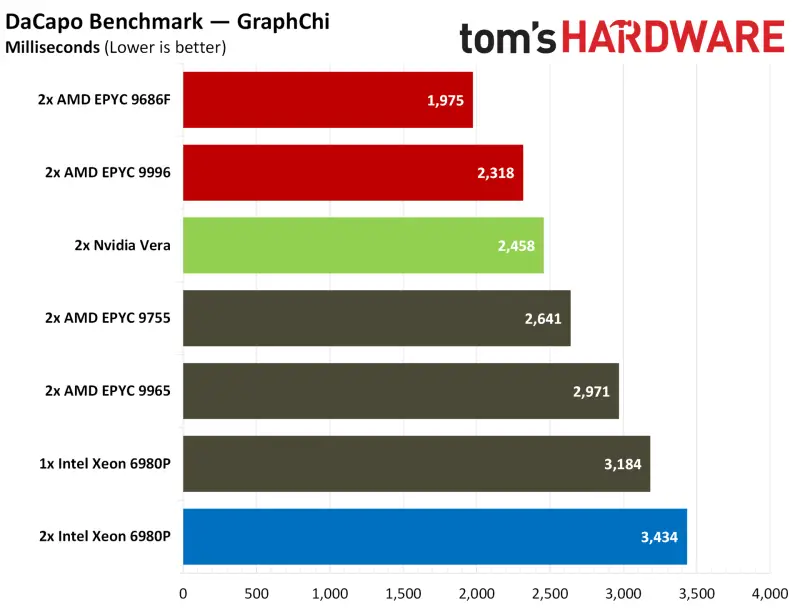
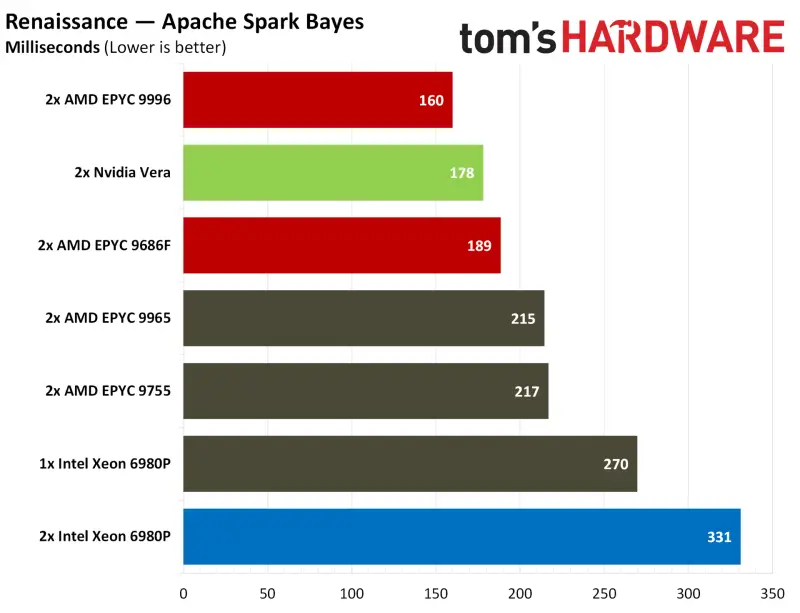
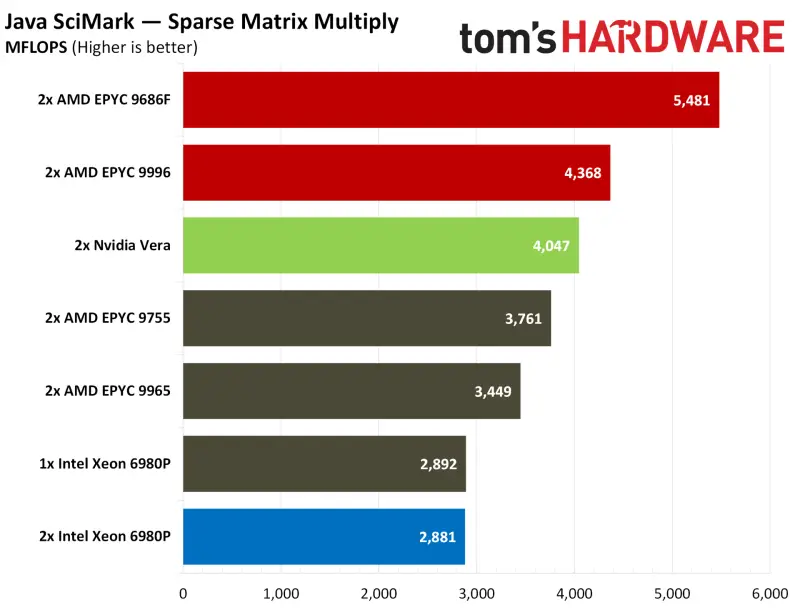
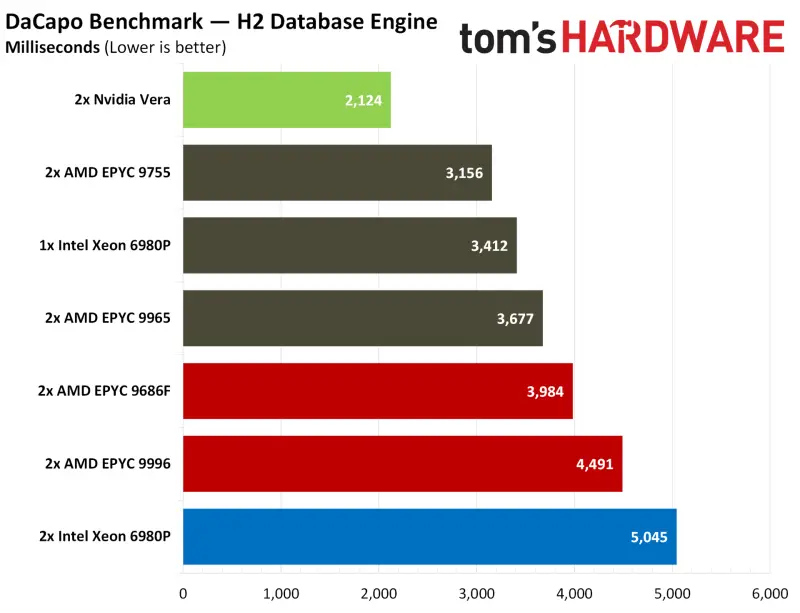
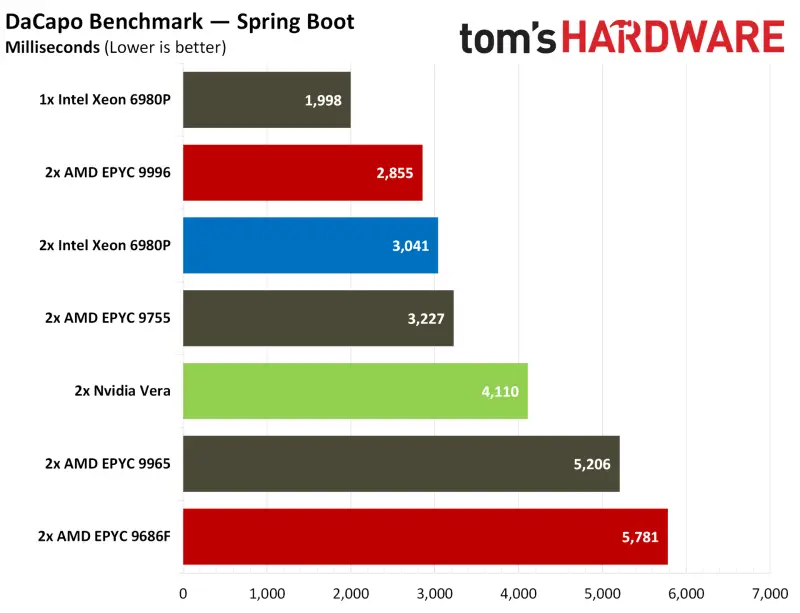
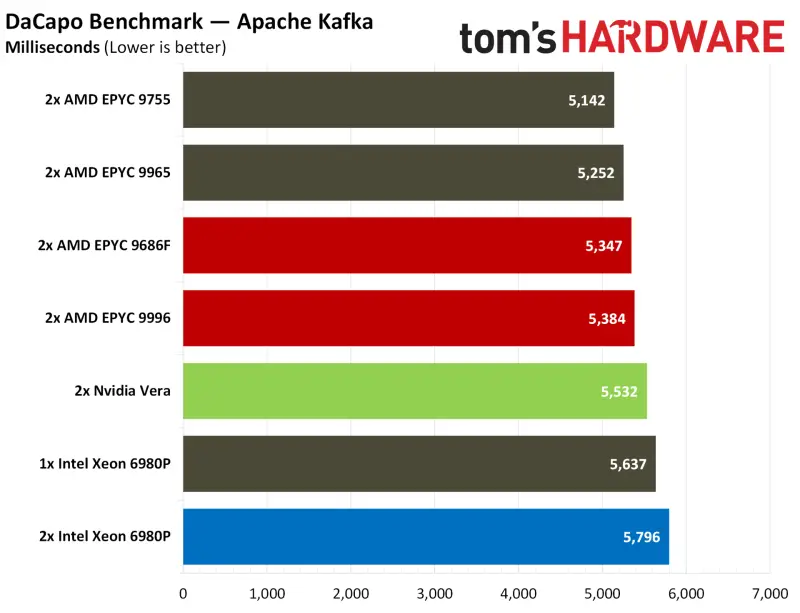
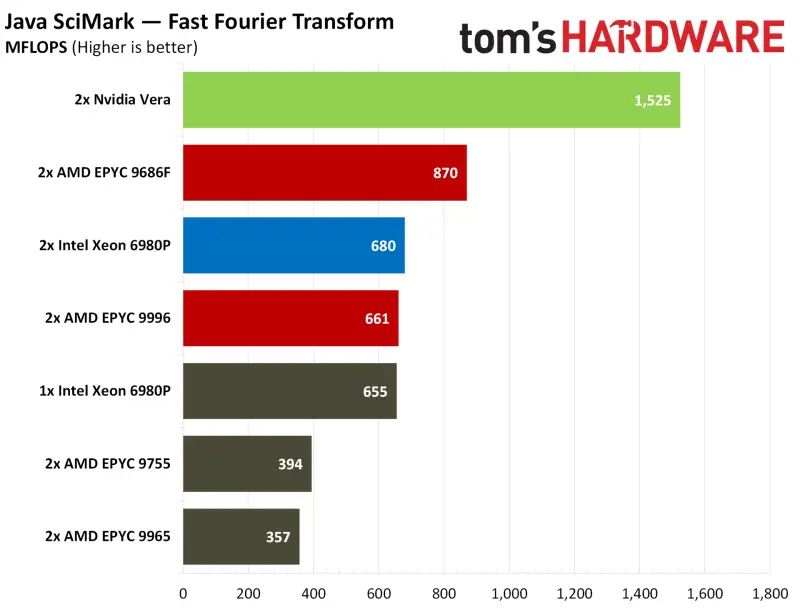
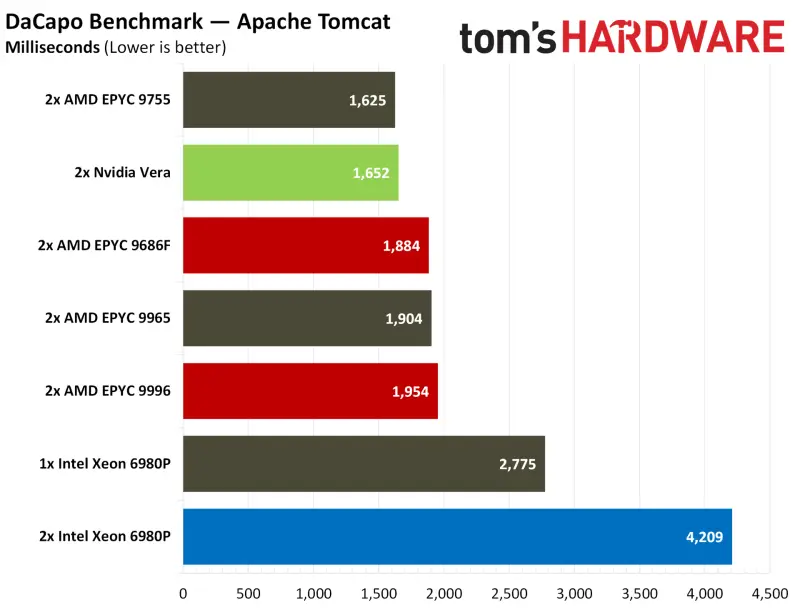
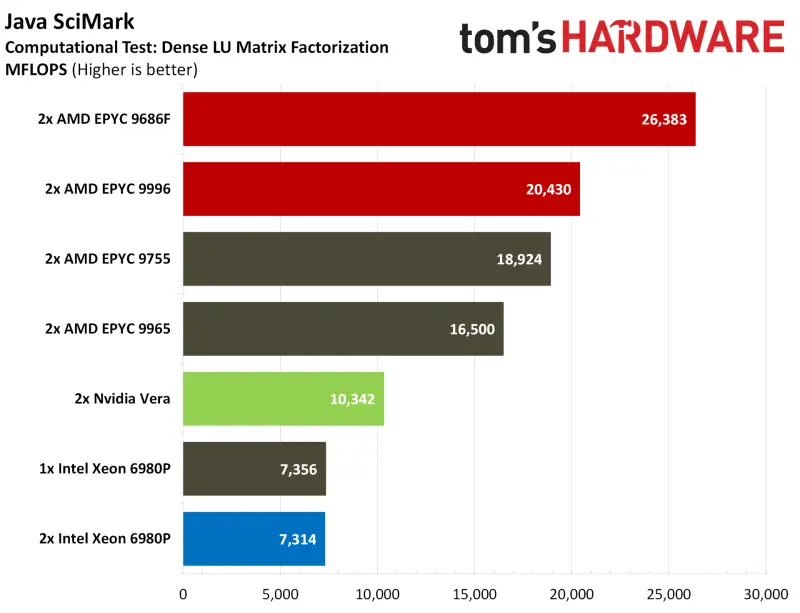
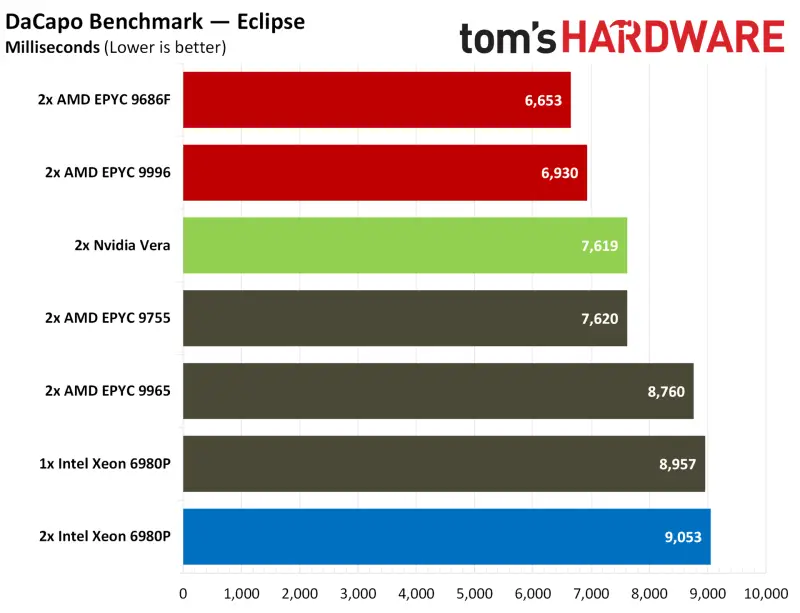
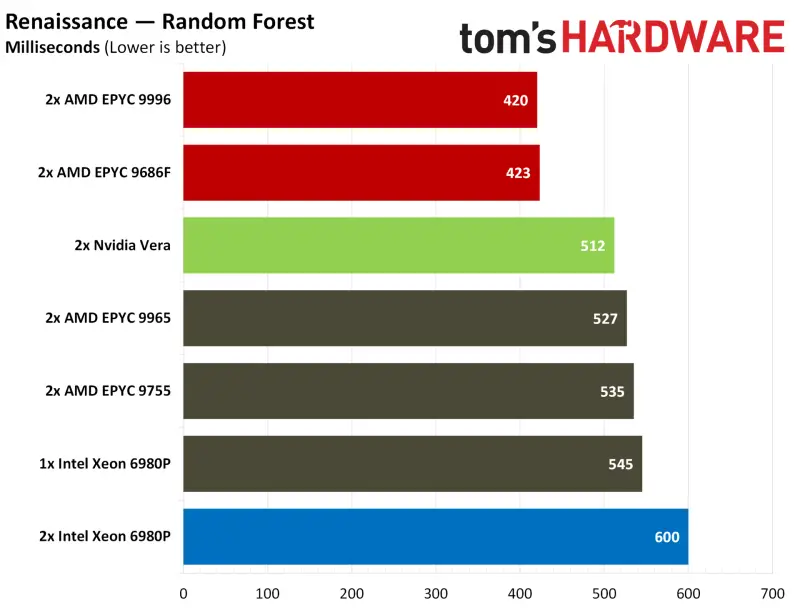
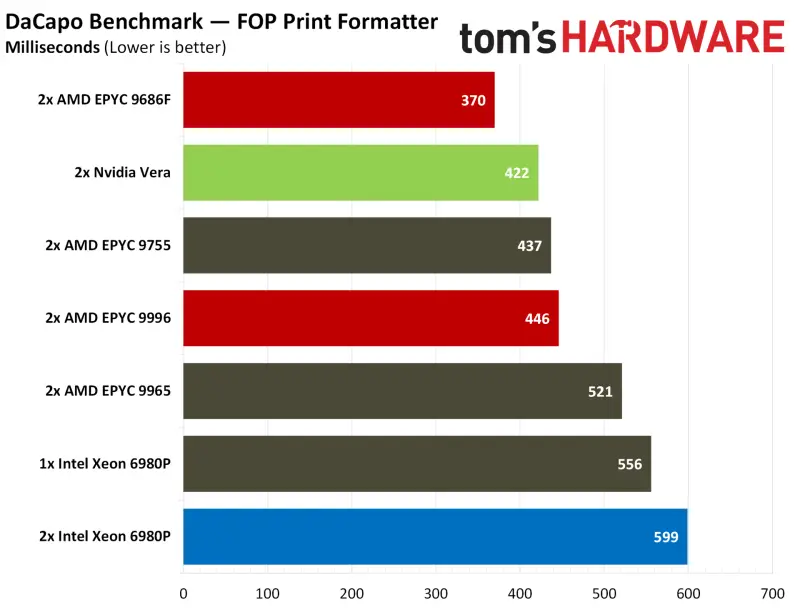
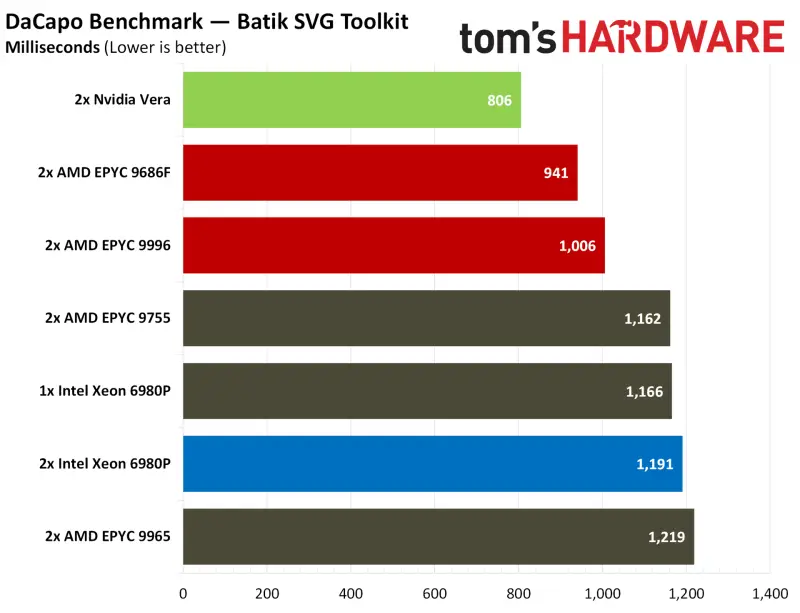
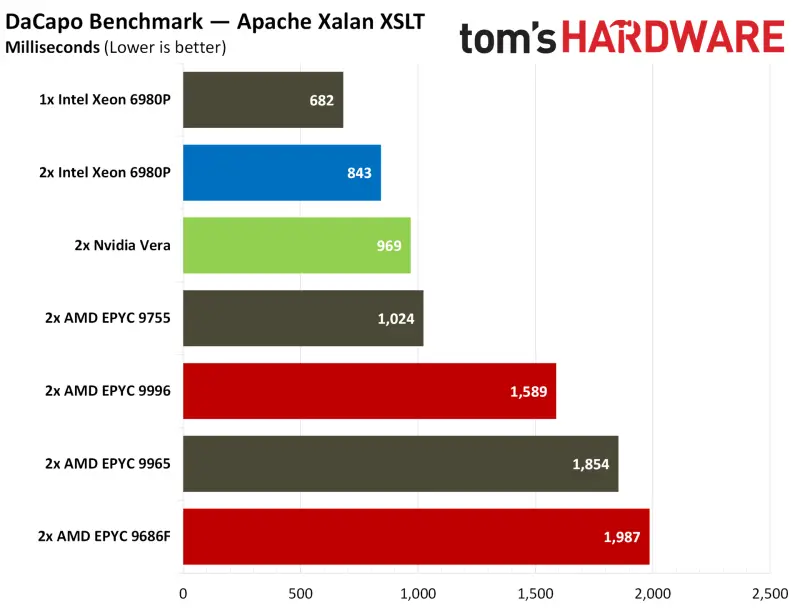
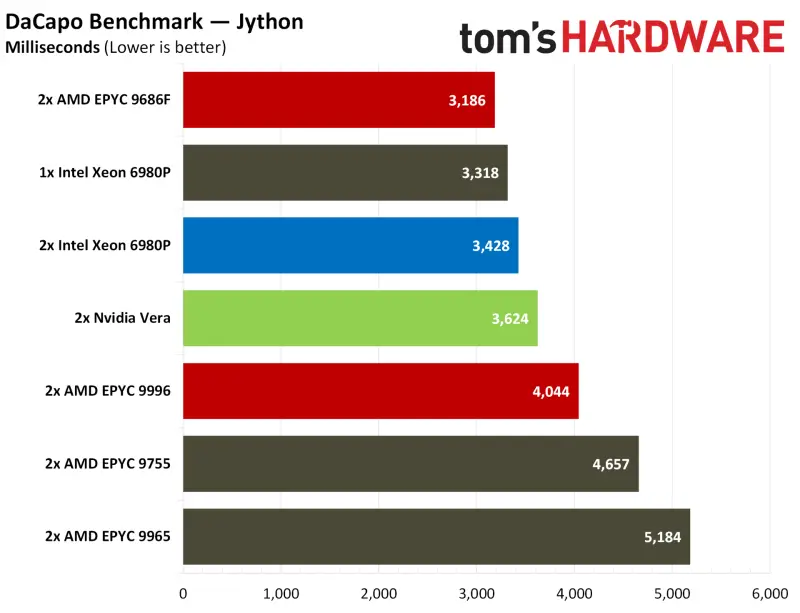
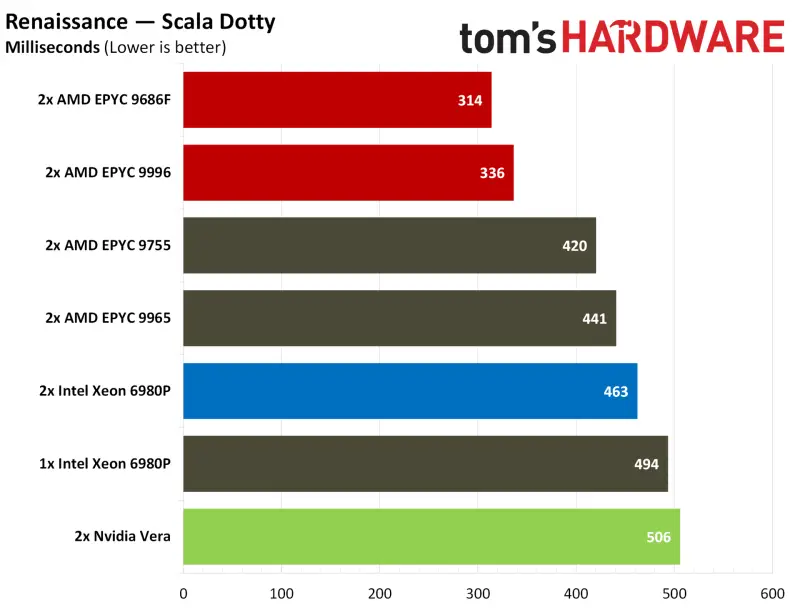
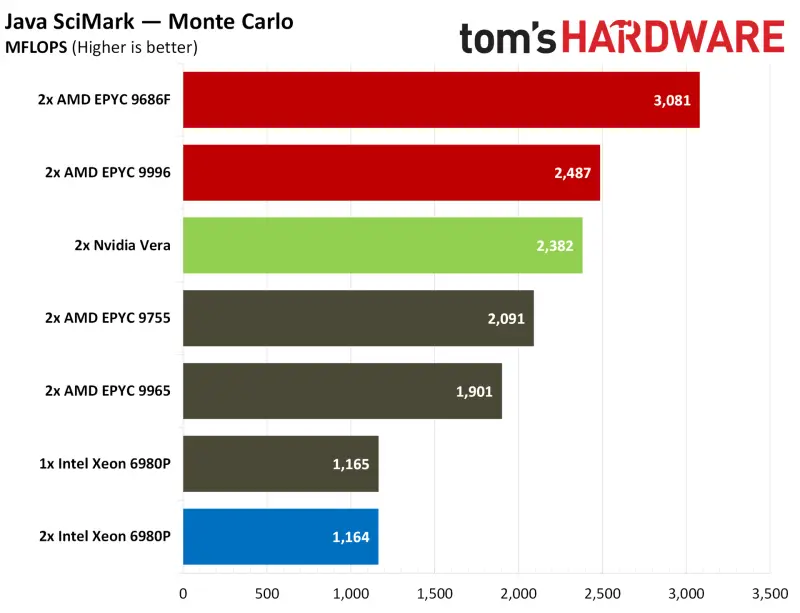
Java is the language you'll find underneath everything from scientific computing to database engines, so we ran three Java suites. Java SciMark puts the EPYC 9686F well ahead, with a 92% composite lead over Vera. On a like-for-like generational basis, the EPYC 9996 delivers a solid 24% gain over the EPYC 9965.