Novig Reaches Third Place in Prediction Markets With a Sports-Only Model
Sports-only prediction market Novig posted $1.8 billion in 30-day volume, ranking third, but its growth now hinges on a shifting state-by-state legal map.
Novig's rise is unusual because it's happening on volume alone. The sports-focused exchange has been operating as a U.S.-regulated prediction market only since August, yet it now sits third by one widely cited industry measure. The numbers come from The PM Pulse, a newsletter that tracks volume using data from the research firm Aldrin, and they're worth a close look before anyone treats them as a scoreboard.
Over the past 30 days, Novig handled $1.8 billion on U.S.-regulated exchanges. That's modest next to Kalshi's $33.3 billion and Polymarket U.S.'s $6.3 billion. But it sits roughly $300 million ahead of Crypto.com in fourth, and its volume climbed 80% from the prior 30-day window. The figures exclude combos, or multi-game parlays, which can inflate volume without producing proportionally more revenue for the exchange. Sam Schwartz, who runs the newsletter, flagged that distinction directly.
A small war chest, a fast climb
Novig was founded in 2021 and raised about $30 million while operating a sweepstakes-based model that let it serve certain states. A shift in the legal landscape pushed the company toward federal regulation this year, and that change unlocked a $75 million Series B in February at a $500 million valuation. Novig has raised $105 million in total. Reports suggest it's now raising at a $2 billion valuation, though the company declined to comment on future fundraising.
Those totals look small next to the competition. Tracxn data puts Kalshi at roughly $3.8 billion across 13 rounds, including two $1 billion rounds since May. Polymarket has raised about $3.3 billion across eight rounds, with $1 billion from Intercontinental Exchange, the owner of the New York Stock Exchange, among them. Novig's headcount grew from 20 to 100 employees this year, a pace its cofounder and CEO Jacob Fortinsky compared favorably to almost any company outside AI. "There are very few companies I think outside of AI that have achieved our level of growth in the span of two months," he told Fortune.
Marketing that moved the needle
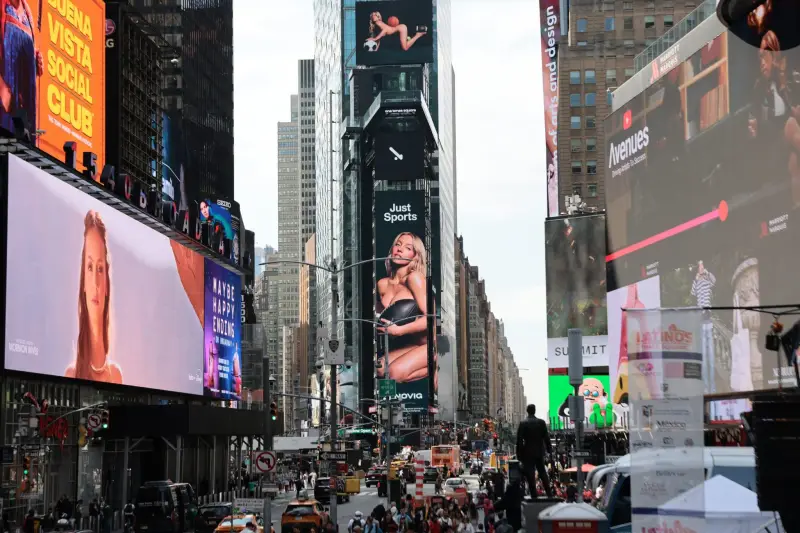
Much of Novig's recent acceleration traces to its "Just Sports" ad campaign, starring actress Sydney Sweeney, who is also a part owner of the company. Novig says that in the 30 days after the campaign launched in September, first-time deposits rose 362% and mobile app downloads jumped 261%, compared with the 30 days before. The app briefly reached No. 1 on the App Store's top free sports apps chart during the rollout. The company's internal data is the source for those figures, so they're best read as company-reported rather than independently verified.
Sports only, by design
Novig runs a peer-to-peer exchange where users trade against each other rather than against the house. The company argues that structure produces tighter prices and lower costs than traditional sportsbooks and most prediction markets. Schwartz says that's the core draw for experienced bettors. "That's the main reason Novig saw growth early as a company—it's just such a natural draw to the professional and sophisticated users out there… they want to get the best odds possible," he said.
The company also narrowed its scope on purpose. It doesn't list politics or pop culture contracts, and it requires users to be 21 or older, while Kalshi and Polymarket allow 18-year-olds. Skipping political markets looks like a missed opportunity on paper. Political contracts drove $729 million in trading on Kalshi on a single day of the November midterm cycle, and they accounted for more than 70% of Kalshi's volume growth across that week, according to PM Pulse data. That surge also brought a wave of free exposure, since news coverage frequently cited the platform's odds.
The catch is that political spikes fade. Schwartz noted that on most other days this year, political contracts made up less than half a percent of Kalshi's daily volume. Sports, by contrast, run nearly every day and account for more than 80% of prediction market trading. Novig is built around that steady cadence, and its share data reflects it: Kalshi holds about 64% of volume excluding combos over the past 30 days, Polymarket's U.S. and DeFi arms hold about 23%, and the remaining 13% is split across the field. Novig captures 3.5% of the total, edging out Crypto.com and DraftKings' DKeX platform for third.
Where the model runs into limits
Low fees appeal to sophisticated, high-volume traders, but they don't seem to move the average retail bettor. "The majority of users out there are not price sensitive," Schwartz said. Sportsbooks such as DraftKings and FanDuel, along with Kalshi, keep signing up customers despite charging more.
The larger risk is legal. A court fight over sports-related prediction markets is widely expected to reach the nation's highest court next year, and several states have already moved aggressively against the platforms. So far, state restrictions haven't badly dented growth. Kalshi, though, has already shrunk from 50 states to 47 after bans in three states, including Nevada and Michigan, and Schwartz expects a few more to follow. Some in the industry think access could fall to 35 states or fewer. Schwartz warned that losing larger states would hit volume hard across the sector, and smaller players with less share to fall back on would feel it most.
Timing adds another wrinkle. Schwartz put the odds of a ruling in June 2027 versus June 2028 at roughly a coin flip, and said the court would likely need to take the case by mid-January to decide in 2027. A longer wait could mean more state bans in the meantime.
Fortinsky isn't worried. "It's certainly not an existential risk to the company," he said. "We are set up to succeed and to crush the incumbents, no matter what the regulatory environment looks like. We have a stronger team, stronger product, and stronger velocity." Here's the thing: his confidence rests on a product that doesn't depend on headline-grabbing spikes, and that's exactly what makes the next court ruling and the next round of state actions worth watching closely.