Nvidia Names CFO Colette Kress Interim CEO After Jensen Huang Exits
Nvidia's CFO Colette Kress becomes interim CEO after Jensen Huang's resignation. Her finance background and deep knowledge of the business shaped the choice.
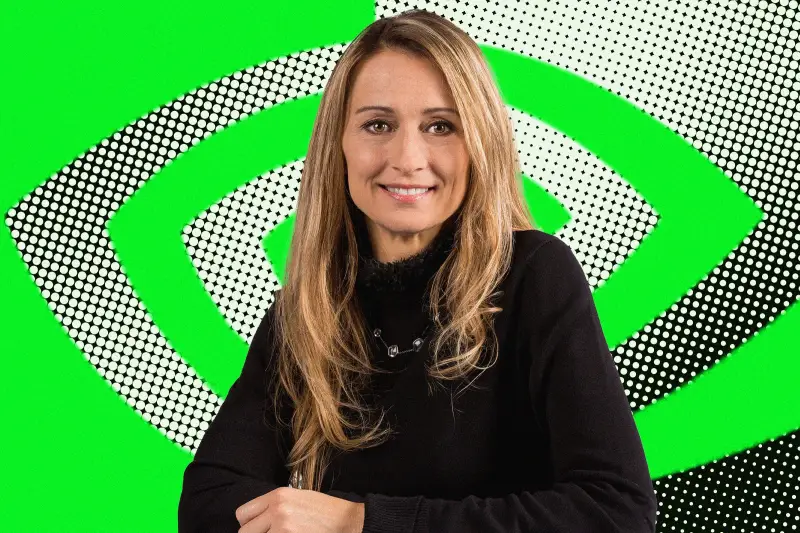
Nvidia is handing its top job to the person who has spent the last decade explaining its numbers to Wall Street. Colette Kress, the company's chief financial officer, has been named interim CEO after cofounder Jensen Huang resigned. For a company that has defined itself around one charismatic founder, the pick is a notable shift, and my read is that the board chose continuity over a splashy outside hire.
Why the board picked the CFO
Kress joined Nvidia in 2013, when the company was still best known for gaming graphics cards. Before that she spent more than two decades in finance roles at Microsoft, Cisco, and Texas Instruments. According to Globes, Huang personally recruited her, sketching out on a whiteboard how Nvidia could become a major supplier of computing infrastructure for artificial intelligence. She has been in the room for the pivot that turned the company into the central supplier of AI hardware.
Harvey Jones, the newly appointed chair of Nvidia's board, said Kress "has helped lead Nvidia through a period of extraordinary growth and has a deep understanding of our business, customers, operations and financial position." He said the company will be supported by an experienced leadership team and that the board has full confidence in her.
Analysts and former colleagues pointed to the same thing: Kress knows the financials better than almost anyone. Patrick Moorhead, founder and chief analyst at Moor Insights & Strategies, called her "the logical choice" and argued she has credibility with investors "because she answers hard questions directly." He also pushed back on the idea that she is just a numbers executive. In his conversations with her, he said, she goes deep on the product roadmap, from rack-scale systems to networking and software.
Her role on Wall Street
Huang has long been the public face of Nvidia, but Kress has handled much of the relationship with investors. On earnings calls she typically walks through financial performance, customer demand, supply constraints, and the other metrics analysts track closely. That experience matters more than usual now, because the company's quarterly disclosures are one of the few places where the market gets a direct read on the business.
Her approach to the stock price is worth noting. In a 2023 interview with the Israeli business newspaper Globes, she said, "One of the things we don't focus on is the stock price. We focus on our investors and how we would like to innovate." That stance fits a CFO who has spent years building a business plan around product cycles rather than quarterly market moods.
The structural problem behind the succession
Nvidia's internal setup helps explain why Kress was a natural fit. The company has long operated with dozens of executives reporting directly to Huang, and it has no traditional chief operating officer. Sources have told WIRED that even executive vice presidents don't necessarily control their own budgets. The result is that few people inside the company understand its finances as thoroughly as Kress does.
That made the succession harder in a different way. Other candidates were clearly qualified. Ian Buck has been at Nvidia for more than 20 years, created CUDA, the company's software platform, and now oversees its high-performance computing business. Jeff Fisher joined in 1994 to lead software sales and later became senior vice president of the GeForce unit, where he drove the strategy for bringing GPUs to market. Both have deep operational credibility. But neither has the same grasp of the company's finances and investor relations, and in a structure without a COO, that gap carries weight.
The gap Kress has to fill
A former Nvidia executive who spoke to WIRED on condition of anonymity described Kress as "incredibly sharp" and said she "can step into the [CEO] role immediately without needing any guidance." The same source noted that she doesn't have Huang's engineering and technical background, and that she has tended to avoid being at the center of public attention. Those are real limits. Huang's influence on product direction came partly from his technical fluency, and that's hard to replicate through a finance background.
Here's the thing: the leadership test for Kress won't be the earnings call. It will be whether she can keep product teams moving without the founder's hands-on presence, and whether a company that has run on a flat, founder-centric structure can make decisions quickly under an interim title.
Why the timing matters
The transition is happening under heavy scrutiny. Nvidia's board announced on Sunday that it was launching an independent investigation into Huang's activities, after The New York Times reported that he had an affair with a woman named Alice Huang, whom US officials suspected of being a Chinese intelligence asset. WIRED then reported that Huang had quietly hired a crisis communications firm the previous year to handle matters tied to his personal life. By October 2025, that firm was being brought into all press inquiries involving Huang at Nvidia. That same period saw reports that US authorities were looking into whether a company linked to Alice Huang had helped Chinese firms get around US chip export controls through subsidiaries.
None of those reports have been resolved in the coverage available so far, and the investigation's outcome will shape how much room Kress has to define her own tenure. An interim title leaves the permanent question open. What's clear is that the board wanted someone who knows the numbers, the customers, and the investors cold, and who can stabilize the company while it works through the Huang situation.
For developers and buyers who depend on Nvidia's hardware roadmap, the near-term signal is reassuring but not conclusive. Kress has a record of running the financial side of a company whose products now sit at the core of AI infrastructure. What remains to be seen is whether that experience translates into steering the technology agenda the way Huang did. That's the question to watch over the next few quarters.