Far-Right Groups Eye the GOP After Midterm Gains
Fuentes and other far-right figures say the midterm results open a path to take over the GOP, pointing to a 71% win rate among tracked candidates.
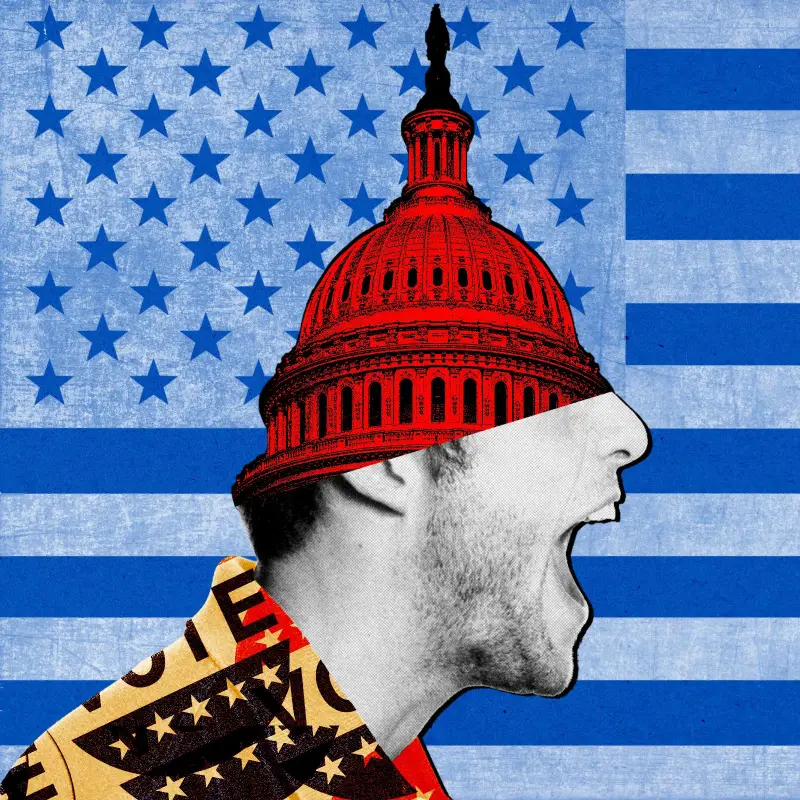
The most striking part of the far-right reaction to the midterms isn't that its candidates did well. It's that the movement's leaders are openly talking about the Republican Party as a asset to be taken, not a coalition to be persuaded. That shift in language is what deserves attention.
A strategy built on a Democratic win
On midterm day, white nationalist Nick Fuentes told his followers on X to "get out and vote Democrat today." That post drew more than 12 million views. Hours later, as Democrats swept races across the country, Fuentes claimed credit on Telegram: "We did it again." He later gave the idea a name, "the Groyper Effect," after the nickname for his followers.
The logic he laid out in livestreams is less about the Democrats than about the vacuum he expects to follow. "Let the Democrats rule; see how that goes," he said. "There will come a time when the far left will terrorize people, and they're going to push all of them into the arms of the right. Who's going to fight the far left? Only the far right. This is why we have to take over the right wing now."
He also addressed Republican leaders directly. "It's our party now," he said in another stream. "You need to cooperate with us. Groypers are open for business. It has to be America First, and if it's not, we'll do it again for the enemy."
Reading the fringe chatter
A review of comments from white supremacist, Christian nationalist and other far-right groups after the results shows the same pattern. These groups are harsh about Donald Trump's failure to put white, Christian and American values first. They also expect the rightward swing of frustrated voters to flip into a backlash that pushes more people toward their ideas.
Jared Holt, senior researcher at Open Measures, sees that expectation as the main thread. "Many prominent figures in racist, extremist movements have taken to declaring the MAGA movement dead since the midterm elections, claiming that the results validate their previous criticisms of the Trump administration and opens new opportunities for their movements to push disaffected voters toward their ideological beliefs," he told WIRED.
My read is that the "MAGA is dead" framing is doing more work than it should. Declaring a movement finished is a recruitment pitch aimed at people who feel abandoned, and it tends to get louder right after a setback.
Extremist candidates didn't all lose
Some of the Republican Party's extremist candidates were rejected last week, but plenty won. The Institute for Research and Education on Human Rights (IREHR) tracked 535 candidates in statewide races who belonged to at least one far-right Facebook group. Of the 476 races called by the Friday after the vote, 338 of those candidates won, a 71 percent win rate. Most of those races were GOP incumbents keeping their seats, which means the wins were less about new insurgents and more about existing officeholders staying put.
The results include individuals who are not fringe figures in name only. In Florida, 34-year-old citrus farmer Marshall Rawson, who attended the 2017 Unite the Right rally in Charlottesville, Virginia, easily won the state's 10th District State House race against his Democratic opponent.
Statewide measures as a signal
Many states also passed measures that align with far-right priorities, including anti-transgender rules, strict voter ID requirements and anti-immigrant provisions. Devin Burghart, executive director of IREHR, pointed to the trans sports measures during a briefing with reporters. "Arizona, Colorado, Nebraska, and Washington approved bans on trans athletes in female sports, so girls in Washington state, for instance, will now have to go through a genital exam or pass a DNA test before they can participate in youth sports," he said.
Extremist groups treated those outcomes as proof that voters wanted policies the current GOP hasn't delivered. The Cape Fear Proud Boys wrote on Telegram that the "ultimate rebuke of the current Republican establishment was citizens voting them out of office, then doing their job for them by passing" measures on issues Republicans "should have already handled."
Chuck Tanner, IREHR's research director, flagged a number that extremists are reading closely. Even in races the far right lost, candidates drew 41 to 47 percent of the vote. "What this signals to me is even in those places where they lost, they're getting 41-47 percent of the vote, [so] there's still a mass base to try to be mobilized," he said. "That's the lesson that some of these groups are taking out of it, is that there's still that mass base."
From protest to party takeover
That base is what the groups believe makes the GOP vulnerable from the inside. Warren Balogh, a white supremacist from Pittsburgh who attended the Charlottesville rally, urged on Telegram: "Now is the time, if you're a nationalist, to start looking at moving on the Republican Party where you live. And by that I mean, organizing your guys and going in to do a hostile takeover."
The Cape Fear Proud Boys took a similar view. "This may be the best thing that has happened to the Republican Party in a half-century," they wrote days after the midterms. "Now you will learn to placate us, or you will continue to fail. Understand this: You're going to run people we like, and you're going to do what we say."
Not everyone is willing to wait for the 2028 general election. Joel Webbon, a Christian nationalist pastor, said in a video posted after the midterms: "I'm not saying that we will win through democracy. I'm just saying we'll win." Webbon and other far-right pastors, along with conspiracy theorist Alex Jones, are scheduled to speak at a conference in Texas this week, where at least one session is billed as discussing "battle plans" for "Christian nationalists on the right to be able to seize power."
What to watch in January
Researchers WIRED spoke with said they haven't seen explicit calls for violence from the groups they track. Still, attention is already turning to January 3, when certification of the midterm results is set to take place. Far-right activist Jake Lang, a pardoned January 6 participant, is planning an event in Washington, D.C., that day. It's unclear how many people will attend, and at least one Christian nationalist pastor Lang listed as a speaker has said he won't be appearing.
My takeaway is that the most useful signal here isn't the rhetoric itself but the organizing it's trying to reach: local Republican committees, state-level races and voters who backed the measures without backing the party. The 41 to 47 percent figure is the number to track, because that's the pool these groups are trying to convert.