Chris Alexiuk on Teaching Open Models to Working Developers
NVIDIA's Chris Alexiuk argues that open weights, data and training recipes matter for AI, and he teaches developers to build with Nemotron models.
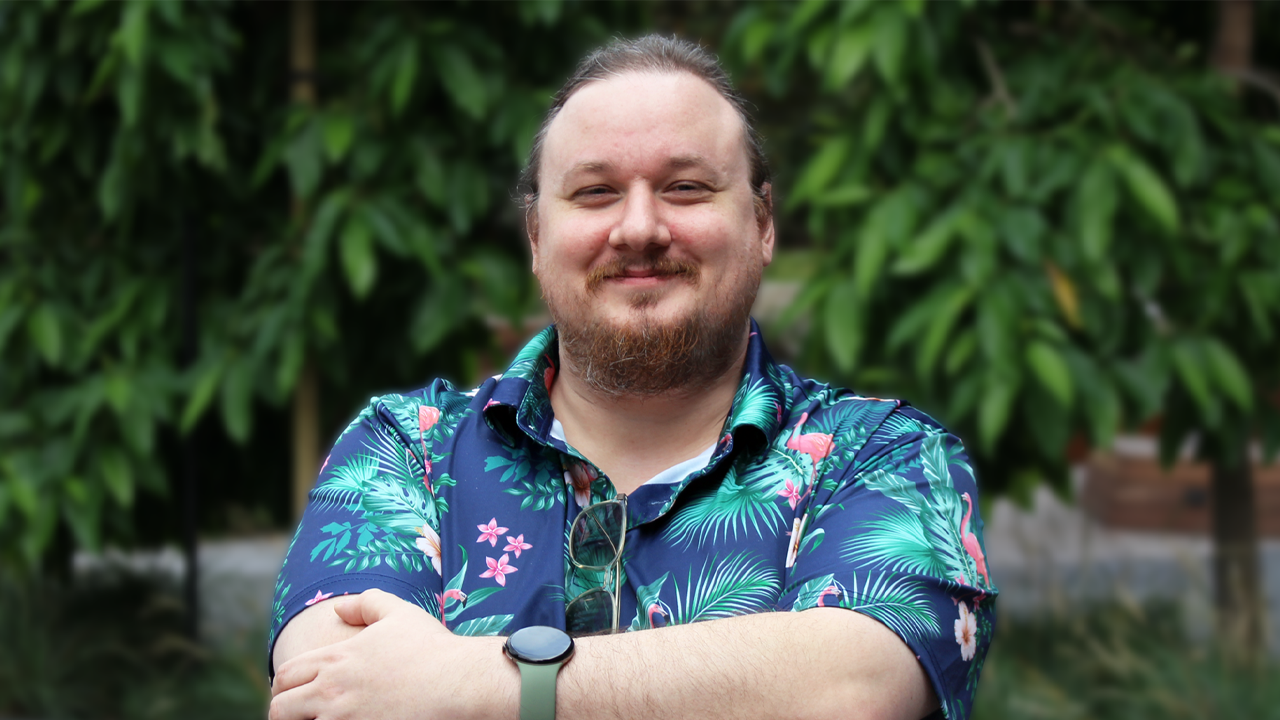
Chris Alexiuk's view of open source AI is blunt: if you believe in it, say so loudly and often. The Toronto-based senior product research engineer in deep learning at NVIDIA spends much of his time on one narrow problem, which is making open large language models practical for developers who have real applications to ship. His approach to that problem is part teaching, part advocacy, and it's worth a closer look for anyone deciding how to build on open models.
Openness as a precondition, not a feature
Alexiuk's core argument is that transparency isn't a bonus you add to a good model. It's what makes a good model possible to understand and to trust. "Fully open source AI is necessary for the democratization of intelligence," he said. "You should have access to the weights, the data that went into it, the training recipes, everything."
That last clause is the part people often skip. Open-weights releases, where you can download a model and run it, are common now. Releasing the training data and the recipe used to produce the model is a much higher bar, and it's the difference between being able to use a model and being able to inspect, reproduce and adapt how it was made. For teams that need to explain their systems to auditors, customers or their own engineers, that difference carries weight. It's also the difference that matters most to researchers trying to figure out why a model fails.
He's also clear about the reasoning behind his enthusiasm. "I think that openness helps more people understand AI and hopefully leads to more people doing really ingenious things with these tools at the limit," he said. "If a tool is amplifying skill, it's amplifying human expression." That framing puts the value in who gets to build, not just in the benchmark numbers a model posts.
What Nemotron covers, by his account
Alexiuk's public enthusiasm centers on the NVIDIA Nemotron family. NVIDIA describes it as a set of open source, multimodal models built for long-running, self-evolving and specialized AI agents. He lists a LinkedIn headline of "No. 1 Nemotron Fan," and he's said that Nemotron is "the most important project that exists." He also goes by "Joe Nemotron" across social media, which is a playful way of signaling how much of his professional identity is tied to this one model family.
The useful part of his explanation is how he maps the family onto different kinds of work. In his description, an individual developer might reach for a model like Nemotron 3.5 Lightning for repetitive, high-frequency execution tasks, where speed and cost per call matter more than depth. A company that wants long-running autonomous agents, deep research pipelines or enterprise workflows would look at Nemotron Ultra instead. The point he's making is that you pick the model whose profile fits the job, rather than forcing every task through one general-purpose system.
That matching logic is worth taking seriously. Teams often default to the largest model they can access, then discover that latency, cost and throughput make the system impractical for high-volume steps. Splitting work across a small fast model and a larger model for planning or multi-step reasoning is a common pattern, and Alexiuk's framing fits it. The engineering question becomes which steps in your pipeline need which capability, and whether you can measure that before you commit.
Teaching for people who build for a living
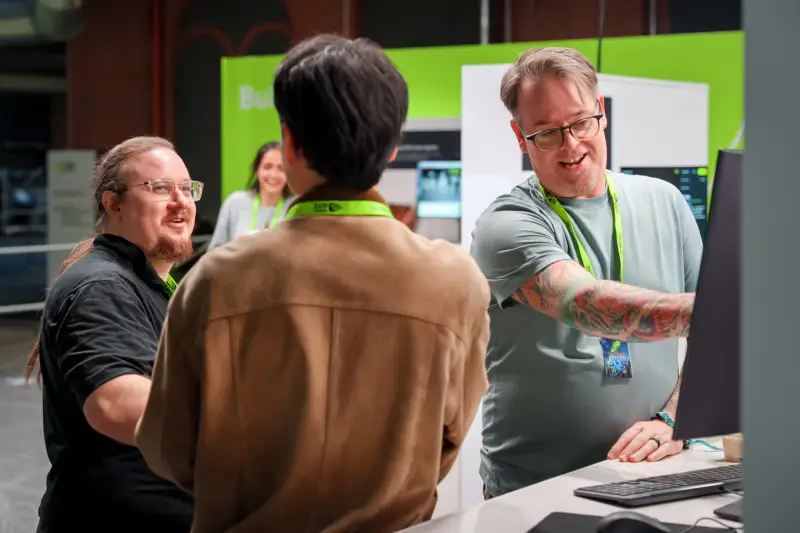
Alexiuk's most visible work is on YouTube, where he has built a following of thousands by teaching viewers how to build, fine-tune, evaluate and ship production LLM applications and agents. The emphasis on evaluation and shipping is what separates this kind of material from a typical introduction. Plenty of tutorials show how to get a model to produce a good-looking answer once. Far fewer cover how to tell whether it works across thousands of inputs, how to fine-tune without degrading the behavior you already had, or how to keep an agent running reliably after the demo.
He's candid that his target audience is wider than the people already in the field. "I think the people who will most help us understand how to build and apply AI likely haven't even heard of it yet," he said. "Trying to get knowledge and information out to as many people as humanly possible is what continues to drive me." For developers who came to software from another discipline, that kind of accessible, hands-on instruction can shorten the gap between reading about agents and running one.
Here's the thing about tutorials for open models, though: they age quickly. Model names, APIs and recommended techniques change, so the durable skill is the workflow itself, meaning how you set up a fine-tuning run, what you measure, and how you decide whether a change helped. Viewers who treat a lesson as a method rather than a recipe will get more out of it than those who copy commands.
From a webcam bird to production agents
Alexiuk's path into machine learning started in a computational physics class at Trent University in Ontario. From there, he learned TensorFlow and discovered that you could train image classifiers that ran on a GPU. His first real project was small and personal: a classifier that alerted him whenever his friend's distinctive pet bird, a Yellow-Faced Gray Budgerigar, showed up in the webcam feed during shared gaming sessions. He wasn't watching the feed closely, but he didn't want to miss the bird.
"In that instance I realized it's crazy what you could do with technology," he said. The contrast he draws with today is sharp. He describes going from a webcam alert to building a website in minutes with a model running on a laptop. "It's never been more accessible to get into and learn about AI," he added.
That arc explains a lot about how he talks to developers. The early experiment was a concrete, narrow task with a clear success condition, and that's the same shape he recommends for serious work. Start with a problem you can state precisely, measure the result, then widen the scope. It's an unglamorous habit, and it's the one that tends to separate agents that work in a demo from agents that hold up in production.
Alexiuk is also hoping for a successor. Asked what would happen if another enthusiast challenged him for the title of No. 1 Nemotron Fan, he said that being surpassed by someone who had discovered Nemotron through his work would be "the greatest day of my life." Whether that happens or not, the pattern he describes, with open models, public teaching and developers passing knowledge along, is the thing he wants to see scale. For anyone who wants to follow his lessons, his NVIDIA Nemotron Labs Livestreams on YouTube are the place to start.


