Intel Beats Q3 Estimates but Weak Guidance Sends Shares Down 30%
Intel beat third-quarter estimates on earnings and revenue, but a soft fourth-quarter outlook and a shrinking PC market drove its stock down more than 30%.
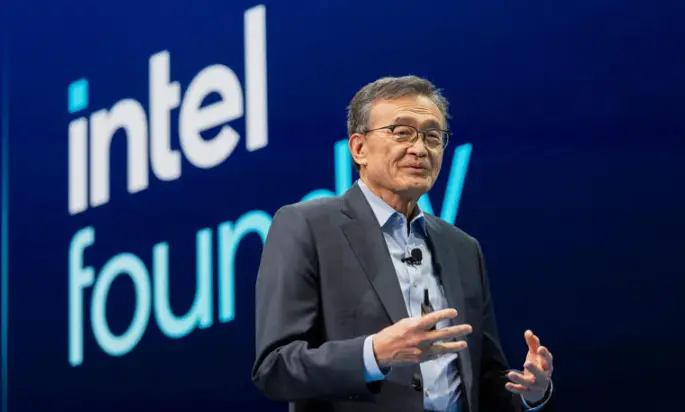
Intel beat its own third-quarter numbers and still lost roughly a third of its market value in a single session. The culprit was the forecast. Investors read the guidance as a sign that the PC business, Intel's historical core, is weakening faster than the company's AI growth can cover.
A beat on the headline numbers
Intel reported non-GAAP earnings of 52 cents per share, excluding items such as stock-based compensation. Wall Street had expected 40 cents. Revenue rose 21% year over year to $16.51 billion, just above the $16.5 billion consensus. GAAP net income came in at $3.3 billion, down from $4.1 billion a year earlier, so the adjusted beat masked a real profit decline.
The segment picture is where the quarter gets interesting. Data center and AI revenue jumped 78% to $7.3 billion and carried the quarter. Client computing and physical AI, the PC-driven unit, fell 5% to $8.1 billion and missed expectations. That split is the story in one line: the growth engine is in servers, and the legacy engine is stalling.
Why the PC business is slipping
Counterpoint Research data cited in the coverage shows global PC shipments fell 4% in the second quarter. Part of the cause is the rising cost of memory and other components, which pushes up device prices and dampens demand. Intel's client results reflect that market-level pressure rather than a company-specific stumble.
That matters because Intel's CPUs still power much of the world's PCs. A weaker PC cycle hits volume and pricing across the client lineup at the same time. Intel's CFO, David Zinsner, said he expects the slowdown to continue until at least the first half of next year. That's a longer horizon than many investors wanted to hear.
The fourth-quarter forecast
Intel guided to fourth-quarter earnings of about 25 cents per share at the midpoint, with revenue between $15 billion and $16 billion. Analysts had been modeling 43 cents per share and $17.1 billion in sales. The gap is large, and it's concentrated in the quarter where investors were looking for evidence that the AI-driven rebound could offset PC weakness.
Zinsner framed the spending plan as disciplined. The company intends to keep investing in capacity and working capital to support supply and future growth. He added that Intel won't commit $1 of capital without confidence in its product and process technologies and clear evidence of customer demand. That's a reasonable stance for a company whose stock had nearly tripled, but it also signals that the next leg of capacity spending will be gated by proof points.
A plant explosion and its cost
During the quarter, an explosion at one of Intel's chip fabrication plants in Israel killed two workers and seriously injured a third. CEO Lip-Bu Tan called it an "unfortunate and tragic accident" that led to an extended shutdown at the site and delayed shipments of new 10-nanometer chips. Zinsner estimated the disruption will cost about $600 million in lost revenue over the next two quarters. That figure is material on a $15 to $16 billion quarterly revenue base, and it lands in the same window as the soft guidance.
Stock momentum and the AI question
Intel's shares had risen more than 150% since January, making it one of the year's fastest-growing technology stocks. The rally had already lost steam earlier in the month, as investors grew uneasy about the scale of AI infrastructure spending across the industry. Friday's drop turned that hesitation into a sharp repricing.
The AI story is more nuanced than the GPU narrative that dominates coverage. Chatbots such as ChatGPT and Gemini mostly run on GPUs from Nvidia and AMD. Agentic AI systems, including Meta's Muse and OpenAI's Dots as described in the coverage, can run more efficiently on CPUs. As agentic workloads have grown this year, demand for Intel's server chips has grown with them. This is the main reason Intel's data center line is accelerating while its PC line shrinks. If agent workloads keep scaling, CPU demand could hold up even as GPU spending draws scrutiny.
Foundry: the unresolved part
Tan said demand for CPUs remains "robust" in the long term, but the foundry business is the weak link in the plan. Intel spun the unit out as a separate division a couple of years ago, and it has struggled to win outside customers. Intel itself is the only major customer so far.
Intel's Arizona fab is the only U.S.-based facility able to mass-produce advanced logic chips, which gives the foundry strategic weight beyond its current revenue. Tan told analysts that "a couple of customers" would be ready to announce within the next two quarters and described "tremendous progress" on the forthcoming 14A process. Until named external customers show up, though, those statements remain forward-looking.
Intel has also been working to recover ground after falling behind on its seven- and 10-nanometer roadmap. Washington took a 10% stake in the company last year, and Nvidia and SoftBank have since invested billions. Those backers signal confidence in the strategy, but they don't settle execution risk.
Ohio and the SK hynix question
Tan has been more cautious than his predecessor, Pat Gelsinger, who pushed to spin out the foundry and court outside customers. Tan has still approved major capital projects, including a new fab in Ohio that was originally expected to come online last year. It hasn't yet. Intel said last week that crews had installed the first structural truss at the site.
Reports last month said Intel was in talks with SK hynix, the high-bandwidth memory maker, about leasing part of the Ohio capacity. Tan declined to address those talks, saying only that Intel "continues to evaluate unique and highly differentiated opportunities to accelerate our Ohio buildout." Nothing is confirmed, but a memory partner in Ohio would be a meaningful signal about external demand for Intel's manufacturing.
What to watch
Here's the thing: Intel's quarter was not a failure on paper. Earnings and revenue cleared expectations. The problem is the forward view, where PC weakness is expected to persist into 2027, the explosion-related shipment delays hit the next two quarters, and the foundry hasn't yet landed a named customer. My read is that the next few reports will matter more than this one. Watch whether data center growth holds, whether the foundry customer announcements arrive on Tan's timeline, and whether Ohio gets a confirmed tenant. Those three answers will determine whether the AI-driven CPU story can carry the company through a cyclical PC downturn.


