Dream Raises $17M to Let AI Draft Building Blueprints
Ex-Palantir executives' startup Dream raised a $17M seed led by Andreessen Horowitz to generate building designs and take on architect-of-record responsibility.
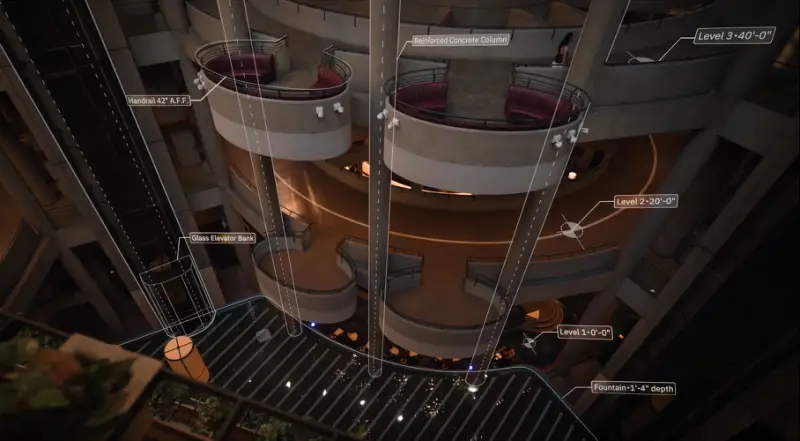
Dream Technologies, a San Francisco startup building AI models that generate architectural plans, launched with $17 million in seed funding. Andreessen Horowitz led the round, with participation from SV Angel, XYZ, Zigg Capital and several other investors. The funding is modest by frontier-AI standards, but the business model is what makes Dream worth a closer look. It isn't selling software to architecture firms. It's selling finished blueprints and standing behind them.
Why the founding team matters here
Dream was founded last year by Andy Elder and Arjun Mathur, both former Palantir Technologies executives. Elder ran the product design team at the software maker, and Mathur was senior vice president of its private sector business. The leadership bench also includes engineers who previously worked at Okta and Siemens. That mix points to a company that expects to deal with enterprise customers, data-heavy workflows and the operational detail that building projects demand.
What the models actually do
Designing a building by hand is slow. A team of architects can spend several months on a single plan, and much of that time goes to iteration. Dream has built a series of models meant to compress the early and middle stages of that process. According to the company, its algorithms can produce hundreds of design variations in a few minutes, which lets a team compare options that would otherwise be too expensive to explore.
The generation runs in stages. The models first analyze the site and the operational constraints that come with it. Those inputs drive a layout that decides where each major element goes. From there, the system fills in granular specifications, such as the dimensions of individual structural components. Think of it as moving from a floor-plan sketch to a fully specified drawing set, with the constraints baked in at each step.
Revisions are where the pain usually concentrates. Changing one element in a building rarely stays contained. Adding a cooling system to a server hall, for instance, can ripple into electrical wiring and ventilation. Anyone who has worked through a design change order knows how quickly a single edit becomes a coordination exercise across several disciplines. Dream says its models shorten those loops by propagating changes through the dependent elements.
Reuse and adaptation
The more interesting commercial angle may be adaptation rather than net-new design. Dream says its models can reduce the work involved in moving an existing building design to a new location. Consider a retailer that has a store layout it likes and wants to open the same format in a different city. Today that usually means a fresh round of local adjustments. Dream's pitch is that the existing design can be reworked against the new site's requirements, including local building codes, without starting from zero.
That's a plausible efficiency win for organizations with repeatable building types, like retail chains, data center operators or multifamily developers. It's also where the economics of AI-generated design get tested. A faster first draft only saves money if the adapted version holds up through review, permitting and construction.
Data and the custom schema
Dream trained its models on data covering about 100 million square feet of U.S. real estate. The dataset spans commercial buildings, apartments and single-family homes, which is a broad mix for a model meant to handle very different project types. The company also stores the blueprints its models process using a custom schema, a defined structure for organizing records. Dream designed that schema to make architectural calculations easier to verify. In a field where a wrong number can propagate through an entire drawing set, that kind of machine-checkable structure is arguably as important as the generation model itself.
A separate tool in development will combine the same real-estate dataset with information about 73 popular design and architectural styles. The company hasn't said much more about it, but the direction is clear: pairing layout generation with stylistic choices so that a plan can be both buildable and recognizable as a particular kind of architecture.
Accountability is the unusual part
Most AI design tools sit beside the professional. They produce options, and an architect decides what gets built. Dream doesn't position itself that way. The company acts as architect of record, which means it takes legal responsibility for the plans it delivers. That's a meaningful commitment. Architect-of-record status carries real accountability, and a startup taking it on has to be confident in its verification process.
Elder framed the stakes directly. "A hallucination in an LLM is a typo," he said. "A hallucination in a building is a structural fault, with potentially catastrophic consequences. We built Dream to be exact, down to how a duct routes through a wall, because precision at that level is what actually shortens timelines and takes cost out of a project." The argument is that the error tolerance in construction is far lower than in text generation, so the system has to be built around exactness rather than plausibility.
Early traction and what to watch
Dream disclosed that it is already supporting 10 construction projects in California and Texas, with a combined value of $20 million. That's a small number of projects, but they're real engagements with real budgets, which is more useful evidence at this stage than benchmark claims.
The questions that matter from here are concrete. How many generated designs survive review without substantial rework? How does accuracy hold up across jurisdictions with different codes? And when a model's output becomes a stamped deliverable, how do firms audit what the system decided? Dream's schema and verification approach are its answer to those questions, and they're the parts of the company I'd want to see tested on larger projects. If the verification layer holds, the interesting outcome is not that AI replaces architects but that a meaningful slice of routine design work moves onto a checkable, repeatable pipeline.