Democrats Flip Seats Trump Carried by Double Digits in Midterm Sweep
Democrats flipped seats Trump won by double digits, took Texas's governor's race, and pulled off upsets across the map as redistricting plans backfired for Republicans.
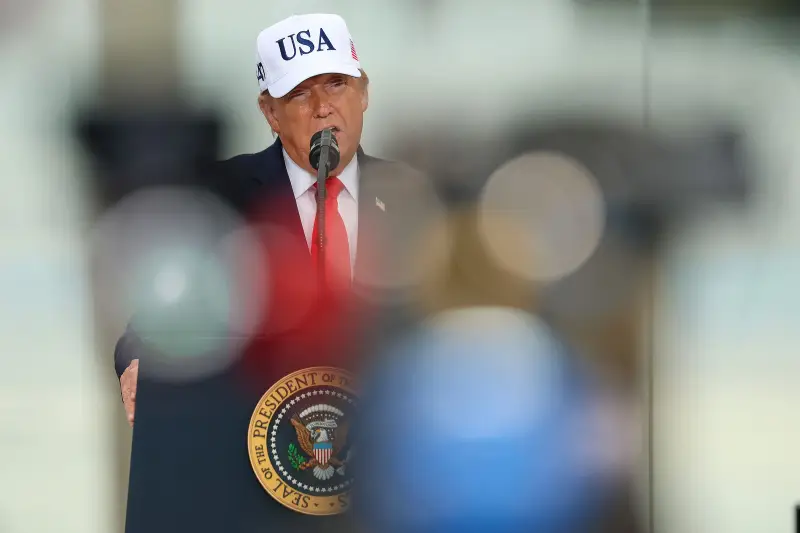
Democrats didn't just win close races on Tuesday night. In several contests they flipped seats that Trump carried by double digits two years ago, and that's the number that should worry Republican strategists most. A margin that size usually signals a shift in the coalition, not a bad night in a few swing districts.
Texas and the statewide upsets
The sharpest result came in Texas. James Talarico defeated Ken Paxton, the Republican state attorney general whose campaign was dogged by scandal. In the governor's race, Gina Hinojosa beat Greg Abbott. Both outcomes are hard to overstate. Money didn't close the gap.
Democrats also won other pivotal contests for the upper chamber in Kansas, South Carolina, Iowa, and North Carolina, according to the Associated Press, and they held on to seats in Georgia and New Hampshire. Taken together, that's a map much wider than the party's defensive list would have suggested going into the night.
Why the administration is struggling to explain it
Inside the White House, the mood was hard to read. Trump officials told WIRED that high gas prices and a rising cost of living, both linked to the Iran war, were the main drivers of the losses. One source close to the White House went further, singling out two commentators, Mark Levin and Marc Thiessen, who had pushed Trump to extend the conflict. The source said that if anything good came out of the night, it was that no Republican president would again take advice from them.
Some officials, speaking on condition of anonymity, went beyond prices. They blamed the president for taking the country into a Middle East conflict that he expected to be over within weeks, and which has dragged on with no clear endpoint. That's a politically awkward admission, and it matters because it suggests the damage isn't limited to one issue.
The exit data points the same way. Defections from other parts of the 2024 Trump coalition were large enough that the administration's cost-of-living explanation looks incomplete. Latino voters moved toward Democrats as the administration pursued immigration policies that critics described as brutal and unpopular. When a coalition loses ground across several demographic groups at once, the causes tend to be structural rather than tied to a single headline.
The "he wasn't on the ballot" argument
An administration official offered a different framing in a statement: Trump wasn't on the ballot, and Trump voters still show up when he is. The official then added a second point, that candidate quality mattered and that Trump had promoted many of the candidates more effectively than they promoted themselves.
That second claim cuts in an interesting direction. Many of the defeated Republicans were hand-picked by Trump. He pushed out incumbents such as Texas Senator John Cornyn, who lost his standing in the party's primary process, and he backed candidates like Darline Graham, sister of the late Lindsey Graham, who ran a campaign in South Carolina that was widely described as weak. If candidate quality was the problem, then candidate selection was the lever Trump personally controlled. Officials pointing at candidate quality are, in effect, pointing back at the president's own recruiting decisions.
Other officials have looked for additional scapegoats, citing a redistricting effort that didn't deliver. The logic behind that effort was straightforward. Republicans redrew numerous congressional maps earlier this year, and White House aides estimated the changes could produce 10 to 15 additional House seats if Trump voters turned out. Political scientists flagged the trade-off at the time: more districts became Republican on paper, but each one was less Republican in practice, which made them harder to defend in a bad year.
On Tuesday night, that trade-off came due. Democrats won at least three House seats in Florida that Republicans had redrawn, along with a seat in North Carolina. A redistricting strategy built on thin margins works only if the national environment cooperates, and this one didn't.
The closest thing to good news for Republicans
Florida offered Republicans their most comfortable talking point. The statewide contest there became abruptly competitive in the final days of the campaign, and it looked for a time like a real threat. In the end, Ashley Moody narrowly held off Angie Nixon, a progressive Democrat. A narrow hold in a state the party expected to win is less a signal of strength than a warning about how quickly the picture changed.
What comes next
As the likely shape of the House and the upper chamber became clear, Democratic leaders turned to oversight. Robert Garcia, the incoming chair of the House Oversight Committee, summed up the mood in two words on social media: "Lawyer up."
That's the thing to watch. Oversight committees don't need a majority of the country's support to subpoena records, hold hearings, and set the agenda for the next two years. Republicans will now have to decide whether the losses were about prices, a war, immigration, candidate selection, or the president's own role in all of them. Their answer will shape how they approach the next cycle, and it will shape how much room the administration has to govern.