Mass Effect's Score Owed as Much to Its Tools as Its Visuals
Composer Jack Wall says the visuals drove his writing, but the analog plugins and Wwise middleware he used on the first two games shaped how the music sounded.
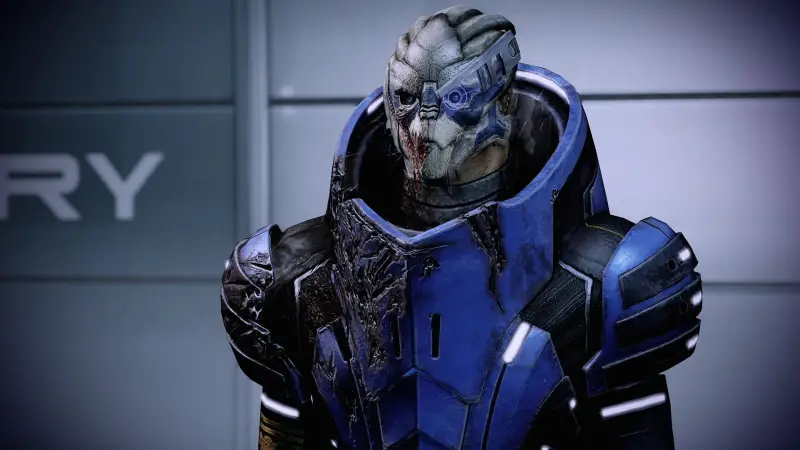
Most discussions of video game scores start with the melodies. Jack Wall's account of the original Mass Effect and Mass Effect 2 starts somewhere else: with the picture on screen and the software on his desk. His description of the process shows how much of that soundtrack's identity came from specific production decisions, not just from a composer's taste.
Starting from the visuals
Wall says he doesn't approach a project by writing themes in the abstract. He watches the material first. "I get inspired by the visuals, and honestly those visuals feel like an embarrassment of riches that inform how I write," he said. He extended that to any medium he scores, whether a game, a TV series or a film, and treats each one as its own problem.
That approach matters for a series like this one. A sci-fi RPG asks the score to carry the scale of the setting, the loneliness of long travel and the weight of the player's choices, often across dozens of hours. Working from the imagery gives the composer a direction before any melody exists, and it keeps the music tied to what the player is actually looking at.
Sound, theme and vibe
When Wall describes what defines Mass Effect, he breaks it into three parts: "Sound, theme (melody), and vibe." He's careful to say these are specific to this series. "I suppose you could say this about any medium you write for as a composer," he added, which is a fair point. Any scoring job comes down to timbre, a memorable line and an overall mood. What's interesting is how concretely he ties those ideas to instruments.
He pointed to Moog synths and other analog synths, orchestra, voices, some specific percussion and "lots of arpeggiated synths with orchestra on top." Those choices explain a lot of the series' texture. Pulsing arpeggios give the music forward motion, while orchestral and vocal layers add weight. Wall also said that game director Casey Hudson wanted an 80s synth sound mixed with what he called quasi-orchestra. That brief set the foundation for the series' sound.
Analog warmth without the analog headaches
The first game's sound came from software rather than hardware. Wall said that for ME1, the team used analog modeled plugins from Arturia and other companies. At the time, that was unusual for a game score, and it solved a practical problem.
Hardware synths like Moogs have a distinct character, but they're hard to manage in a production pipeline. Their knobs drift, and their settings are difficult to reproduce exactly. Wall put it plainly: "The real Moog synths are notoriously tough to recall." Modeled plugins let a composer save a patch, return to it later and reuse it across variations of the same cue. For a team producing many versions of pieces that have to fit different scenes, that repeatability counts for a lot.
Wall called the approach "pretty groundbreaking stuff" at the time. Plenty of composers now work entirely in software, so the idea feels routine today. Back then, it gave a team the sound of vintage analog gear without the logistics that come with physical instruments.
Wwise changes how the music plays
The second game brought a different kind of change. Creating the music was only half the job; getting it to respond to the game was the other half. For Mass Effect 2, Wall used Wwise, short for Wave Works Interactive Sound Engine, to bring the score into the game. He said that move "was a game changer for us," since the first game hadn't had access to that tool.
Audio middleware like Wwise is built for interactive sound. Instead of playing a fixed track from start to finish, it lets designers tie music to game states: switching layers when combat starts, transitioning between cues without an abrupt cut, or stacking stems depending on what the player does. That kind of control is what makes adaptive scoring work, and it's why a series with heavy dialogue and branching choices benefits so much from it.
Wall's verdict was direct: "I think the way the music plays back in ME2 is far superior to ME1." Some of that gap likely reflects the playback system, and some reflects what the composer could do with it. Either way, he's describing a change in how the score is experienced, not just in how it was recorded.
What's worth taking from this
Wall's account is a useful reminder that a score's identity depends on the whole chain: the visual reference that sparks the writing, the instrument models that shape the timbre, and the playback engine that decides when and how the music appears. Change any one link and the result sounds different. That's a practical lesson for anyone building interactive audio today, whether they're working on a large RPG or a much smaller project.
It also makes the first two Mass Effect games a good case study. The tools were different, the sound was recognizably the same series, and the second game's playback was a clear step forward. If you're scoring for interactive media, the more interesting question might be which tool you'd pick first, and what it would let your music do that the last one couldn't.