SoftBank Cancels $3.7 Billion in Gas Turbine Reservations as AI Power Bets Shift
SoftBank is canceling turbine reservations that cost it $3.7 billion, shifting its AI power strategy while disputing claims it defaulted on its orders.
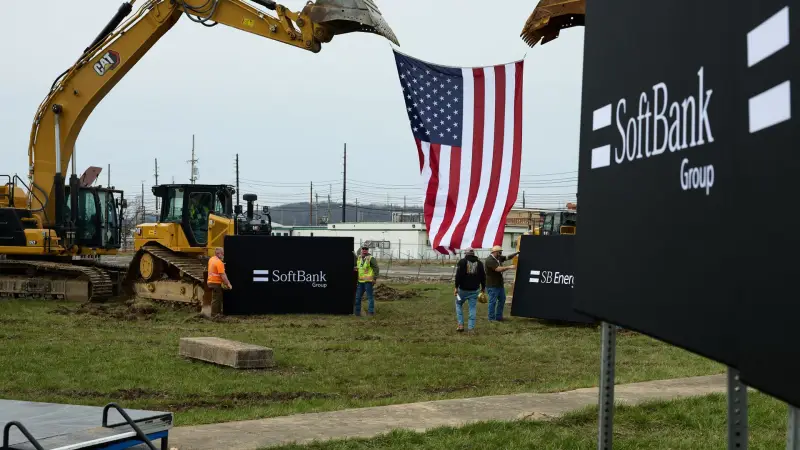
SoftBank had been betting that turbines would be the scarcest part of the AI data center build-out, and it reserved accordingly. Now it's walking much of that position back, taking a $3.7 billion hit to its profit. The reversal is worth watching because it shows how hard it is to forecast power demand for AI infrastructure several years out, and how expensive it gets when that forecast turns out to be wrong.

The scale of the reservations
According to the Wall Street Journal report, which cited people familiar with the orders, SoftBank reserved more than 13 gigawatts of power-producing turbines. That's a staggering figure in isolation. It's also more power-generation capacity than the entire state of Connecticut, and roughly six Hoover Dams' worth of output. The reservations were meant to lock in a large share of the global gas turbine supply at a time when manufacturers were already fielding more demand than they could fill.
Founder and chief executive Masayoshi Son saw that scarcity as a source of advantage. The logic was simple: if turbines were going to be the bottleneck for AI data centers, whoever held the orders would control the timeline for everyone else. Turbine makers typically charge customers tens of millions of dollars per gigawatt for these reservations, so the strategy carried a real upfront cost, and the company accepted that cost in exchange for position.
Why turbine orders are so hard to unwind
Gas turbines aren't something a buyer can order when a site is ready. Manufacturing slots are scheduled years ahead, which means a developer has to commit to hardware long before it knows exactly what the power demand will look like. That lead time is the reason the reservation game exists at all. It's also the reason a reversal gets expensive: a canceled slot may be lost value, and orders that are too far along can't be cleanly walked back.
Teams in this position usually face a sequencing problem. They order aggressively to protect against shortages, then discover that their own project plans have moved faster or slower than the hardware calendar. SoftBank's situation looks like a case of that mismatch. The company had planned to use the turbines for future gas-powered plants, and it has now changed direction. Canceling its remaining reservations with GE Vernova, its turbine supplier, and unwinding the orders that were too advanced to cancel outright is what produced the $3.7 billion charge.
SoftBank told investors on a recent call that the orders were placed "to secure power generation equipment in anticipation of shortages." The rationale holds up on its face. The problem is that the anticipated shortage and the actual amount of capacity needed turned out to be different numbers, and the gap was large enough to matter financially.
The default dispute
The reversal drew a sharper response after xAI CEO Elon Musk claimed in a post on X that SoftBank had defaulted on turbine blade contracts. SoftBank Chief Financial Officer Yoshimitsu Goto pushed back quickly. "This is simply not correct at all," Goto reportedly said. "There is no such default."
The distinction SoftBank is drawing matters. Canceling a reservation voluntarily and failing to meet an obligation are different things, and the company is insisting the first describes what happened. Beyond that, the company hasn't offered much detail on the terms of the unwinding, so outside observers can't yet judge how cleanly the contracts were exited. What's clear is that SoftBank wants the move framed as a strategic adjustment, not a breakdown in its commitments.
What's still on the table
The turbine retreat doesn't mean SoftBank is abandoning large-scale power. The company is still set to build a 9.2-gigawatt power plant in Ohio, with construction scheduled for early 2027. The plant is expected to cost $33 billion and will supply a neighboring eight-gigawatt data center. That facility is slated to be leased to OpenAI, but that arrangement is tied to financing. Nvidia has entered discussions about guaranteeing around $250 billion of that project's financing.
That's the real test. If the Ohio project proceeds on schedule, SoftBank will still need a turbine supply for it, and the lesson from the reservation spree will be about how much to commit and when. If the financing or the lease falls short, the canceled orders may look like the early warning rather than an isolated correction.
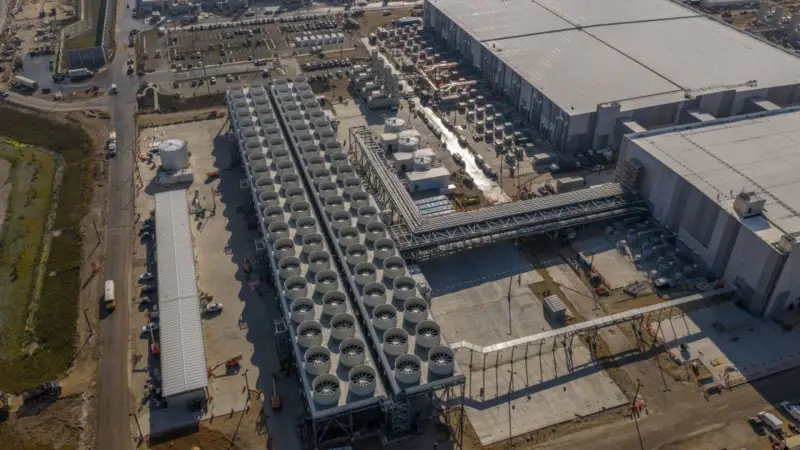
My read is that this episode says less about gas turbines specifically and more about the cost of locking in physical infrastructure on the strength of demand forecasts. Power equipment has long lead times, and AI capacity plans have been moving quickly. Companies that reserve early protect themselves against shortages, but they also take on the risk that the shortage never arrives in the form they expected. For developers and infrastructure planners, the practical takeaway is to match hardware commitments to firm project timelines, not to the most aggressive version of the demand curve. SoftBank has now paid to learn that lesson at a very large scale, and the next few quarters of its Ohio project will show whether the lesson changes how it builds.