ASRock Ships VBIOS 1.0.6 for Radeon RX 7900 Cards With No Changelog
ASRock's new VBIOS 1.0.6 for Radeon RX 7000 cards arrives with no changelog, after 1.0.5 reportedly left some RX 7900 XT and XTX cards unbootable.
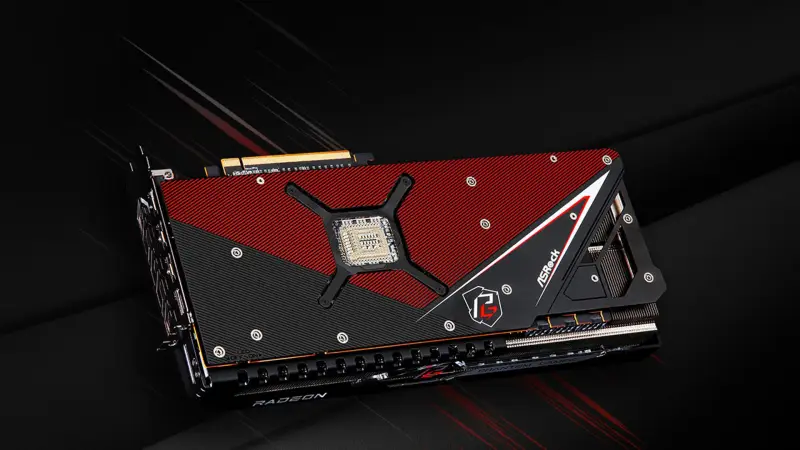
ASRock has posted a new VBIOS for its Radeon RX 7000-series cards, and the timing makes it hard to read as routine. Version 1.0.6 follows 1.0.5, the release that owners reported was stopping some RX 7900 XT and RX 7900 XTX cards from booting. The update showed up on ASRock's download pages without a changelog or any explanation of what it changes.
A firmware update with no paper trail
That silence is the story here. A firmware revision for a GPU normally comes with at least a line or two about stability fixes, compatibility work, or the security issue it addresses. Version 1.0.6 has none of that. Users can see the version number and the file, and that's about it.
For anyone deciding whether to flash a card, the missing notes matter more than usual. Firmware on a graphics card controls how the board initializes at power-on. If something goes wrong during that stage, the machine may never reach the desktop. A mistake of that kind is what owners say happened with 1.0.5, so a vendor that stays quiet after a failure leaves customers guessing about the cause and whether the fix is real.
Why AMD's patch sits in the background
The timing of ASRock's release follows a separate event. Last month AMD issued a VBIOS patch for its Radeon RX 7000-series GPUs to address potential security vulnerabilities. AMD did not describe the flaws, but it said there were no reports of them being exploited in practice. In a statement shared with ComputerBase, the company framed the update as routine: firmware corrections are released ahead of public disclosure so customers have time to install them, and users should apply GPU firmware as soon as their board maker provides it.
That guidance is sound in general, and it's probably why the 1.0.5 failures landed so badly. Board partners ship their own builds of AMD's reference firmware, so a patch that is correct at the GPU-vendor level still has to survive each partner's customization and testing. ASRock's 1.0.5 was listed for 10 models across the RX 7600 XT, RX 7700 XT, RX 7800 XT, RX 7900 XT, and RX 7900 XTX families. The failure reports concentrated on the two 7900-series cards, which suggests a problem specific to certain board configurations rather than a blanket defect. That's an inference, though, not something ASRock has confirmed.
What owners reported when 1.0.5 went wrong
Several RX 7900 XT and RX 7900 XTX owners said their systems failed to boot after installing 1.0.5. Reports of the failures spread quickly, and ASRock later pulled 1.0.5 from its website. The company has not explained the root cause, and it hasn't said whether 1.0.6 addresses the problem.
Some affected users recovered their cards with external EEPROM programmers, which means rewriting the firmware chip directly rather than through the normal update path. That's a real option for people comfortable with desoldering-free hardware programming, but it's far outside what most gamers will attempt. For everyone else, a bricked card means either a repair or a replacement, and the path to either one depends on the seller and region.
Warranty answers that don't line up
Customer support is where the uncertainty becomes personal. According to reports shared with VideoCardz, a user in Japan received confirmation that the failed update would be covered under warranty. A separate owner in Europe was reportedly told to seek warranty service even though the card was out of warranty. Those two answers point in different directions, and neither has been backed by a public policy from ASRock.
That leaves owners in an awkward position. A warranty claim for a card that failed after a vendor's own firmware release is a reasonable thing to expect, but the written terms and the regional handling clearly aren't consistent yet. Anyone with an affected card should keep the purchase record, document the boot failure, and ask for the coverage decision in writing before sending hardware away.
Should you flash 1.0.6?
My read is that the answer depends on why you're updating. If a card is running 1.0.5 and still boots, moving to 1.0.6 is a reasonable step only if you have a backup of your current BIOS and a way to recover it. If the card is healthy on its existing firmware and you have no known issue to fix, there's little in the public record to justify the risk. The missing changelog removes the one piece of information that would make that call easier.
What to watch next is fairly clear. A changelog that names the 1.0.5 failure and describes how 1.0.6 changes initialization would go a long way. So would a written warranty policy that applies the same way across regions. Until ASRock provides either, the update is a firmware image with a version number and little else, and treating it that way is the sensible approach.