Amazon's Basic Kindle Trades Features for Size and Weight
Amazon's 2026 entry Kindle drops the warm light and waterproofing but gets lighter, thinner and faster. Here's who it still suits at $169.99.
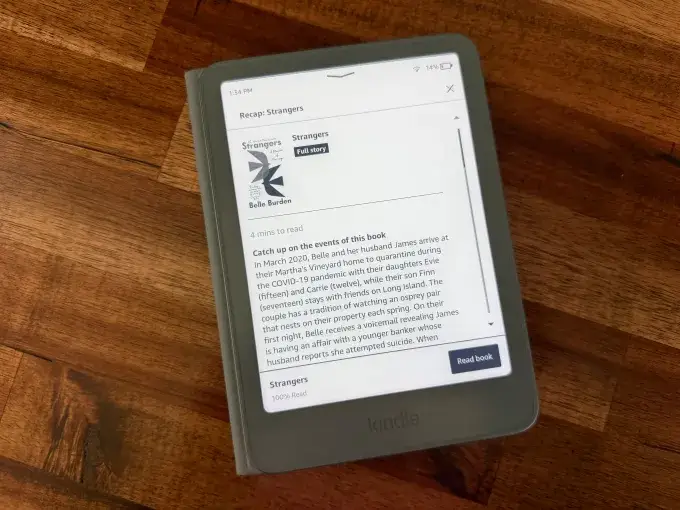
Amazon's refreshed Kindle lineup is an unusually large redesign, but the model I keep coming back to is the cheapest one. The 6-inch entry Kindle starts at $169.99 for the ad-free version, and after the price increases that hit the lineup, it's the one most new e-reader buyers will actually consider. The price rises of $40 to $50 across the range trace back to the memory-chip shortage driven by the AI boom, and they make the premium Paperwhite and Colorsoft harder to justify for many readers. That leaves the basic model carrying more of the weight.
So is a stripped-down Kindle still worth buying when the rest of the lineup offers more? After a couple of weeks with it, my answer is yes, but only if you're willing to live without a few features that some readers consider essential.
What you give up at this price
The basic model has no warm light, no color display, no auto-adjusting brightness, and no support for the new page-turn cover. It isn't waterproof either. The smaller screen and battery are the obvious trade-offs for the compact body. Battery life runs about 6 weeks, compared with 12 weeks on the Paperwhite and 8 weeks on the Colorsoft. That gap is less important than it sounds for a device you charge occasionally, but it does reflect how much more power the bigger screens and lighting demand.
The warm light deserves the most thought. It shifts the display from a cool, bluish white to a softer amber, which is designed to ease eye strain and make reading in dim rooms more comfortable. If you read in bed with the lights off, that difference matters a lot. If you read in daylight or under a bright lamp, you may never miss it. Readers who plan to take the device to the pool or on a beach trip should also weigh the lack of waterproofing, since that rules out a casual splash test.
The physical changes do the heavy lifting
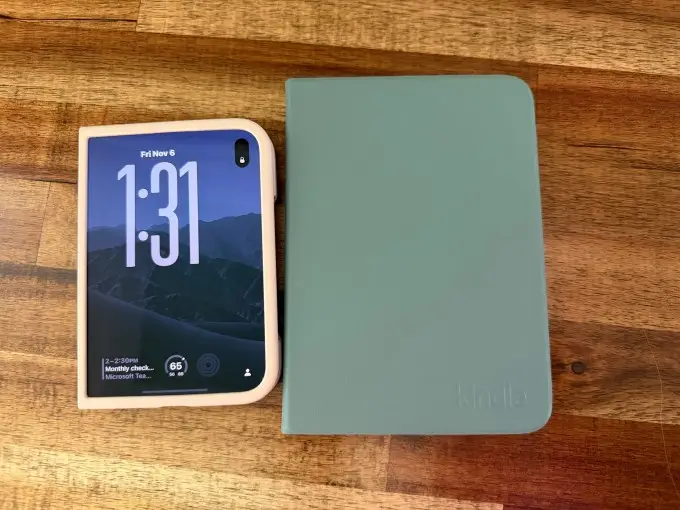
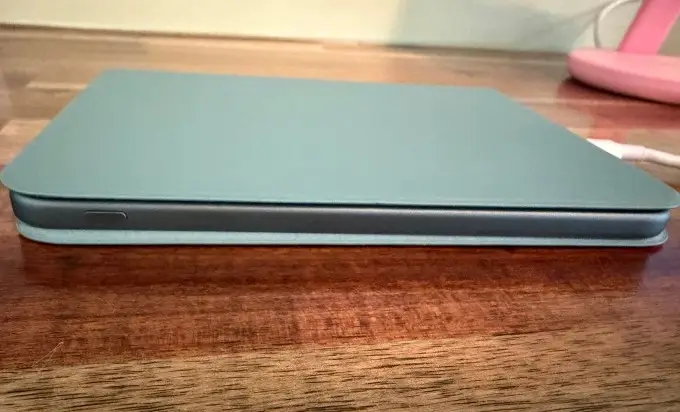
What surprised me is how much the body improved. The plastic 2026 model is about 11% lighter and 14% thinner than the 2024 version. It weighs 140 grams against 158 grams and measures 6.85 mm thick against 8 mm. On paper, 18 grams sounds trivial. In hand, it's enough to notice, especially over a long session with a book propped on your knees. It also slides into a bag or pocket with less bulk, which is the scenario this device is built for.
The aluminum version goes the other direction on weight. It comes in at 162 grams, which is 4 grams heavier than the 2024 Kindle, though the slimmer profile still makes it feel more compact. If you value a metal finish and don't mind the extra grams, that version is the one to consider.
The flush screen and the thumb problem
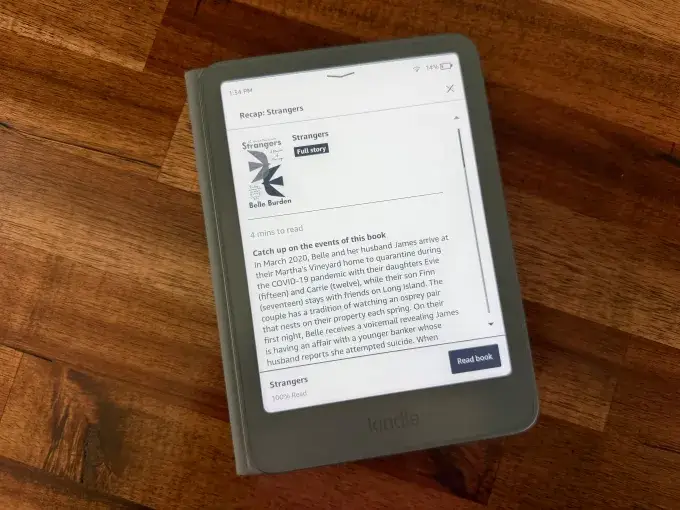
Even the entry model gets the flush-front screen, which removes the raised bezel that used to give your thumb somewhere to rest. Amazon's answer to the obvious problem is a capacitive touch dead zone that recalibrates to account for a resting finger. In practice, this works along the outer edge of the screen, the colored border. Press down in the middle of the display, though, and the device still reads that as a tap, which can trigger a word lookup or a highlight. That's a sensible limit, and it means you learn a new holding habit rather than trusting the hardware to figure it out for you.
Software and the jump from older models
The basic Kindle feels a little snappier than its predecessor. The most noticeable difference is when opening books, where Amazon claims a 30% speed improvement. That's the kind of change you feel every time you pick up the device, even if it isn't flashy.
The bigger story is for people upgrading from the 2019 Kindle Basic. The gap is wide. The new model adds USB-C, a display that moves from 167 ppi to 300 ppi, and storage that has grown well past the 4GB of the older device. The flush screen, lighter body and longer-lasting battery round out a much larger leap than the year-over-year changes suggest. If you're still carrying a 2019 model, this is the upgrade that feels like an actual replacement.
Choosing between the configurations
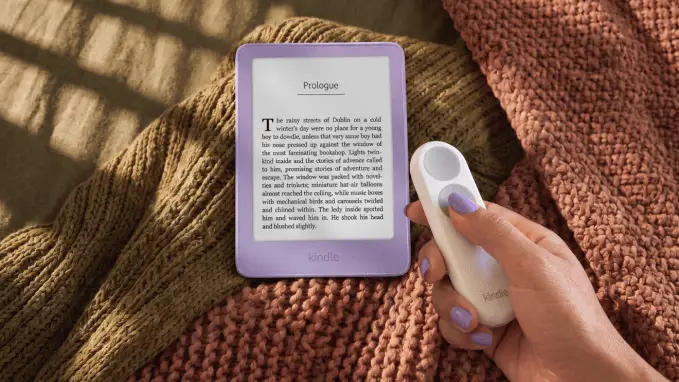
The configurations here are more varied than the base price suggests. The plastic model at $169.99 offers 16GB of storage and comes in black, called Graphite, or a new purple option called Ube. That purple is a small thing, but it's the first time the entry model has offered a color beyond black, and it makes the cheapest Kindle feel less like a default purchase.
Step up to the aluminum version at $189.99 and you get 32GB of storage in Seagrass or Alpine Sky. The price difference is $20 for a metal finish, double the storage, and a more premium feel in hand. For many buyers, that's the sweet spot if the budget allows.
The Kindle Click, the new Bluetooth remote for turning pages, works with the basic model too. I'm not convinced most readers need it. The device is already small and easy to hold, so a remote adds another accessory to lose. Readers who have limited mobility or who find one-handed page turns difficult may see real value in it, and for them the remote could matter more than anything else on this list.
Where the basic Kindle fits
If you want a Kindle that works with the warm light and the brighter, larger screen, the $199.99 16GB Paperwhite is the next step up, and it comes only in Graphite. The 32GB Paperwhite, at $249.99, also comes in Seagrass. Those extra dollars buy lighting, a larger battery life and a more capable reading setup, which is the right call for nightly readers or anyone who wants a dedicated device for long stretches.
For everyone else, the basic Kindle is still the strongest argument for a pocket-sized reader. It's lighter, thinner and faster than what came before, it has a sharper screen, and it's the least expensive way into the Kindle ecosystem at a time when prices are climbing across the category. Here's the thing: the features it drops are real, but they only matter to certain readers. Know which group you're in before you check out, and the basic model may be all you need.