Amazon's Alexa Photo Frame and Echo Time Bring Alexa Into the Bedroom and Living Room
Amazon adds a 10-inch Alexa Photo Frame and a bedside Echo Time clock, plus a hub-equipped Echo Dot, a camera Echo Studio and a 16-inch Echo Show.

Amazon's new lineup is less about louder speakers and more about where Alexa sits in the house. Five devices arrived at once, and two of them are categories Amazon hadn't made before: a 10-inch smart picture frame and a bedside alarm clock. The other three are refreshes of the Echo line, and they lean on Alexa+ and a new chip more than on any single hardware trick.
A photo frame that looks like a print
Digital photo frames spent years as a clunky, last-minute holiday gift. The bright, glossy panels of earlier generations looked like screens propped on a shelf. The category has changed since then, and much of that shift came from Aura, whose matte, easy-on-the-eyes designs made the frame something you'd hang next to real artwork. Amazon's Alexa Photo Frame follows that playbook closely.
The screen is semi-matte and anti-glare, which Amazon says is calibrated for photos. It's meant to read more like a Samsung Frame TV than a laptop display, and at 10 inches it's sized for a wall or a bookshelf rather than a desk. The matte finish matters more than the resolution story here. Glossy panels reflect every lamp in the room, and a matte surface lets the image sit with the rest of the décor.
Pricing starts at $199.99 in Black, with Birch or Walnut wood finishes at $229. It's on sale now.

The real feature is the Amazon account behind it
Plenty of frames can pull photos from a cloud service. What Amazon is selling is the curation layer. Prime members get unlimited storage in Amazon Photos, and Alexa+ is meant to choose what appears on screen and when. Amazon's description is specific: "It knows to choose photos where you're smiling and the lighting is right, and it matches the season you're in, so you see last year's family Halloween costumes in October instead of the middle of spring. It also knows what to skip, like screenshots and receipts."
That's a more ambitious promise than a slideshow with a shuffle button. Seasonal matching and skipping junk images depend on the model's ability to judge image quality and context, and those judgments will be subjective. A photo that one person treats as a throwaway snapshot may be the one another person wants on the wall. Here's the thing: the frame is only as good as its ranking, and that ranking is a black box until people live with it for a few months.
The ecosystem tie-in also cuts both ways. If your photos already live in Amazon Photos, setup is mostly a matter of signing in. If your library is spread across other services, you'll either consolidate or accept a narrower set of images. Voice notes on photos and automatic sync as you shoot are useful additions, and they keep the frame feeling current rather than frozen in the last upload.
Echo Time and the case for leaving the phone out of bed
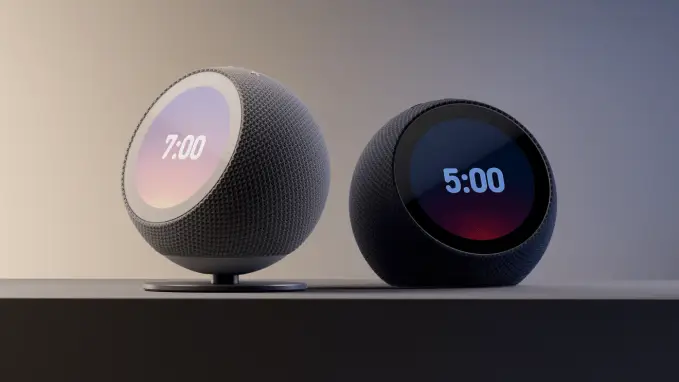
The Echo Time is aimed at a habit that's been getting harder to defend. Many people already use their phones as alarms, weather checks and morning reminders, and the phone then becomes the first screen of the day. Amazon's pitch is that the bedroom needs a different kind of device. "Millions of customers start and end their days with Alexa — checking the weather and turning on the lights from bed in the morning or winding down with white noise at night," the company wrote. "But the bedroom asks for something different from a device than the kitchen or living room does — so we designed an Echo specifically for it."
The Echo Time costs $199.99, or $209.99 for the Kids version. Its headline feature is opt-in sleep sensing. Rather than ringing at a fixed minute, the smart alarm works inside a window of 10 to 60 minutes before your set time and can wake you during a lighter phase of sleep. The aim is a gentler start, and the trade-off is that the clock is making a judgment about your sleep stage. Sensing accuracy, and how it compares with a wearable or a dedicated sleep tracker, is something Amazon's material doesn't quantify, so that's worth testing before you rely on it for an early flight.
The clock also mimics sunrise to ease you awake, a feature popularized by Hatch alarm clocks. Light-based waking is well established, so the novelty here is the integration: the same device that controls the lights and answers weather questions also handles the wake-up sequence. Because it's opt-in, sleep data stays a choice. That's a reasonable default for a device that sits next to a bed.
Echo Dot gets a hub, and Echo Studio gets eyes
The biggest change to the Echo Dot is that it now includes a built-in smart home hub. Amazon pairs it with an eero Wi-Fi extender that adds up to 1,000 square feet of coverage, which helps the Dot reach lights, locks and thermostats around the house. Folding hub functions into a $99.99 speaker removes a separate bridge for many setups. Amazon's material doesn't list which device protocols the hub supports, so check compatibility against your existing gear before assuming a clean swap.
The new Dot also runs on Amazon's custom AZ3 silicon, which Amazon says improves on-device processing and speeds up conversations with Alexa+. Pushing more work onto the device rather than the cloud usually reduces round-trip latency, and it can cut the amount of audio that leaves the home. Amazon's claims about responsiveness are its own, and independent latency testing will be the way to confirm them.
The Echo Studio with Home Camera, at $249.99, is the most ambitious of the speakers. It doubles as a camera so you can check on the house while you're away, and it adds visual intelligence. Amazon's examples lean playful: "Pull out a board game box and ask Alexa+ to explain the rules or hold up a cereal box and Alexa can recognize it and help you reorder more flavors." The useful part is that the speaker can answer questions about what it sees in real time. The part that deserves scrutiny is the camera itself. A microphone-equipped device with a lens in a living room raises questions about where footage goes, who can view it and how easily it can be switched off, and those controls should be checked before the speaker goes anywhere private.
The Echo Show 16 is a bigger bet on the wall
Amazon's Echo Show 16 has a 16-inch display, and the company says it offers a 10% larger viewing area than its predecessor in a frame that is 40% smaller. It includes Fire TV, Smart Home controls and Family Organizer, and it can also run as a digital photo frame. That last part is a quiet tie-in to the Photo Frame: the same photo-curation idea now reaches a larger, always-on screen in the kitchen or hallway. The Echo Show 16 is available for preorder at $499.99.
Taken together, the launch points in one direction. Alexa is moving off the countertop and onto walls, nightstands and shelves, and Alexa+ is the layer that decides what to show, when to wake you and what the camera should recognize. The question I'd watch is how well those automatic judgments hold up in daily use. Photo selection, sleep-stage timing and visual recognition all look good in demos, and they'll be tested by the unglamorous cases: the blurry family photo someone wants to keep, the restless night the clock misreads, the cereal box that isn't in the catalog.